Cryptocurrency trading has evolved from a niche activity into a global financial phenomenon, attracting millions of traders seeking profit opportunities in digital assets. Whether you're a complete beginner or looking to refine your trading strategies, understanding the fundamentals, tools, and best practices is essential for navigating this volatile yet potentially rewarding market.
What Is Cryptocurrency Trading and How Does It Work?
Cryptocurrency trading involves buying and selling digital assets like Bitcoin, Ethereum, and altcoins to profit from price fluctuations in the market. Unlike traditional stock trading, cryptocurrency markets operate 24/7 across global exchanges, allowing traders to execute transactions at any time without the constraints of market hours or geographic boundaries.
The basic principle mirrors traditional trading: buy low and sell high, or in advanced strategies, profit from declining prices through short positions. However, cryptocurrency trading introduces unique elements including extreme volatility, decentralized protocols, blockchain settlement, and diverse trading venues ranging from centralized platforms to decentralized exchanges. Understanding these distinctions helps traders select appropriate strategies and platforms matching their risk tolerance and expertise level.
Cryptocurrency prices fluctuate based on supply and demand dynamics, news events, regulatory developments, technological upgrades, market sentiment, and macroeconomic factors. A single tweet from an influential figure can trigger 10-20% price swings within hours, creating both opportunities and risks that demand careful risk management and emotional discipline.
In Nov 16 2024, Elon Musk’s tweet about Dogecoin “Starting to feel like The @DOGE has real potential” caused a sudden spike in trading and price changes, showing how social media can influence user behavior. Integrating such real-time events into a platform can enhance user experience by keeping traders informed and engaged.

How Do You Get Started with Cryptocurrency Trading?
Begin by educating yourself about blockchain technology, understanding major cryptocurrencies, researching different exchanges, and starting with small amounts you can afford to lose. The first practical step involves selecting a reputable cryptocurrency exchange either centralized platforms like Binance, Coinbase, or Kraken, or decentralized alternatives offering non-custodial trading.
Create an account on your chosen platform, which typically requires email verification and identity documentation for Know Your Customer (KYC) compliance on centralized exchanges. This process can take anywhere from minutes to several days depending on the platform and verification backlog. Once approved, secure your account with two-factor authentication (2FA) using apps like Google Authenticator or hardware keys for maximum protection against unauthorized access.
Fund your account through bank transfers, credit cards, or cryptocurrency deposits from existing wallets. Bank transfers usually offer lower fees but slower processing (1-5 business days), while card deposits provide instant access at premium costs (3-5% fees typically). Start with modest amounts $100-$500 for beginners allowing you to learn platform mechanics, experience real market emotions, and develop strategies without catastrophic losses during inevitable early mistakes.
Before executing your first trade, familiarize yourself with the platform interface, practice using demo accounts if available, understand fee structures (trading fees, withdrawal fees, network fees), and research basic security practices like recognizing phishing attempts and safely storing private keys.
What Are the Different Types of Cryptocurrency Exchanges?
Centralized exchanges (CEXs) act as intermediaries holding user funds and facilitating trades through order books, while decentralized exchanges (DEXs) enable peer-to-peer trading through smart contracts without custodial control. Centralized platforms like Binance, Coinbase, and Kraken offer user-friendly interfaces, high liquidity, customer support, and advanced trading features including margin trading and futures contracts.
Decentralized exchanges like Uniswap, PancakeSwap, and SushiSwap operate on blockchain networks, allowing users to maintain custody of their assets throughout the trading process. These platforms connect directly to crypto wallets like MetaMask or Trust Wallet, executing trades through automated market makers (AMMs) rather than traditional order books. DEXs offer enhanced privacy, censorship resistance, and access to thousands of tokens unavailable on centralized platforms.
The emergence of white label dex exchange solutions has democratized the ability to launch decentralized trading platforms, enabling entrepreneurs to deploy their own branded exchanges with pre-built infrastructure. This trend reflects the growing demand for non-custodial trading options that prioritize user control and transparency.
Hybrid exchanges attempt to combine benefits of both models offering centralized performance and liquidity while incorporating decentralized custody solutions. Your choice depends on priorities: centralized exchanges for convenience and liquidity, decentralized options for privacy and asset control, or hybrid platforms for balanced approaches.
What Types of Cryptocurrency Trading Strategies Exist?
Day trading involves opening and closing positions within single trading sessions to capitalize on short-term price movements, requiring constant market monitoring and quick decision-making. Day traders rely heavily on technical analysis, chart patterns, and indicators to identify entry and exit points, often executing dozens of trades daily with profit targets of 1-5% per trade.
Swing trading captures medium-term price movements over days or weeks, requiring less time commitment than day trading while avoiding long-term market uncertainties. Swing traders analyze both technical patterns and fundamental developments, holding positions through minor fluctuations to capture larger price swings of 10-30%.
Position trading represents long-term strategies where traders hold assets for months or years based on fundamental analysis and conviction in specific projects. This approach, often called "HODLing" in crypto culture, minimizes trading fees and stress while requiring patience and strong belief in long-term value propositions.
Scalping focuses on tiny price movements, executing hundreds of trades daily for 0.1-0.5% profits per trade. This high-frequency strategy demands sophisticated tools, ultra-low latency connections, and minimal trading fees to remain profitable after costs.
Arbitrage exploits price differences across exchanges, buying assets on platforms offering lower prices and simultaneously selling on higher-priced venues. Geographic arbitrage, cross-exchange arbitrage, and triangular arbitrage across trading pairs all offer profit potential, though opportunities have diminished as markets mature and automated bots dominate this space.
How Do Different Order Types Work in Crypto Trading?
Market orders execute immediately at the best available current price, guaranteeing execution but potentially suffering from slippage during volatile conditions. When you place a market buy order, you accept the lowest asking price from sellers; market sell orders accept the highest bid from buyers. These orders suit situations requiring immediate position entry or exit regardless of minor price variations.
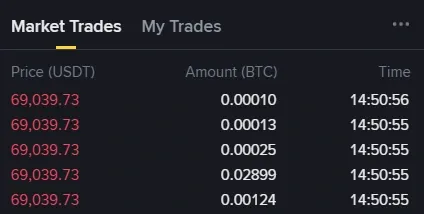
Limit orders specify exact prices at which you're willing to buy or sell, providing price control but without execution guarantees. A limit buy order at $30,000 for Bitcoin only executes if Bitcoin's price drops to $30,000 or below; it remains pending if prices stay higher. Limit orders prevent overpaying during volatility spikes and enable passive trading where orders wait for favorable conditions.
Stop-loss orders automatically sell positions when prices fall to predetermined levels, limiting potential losses during adverse market movements. Setting a stop-loss at 10% below your entry price ensures automatic exit if the trade moves against you, preventing emotional decision-making during panic. Stop-limit orders combine stop triggers with limit prices, offering more control but risking non-execution during rapid price movements.
Take-profit orders automatically close profitable positions at target prices, securing gains before potential reversals. If you buy Bitcoin at $40,000 and set take-profit at $45,000, the position automatically sells when reaching your target, removing temptation to hold for unrealistic higher prices.
Trailing stop orders adjust automatically as prices move favorably, maintaining set distances from peak prices. If Bitcoin rises from $40,000 to $50,000 with a 10% trailing stop, your exit point adjusts from $36,000 to $45,000, protecting accumulated profits while allowing continued upside participation.
What Is Technical Analysis and How Do You Use It?
Technical analysis studies historical price patterns, trading volumes, and statistical indicators to predict future price movements based on the premise that history tends to repeat itself. Traders using technical analysis focus exclusively on charts and data rather than fundamental project quality, believing all relevant information reflects in price action.
Candlestick charts display opening prices, closing prices, highest points, and lowest points within specific time frames through visual patterns. Each candlestick represents a time period 1 minute, 5 minutes, 1 hour, 1 day with the body showing open-close range and wicks indicating high-low extremes. Green or white candles indicate closing prices above opening prices (bullish), while red or black candles show closing below opening (bearish).
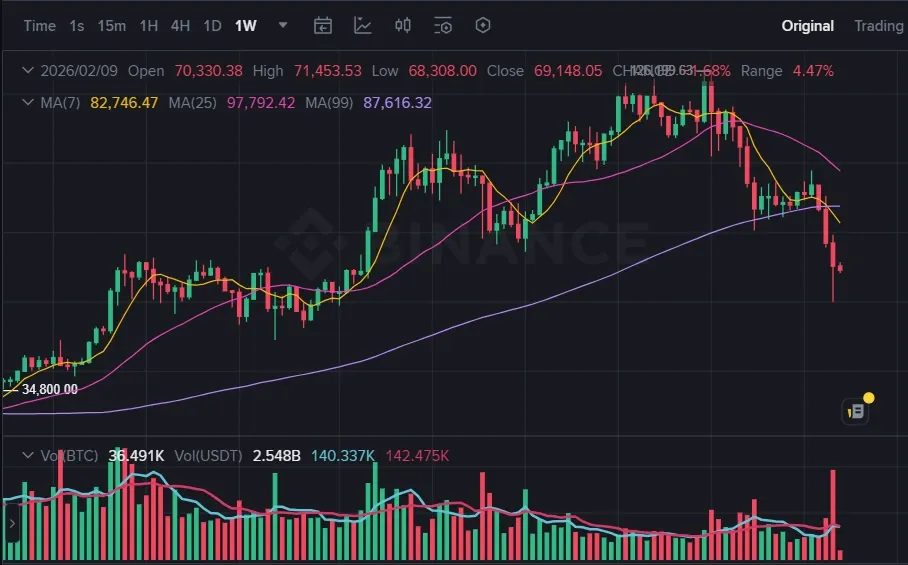
Support levels represent price points where buying pressure historically prevents further declines, acting as psychological floors. Resistance levels mark prices where selling pressure historically caps advances, creating psychological ceilings. When prices break through resistance, that level often becomes new support, and vice versa concepts central to breakout trading strategies.
Moving averages smooth price data by calculating average prices over specific periods (50-day, 100-day, 200-day commonly used). When short-term moving averages cross above long-term averages, this "golden cross" signals potential bullish momentum; the reverse "death cross" suggests bearish trends.
Relative Strength Index (RSI) measures momentum on a 0-100 scale, with readings above 70 indicating overbought conditions (potential selling opportunity) and below 30 suggesting oversold conditions (potential buying opportunity). MACD (Moving Average Convergence Divergence) identifies trend changes by comparing two moving averages, generating buy signals when shorter averages cross above longer ones.
Volume analysis confirms price movements rising prices on increasing volume suggest strong trends, while price increases on declining volume may indicate weak moves prone to reversal.
What Role Does Fundamental Analysis Play in Crypto Trading?
Fundamental analysis evaluates cryptocurrency projects based on technology, team quality, use cases, adoption rates, partnerships, and competitive positioning rather than just price charts. Unlike technical analysis focused on when to trade, fundamental analysis determines what to trade by identifying undervalued assets with strong long-term potential.
Assess the project's whitepaper for technical innovation, problem-solving approach, and realistic roadmaps versus vague promises. Examine the development team's credentials, previous successes, transparency, and active community engagement. Projects led by anonymous teams or those promising unrealistic returns warrant extreme skepticism.
Tokenomics the economic model governing token supply, distribution, and utility fundamentally impacts long-term value. Analyze total supply, circulating supply, inflation rates, burning mechanisms, and whether tokens serve genuine purposes beyond speculation. Projects with excessive team allocations, unfair launch mechanisms, or unlimited inflation face structural devaluation pressures.
Network activity metrics including active addresses, transaction volumes, developer activity on GitHub, and social media engagement indicate real-world adoption versus purely speculative interest. Cryptocurrencies demonstrating growing organic usage typically outperform those driven solely by hype cycles.
Competitive analysis positions projects within their sectors compare DeFi protocols against alternatives, evaluate NFT marketplaces relative to competitors, and assess Layer-1 blockchains against Ethereum and emerging alternatives. Understanding competitive moats and differentiators helps identify projects likely to capture market share.
Regulatory developments, institutional adoption announcements, technological upgrades, and macroeconomic trends all constitute fundamental factors influencing cryptocurrency valuations independent of chart patterns.
How Do You Manage Risk in Cryptocurrency Trading?
Never invest more than you can afford to lose completely, as cryptocurrency markets can experience 50-80% draw downs even for established assets. Position sizing determines how much capital to allocate per trade conservative approaches suggest 1-2% of total portfolio per position, ensuring no single loss catastrophically damages your account.
Diversification across multiple cryptocurrencies, sectors (DeFi, Layer-1s, gaming, privacy), and asset classes reduces correlation risk. However, over-diversification into dozens of small positions dilutes potential gains and becomes difficult to manage effectively. Balance typically involves 5-10 core positions representing 60-70% of portfolio, with remaining capital in speculative smaller positions.
Stop-loss discipline prevents emotional decision-making during losses. Determine maximum acceptable loss before entering trades (typically 5-10% of position value) and honor stop-losses without exception. The temptation to "give trades more room" or "wait for recovery" has destroyed countless trading accounts.
Avoid over-leveraging trading with borrowed capital amplifies both gains and losses. While 10x leverage can turn $1,000 into $10,000 purchasing power, it also means 10% adverse price movement liquidates your entire position. Beginners should trade with zero leverage until demonstrating consistent profitability.
Emotional discipline separates successful traders from failures. Fear and greed drive poor decisions buying during euphoric rallies and panic-selling during crashes. Develop trading plans specifying entry criteria, exit strategies, and position sizes before emotions influence judgment. Journal trades to identify patterns in both successful and unsuccessful decisions.
What Security Practices Protect Your Cryptocurrency Assets?
Use hardware wallets like Ledger or Trezor for long-term holdings, keeping assets offline and immune to exchange hacks or online threats. These devices store private keys in secure elements, requiring physical confirmation for transactions eliminating remote theft possibilities even if your computer is compromised.
Enable two-factor authentication on all exchange accounts using authenticator apps rather than SMS, which remains vulnerable to SIM-swapping attacks. Avoid storing large amounts on exchanges; treat them as tools for active trading, not long-term storage. Regular withdrawals to personal wallets maintain custody control.
Recognize phishing attempts fake websites mimicking legitimate exchanges, emails requesting password resets, or social media accounts impersonating support staff. Always verify URLs exactly, never click links in unsolicited emails, and understand that legitimate platforms never request passwords or seed phrases.
Backup seed phrases typically 12 or 24 words in multiple physical locations using metal storage solutions resistant to fire and water damage. Never store seed phrases digitally, in cloud storage, or photographs. Anyone accessing your seed phrase controls your cryptocurrency permanently without recourse.
Use unique, complex passwords for each platform, managed through password managers like BitWarden or 1Password. Regularly update software, use reputable antivirus protection, and maintain skepticism toward investment opportunities promising guaranteed returns—if something seems too good to be true, it almost certainly is.
What Tax Implications Exist for Cryptocurrency Trading?
Cryptocurrency trades typically trigger taxable events in most jurisdictions, with profits subject to capital gains taxation and losses potentially deductible. Each trade crypto to crypto, crypto to fiat, or using crypto for purchases creates tax obligations based on the difference between acquisition cost and disposal price.
Short-term capital gains (assets held less than one year) usually face higher tax rates than long-term holdings in many countries. The United States taxes short-term gains at ordinary income rates (10-37%) while long-term gains receive preferential rates (0-20%), incentivizing holding periods exceeding one year.
Maintain detailed records of all transactions including dates, amounts, prices, fees, and purposes. Specialized cryptocurrency tax software like CoinTracker, Koinly, or CryptoTrader.Tax integrates with exchanges to automate record-keeping and generate tax reports. Manually tracking hundreds of trades proves nearly impossible and invites costly errors during tax filing.
Consult tax professionals familiar with cryptocurrency regulations in your jurisdiction, as laws vary dramatically internationally and evolve rapidly. Some countries treat cryptocurrencies as currency, others as property or commodities, each classification carrying different tax implications. Ignorance provides no defense against penalties for unreported cryptocurrency income.
Conclusion
Cryptocurrency trading offers unprecedented opportunities for those willing to invest time learning markets, developing disciplined strategies, and managing risks appropriately. Success requires combining technical knowledge with emotional control, continuous education with practical experience, and ambitious goals with realistic expectations. Start small, learn continuously, protect your assets rigorously, and remember that sustainable trading success measures in years, not days. The cryptocurrency market rewards patience, discipline, and informed decision-making while ruthlessly punishing recklessness and emotional trading.