QUANT TRADING SYSTEMS

Crypto Quant Trading Systems, Deployed as One Suite

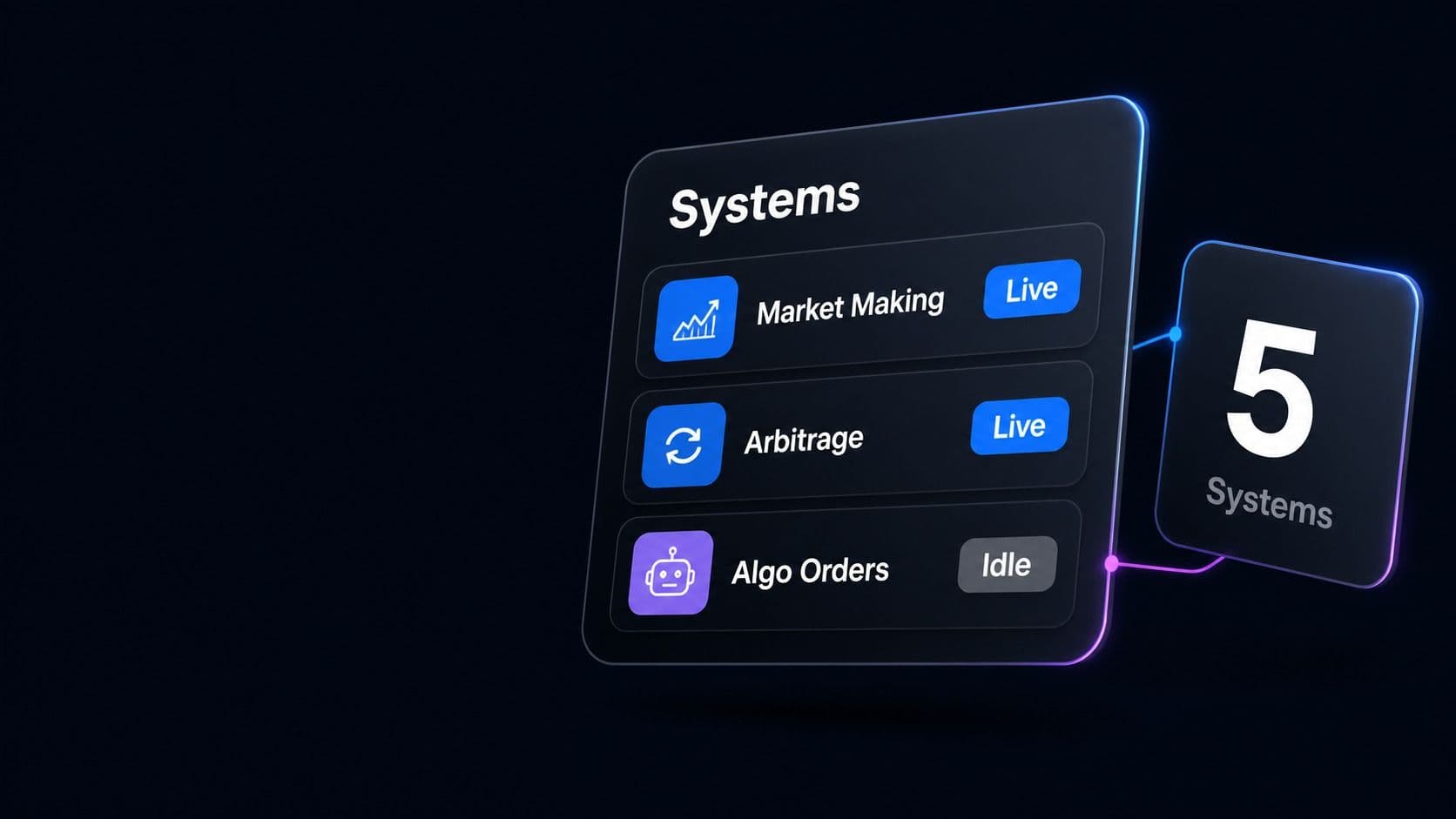
Five deployable systems sharing the thing that matters more than any single strategy: one execution core, one set of operator-defined limits, one audit trail. Compare the five, pick the one that matches the job, or run all of them under your own brand.

Fivesystems, one core
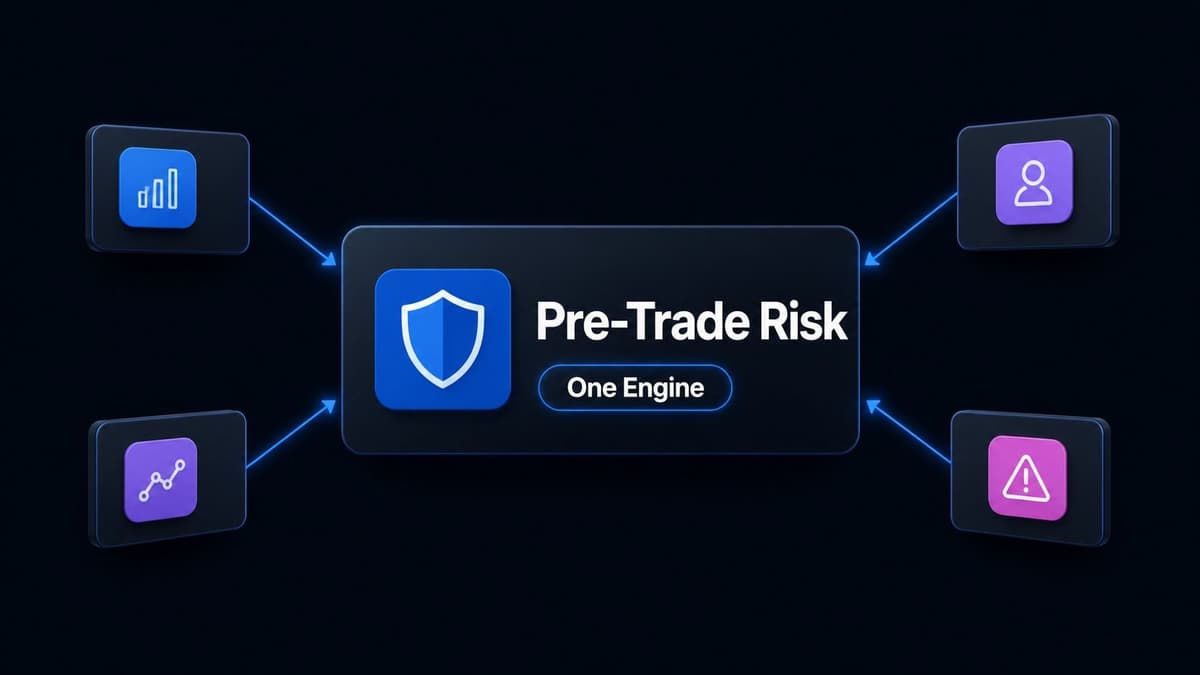
Pre-traderisk per order
Operator-setlimits, approvals
Audit-readyevery action
THE FIVE SYSTEMS

Five Systems, One Execution Core

Each card is a full product, already built and deployable. Read the one that matches the job you need done — the differences that matter are in the table below it.

STRATEGY AUTOMATION

Algorithmic Trading Platform & Bots

Publish a tested bot library to your users and let your own desk deploy custom strategies to the same runtime — every order bounded by limits you set, every bot stoppable on demand.

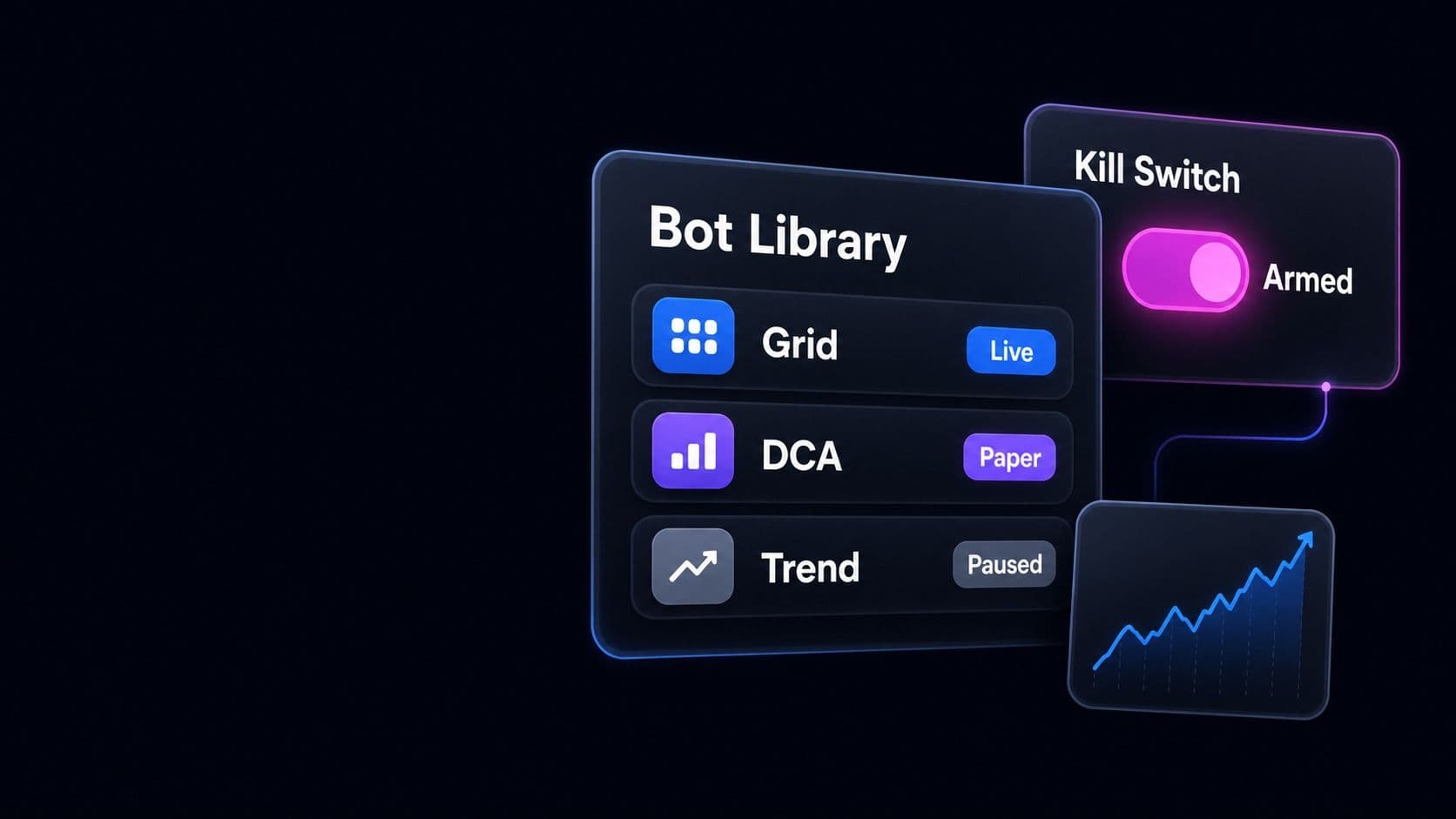
  • Grid, DCA, rebalancing, trend and signal families ship ready
  • Custom strategies run approval-gated and versioned
  • Paper mode, live P&L and a kill switch at four scopes
Learn more
A bot library card listing Grid running live, DCA in paper mode and Trend paused, beside an armed kill switch
LIQUIDITY AND PRICE EDGE

Market-Making & Arbitrage Engines

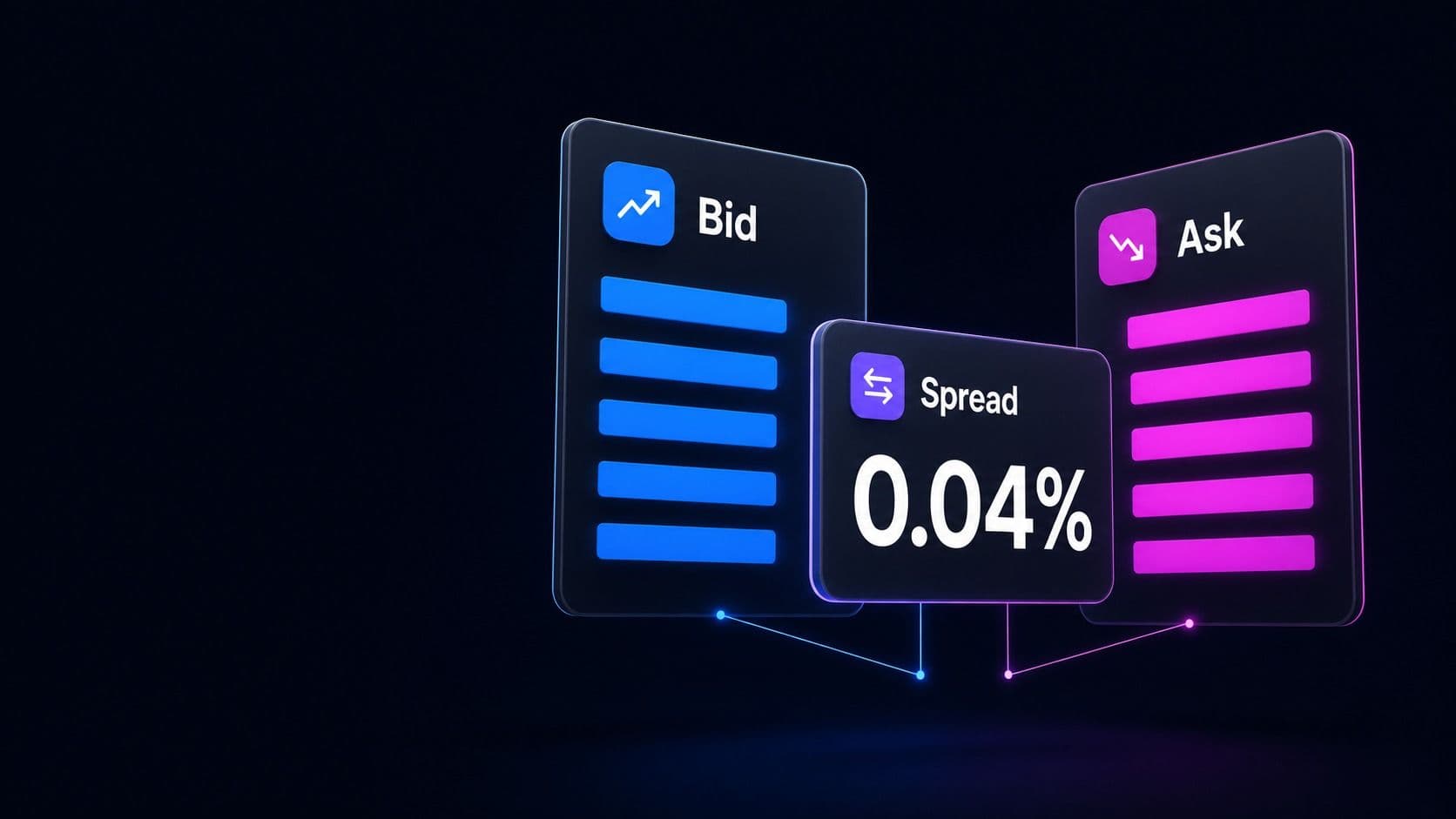
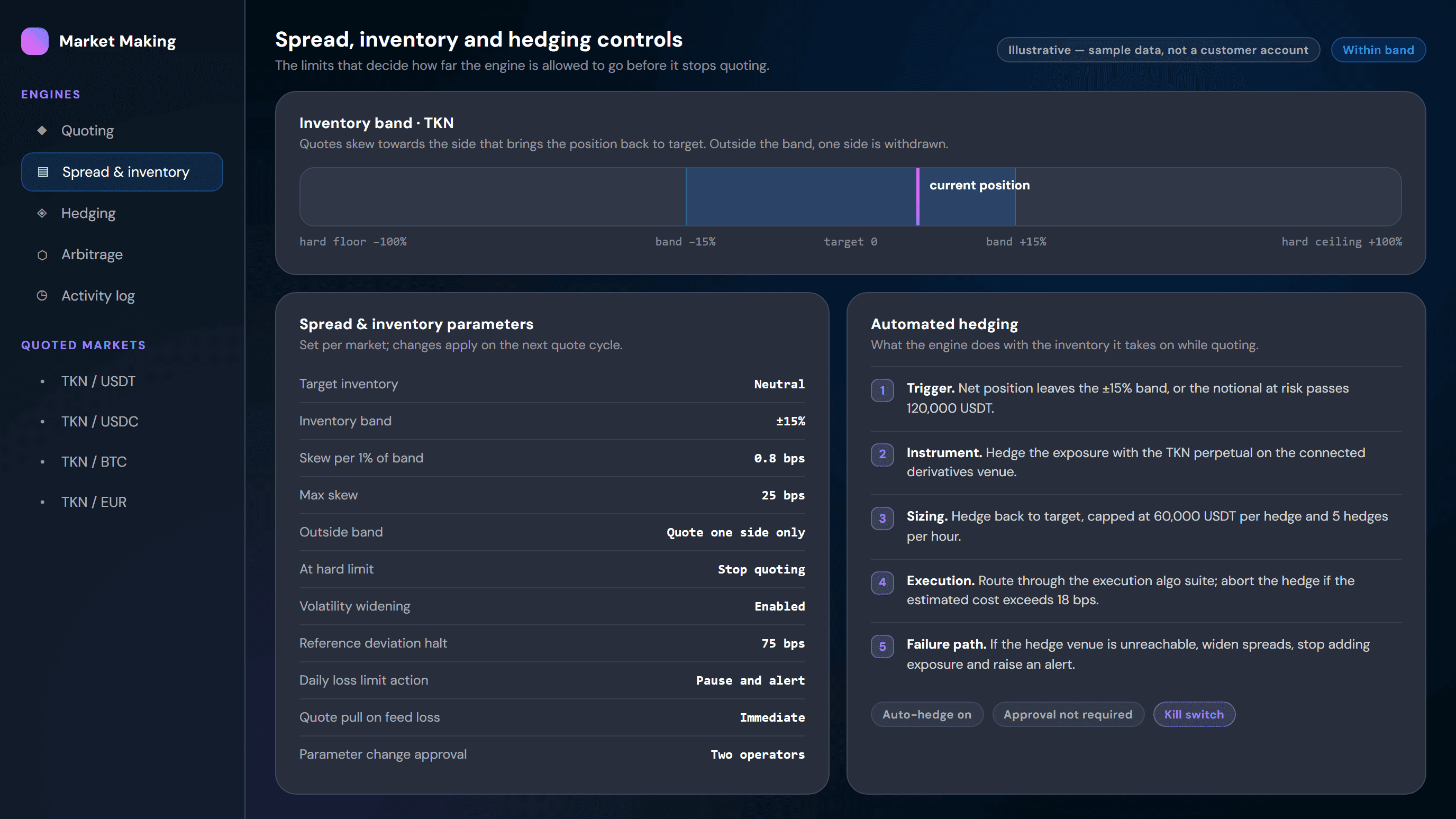
Quote both sides of your own markets with spread and inventory controls, hedge the position automatically, and take cross-venue and triangular price differences from the same connections.

  • Ladder, spread floor and ceiling, inventory band and skew
  • Automated hedging with sizing and cost ceilings
  • Opportunity scoring net of fees, transfers and slippage
Learn more
A bid book in blue and an ask book in magenta with the 0.04 percent spread between them
USER-FACING AUTOMATION

Copy, Social & Signal Trading

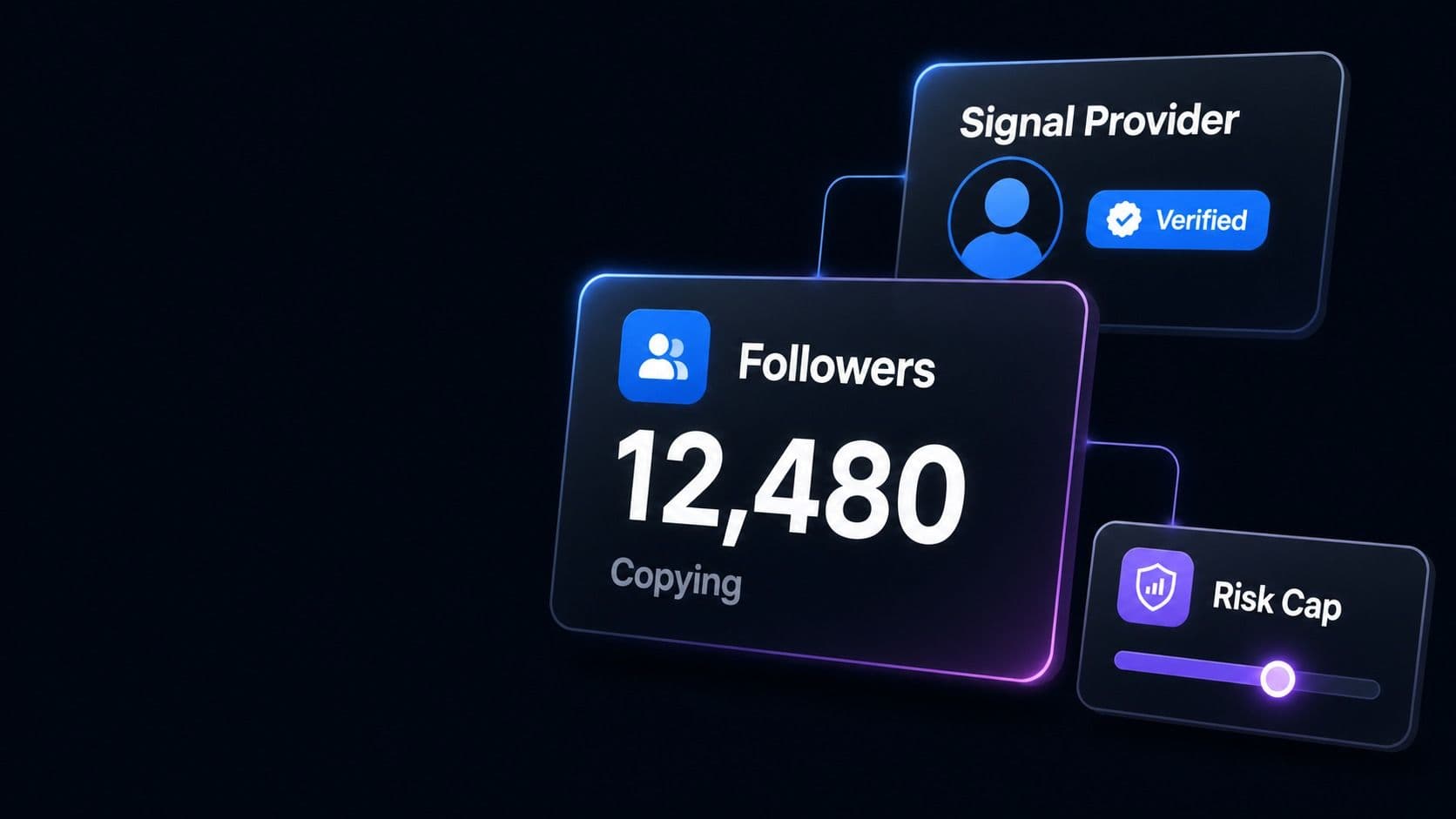
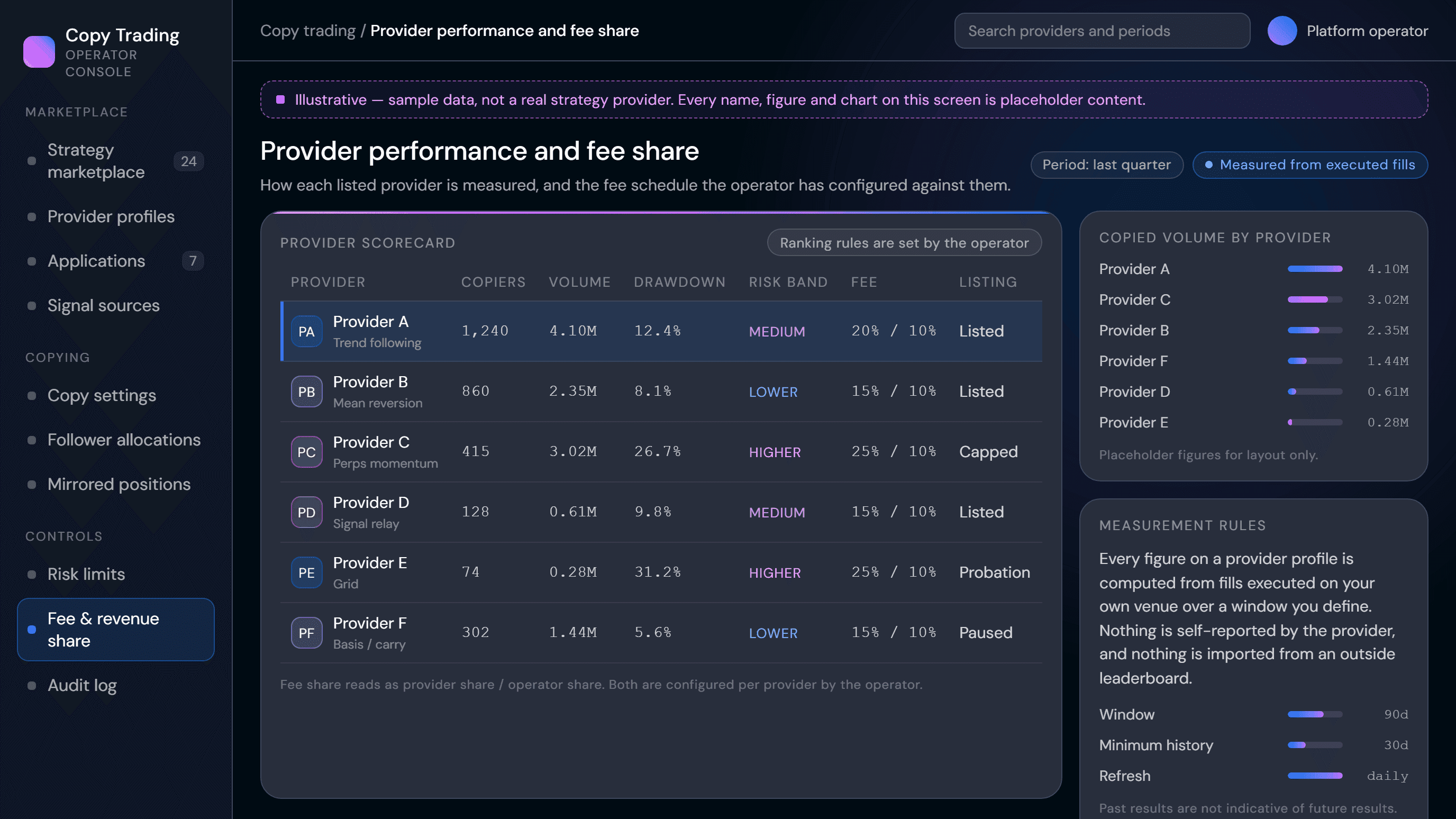
Give users someone to follow: provider profiles, copy settings, allocation ceilings and automated execution of external signals, on the accounts and matching engine you already run.

  • Operator-listed providers with configurable fee share
  • Per-follower allocation, exposure and drawdown limits
  • External signal ingestion with automated execution
Learn more
A verified signal provider card beside a follower count of 12,480 and a risk cap slider
ORDER HANDLING

Smart Execution & Portfolio Automation

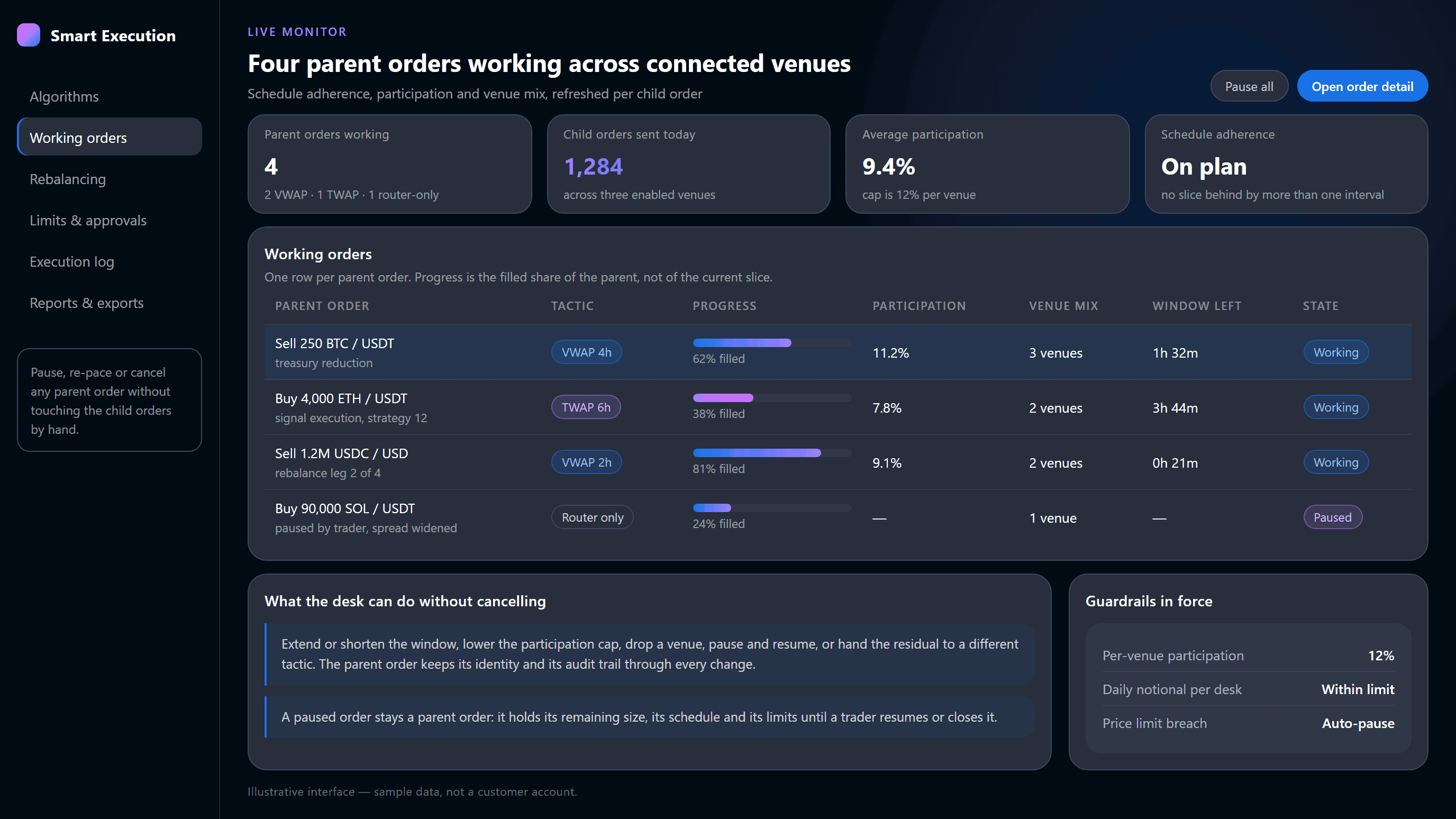
Work a large order on a schedule instead of throwing it at a book, route each slice to the venue that can absorb it, and turn portfolio drift into a costed rebalance a human approves.

  • Time- and volume-weighted schedules with participation caps
  • Smart order routing and large-order splitting
  • Rebalancing with a cost preview before approval
Learn more
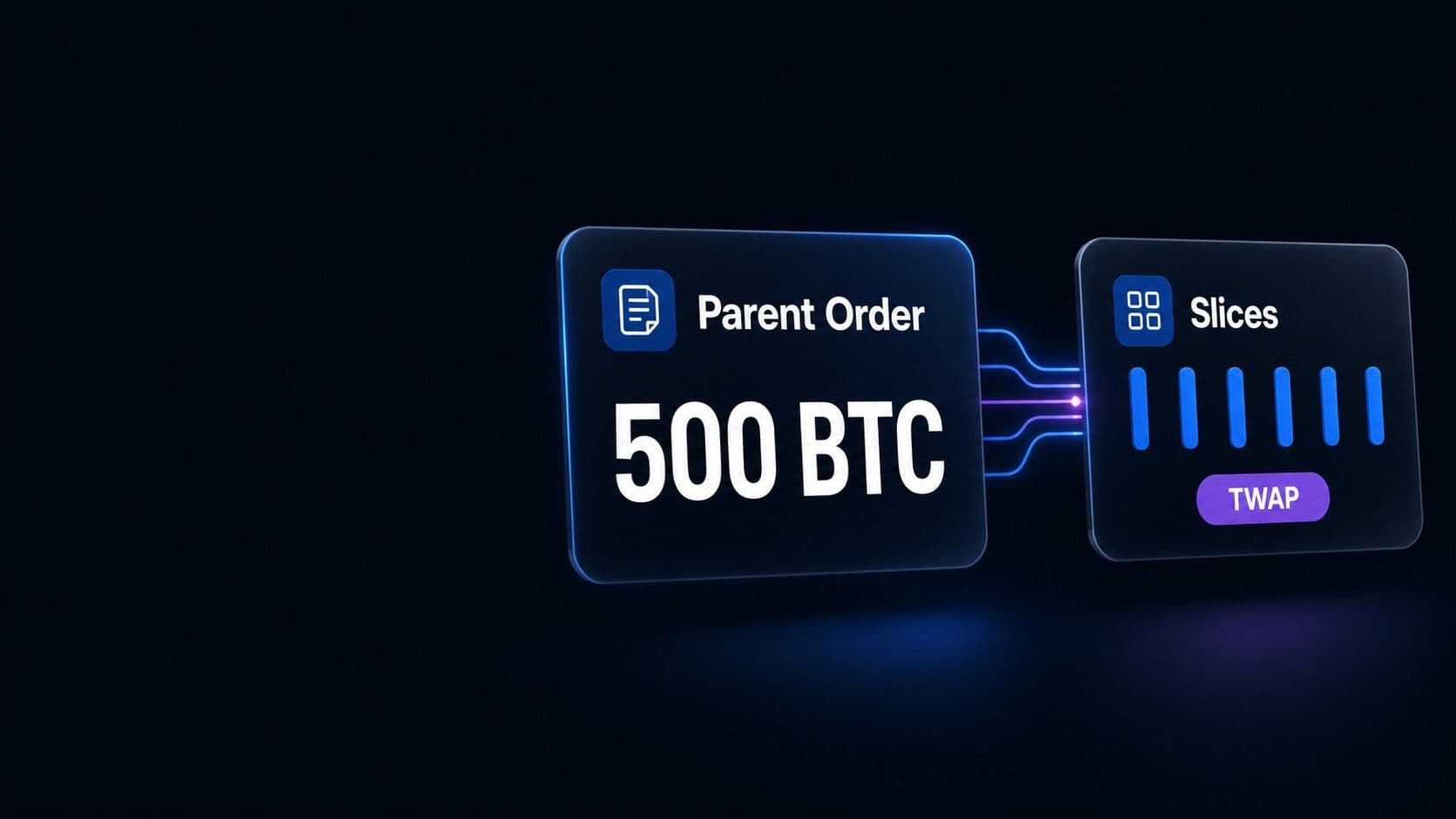
A 500 BTC parent order broken into six TWAP slices
RESEARCH AND DEPLOYMENT

Backtesting, Research & Strategy APIs

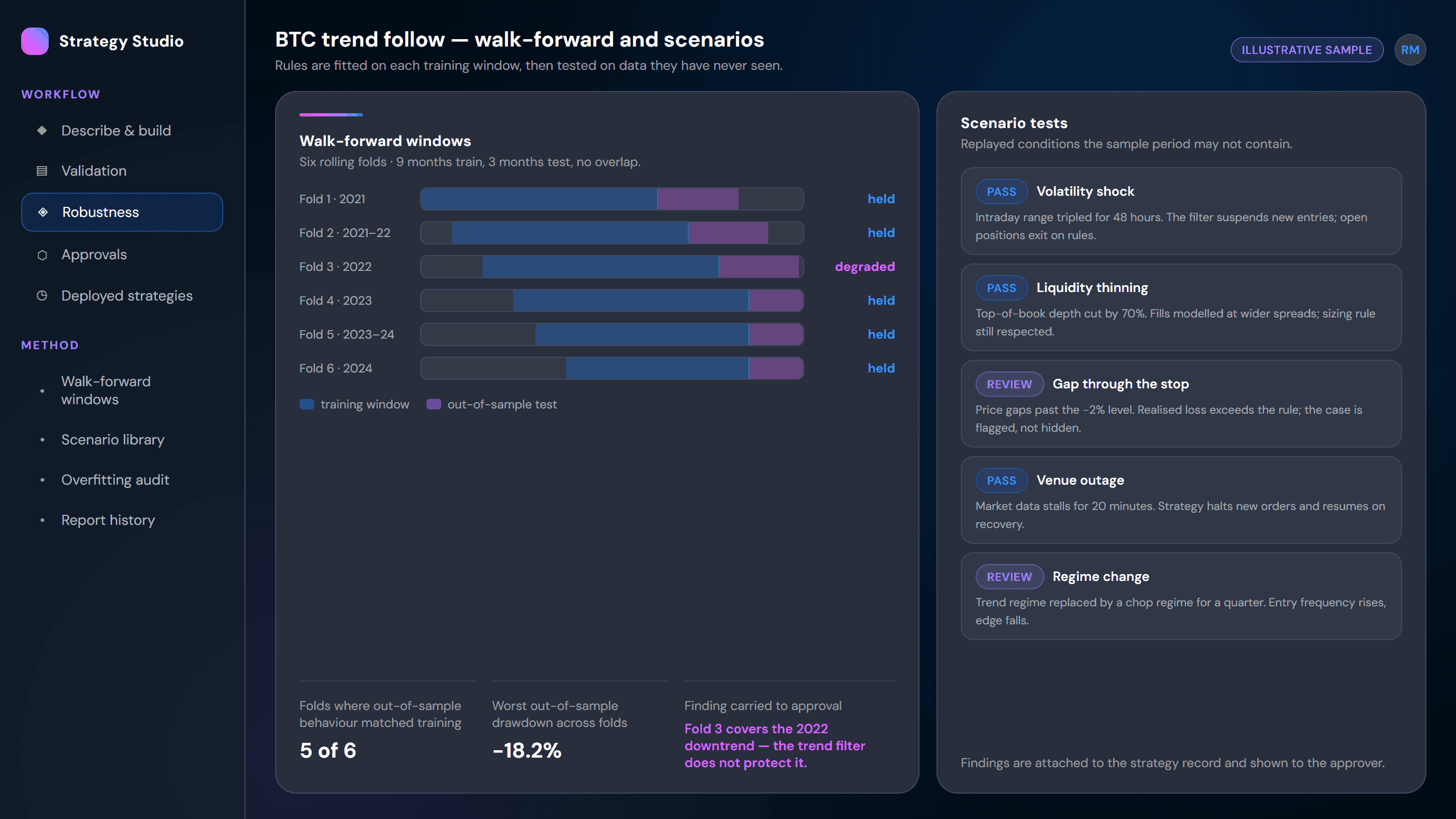
Test a strategy on historical data recorded by the same stack that will execute it, put it through walk-forward and robustness analysis, then deploy the version that survived — with a named approval in between.

  • Historical market data, backtest engine and parameter sweeps
  • Walk-forward and robustness reports on every candidate
  • REST and WebSocket strategy APIs with an isolated test environment
Learn more
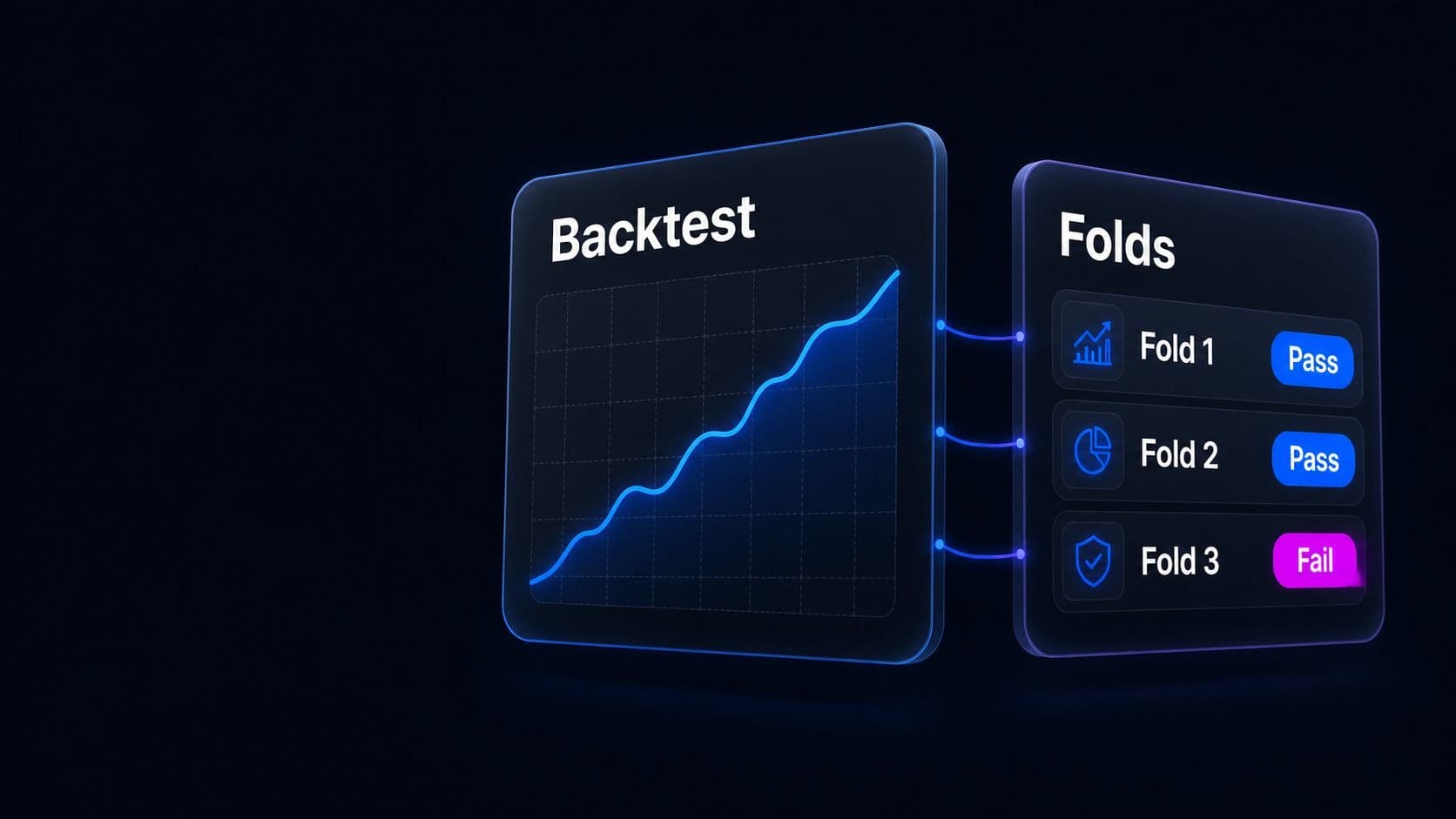
A backtest equity curve beside its folds, two passing and one failing
SYSTEM MAP

What Sits Between a Strategy and a Venue

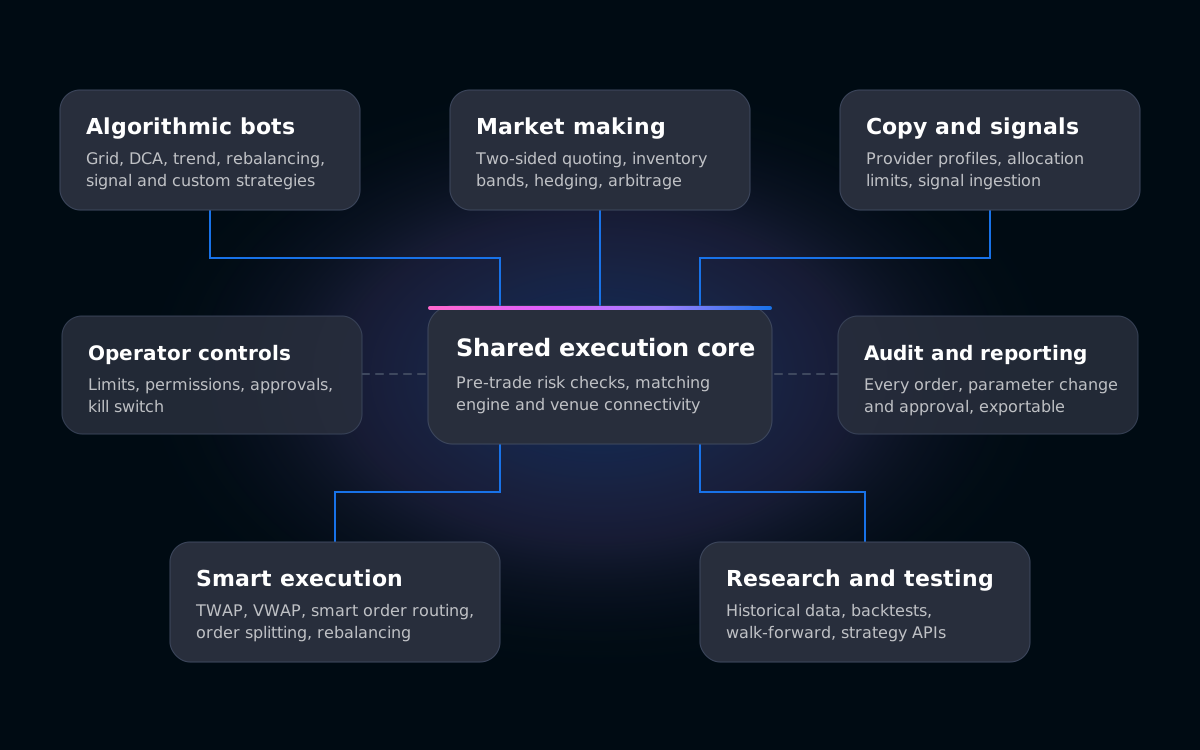
Five systems, two shared rails and one core. The map is the reason a desk can run all of them without running five risk processes.

Diagram: bots, market-making, copy trading, smart execution and research systems around one execution core

Each system decides what to trade. None decides what is allowed. Orders from every strategy pass through the same execution core — pre-trade risk checks, matching engine and venue connectivity — with operator controls on one side and the audit record on the other.

CHOOSING A SYSTEM

Which Engine for Which Job

The decision is not which system is best — it is which job you have. Need depth on your own market, and it is the quoting engine. Need a large order worked without moving the price, and it is the execution layer. Need a rule traded repeatedly, and it is the bot platform. Need users following someone more experienced, and it is the copy module. Need to know whether any of it holds up before capital is committed, and it is the research layer.

#Compared onBot strategiesQuoting engineArbitrageCopy and signalsExecution algos
1The job it doesTrades a repeatable rule set on your marketsQuotes both sides continuously so a market has depthCloses a price difference between venues or marketsLets a user follow a provider or an external signalWorks one large order without moving the price
2Where the result comes fromThe rule being right more often than it is wrongSpread captured over many round tripsA gap that survives fees, transfer cost and slippageThe provider's decisions, resized to each followerCost avoided against a benchmark, not profit generated
3What the operator configuresStrategy families, parameter ranges, per-tier visibilityLadder, spread floor and ceiling, inventory band, hedge rulesPath types, minimum edge, leg timeout, unfilled-leg policyProvider eligibility, allocation ceilings, fee share, cut-offsTactic, schedule, participation cap, venue set, price limits
4Runs on its ownYes, inside its allocation; stoppable at four scopesYes, continuously; quoting stops at the hard inventory limitYes, per scored path; blocked when a leg cannot be coveredYes, per follower; copying halts at that follower's limitYes, on schedule; the order stops at its price and size bounds
5What a human still decidesApproving a custom strategy before it trades liveParameter changes, which can require a second operatorRaising an exposure ceiling or a cost limitListing a provider and setting the ceilings around themApproving a rebalance after seeing its cost preview
6Capital it puts at riskA directional position, bounded by the bot's allocationInventory that drifts either side of a target positionTwo legs held briefly, hedged by construction where possibleEach follower's own balance, sized by their allocation limitThe parent order only, worked down over its schedule
7Typical operatorAn exchange adding a self-serve automation productA desk or venue responsible for its own book qualityA proprietary desk with capital on more than one venueA retail-facing exchange or broker growing engagementAn institutional desk moving size it cannot show
INSIDE THE SYSTEMS

One Console per System, One Set of Limits

A quant suite is bought on its controls, not on its strategies. These are the screens where each system is configured, and the reason they look related is that they enforce the same limits underneath.

Strategy library and parameters publish, bound, expose

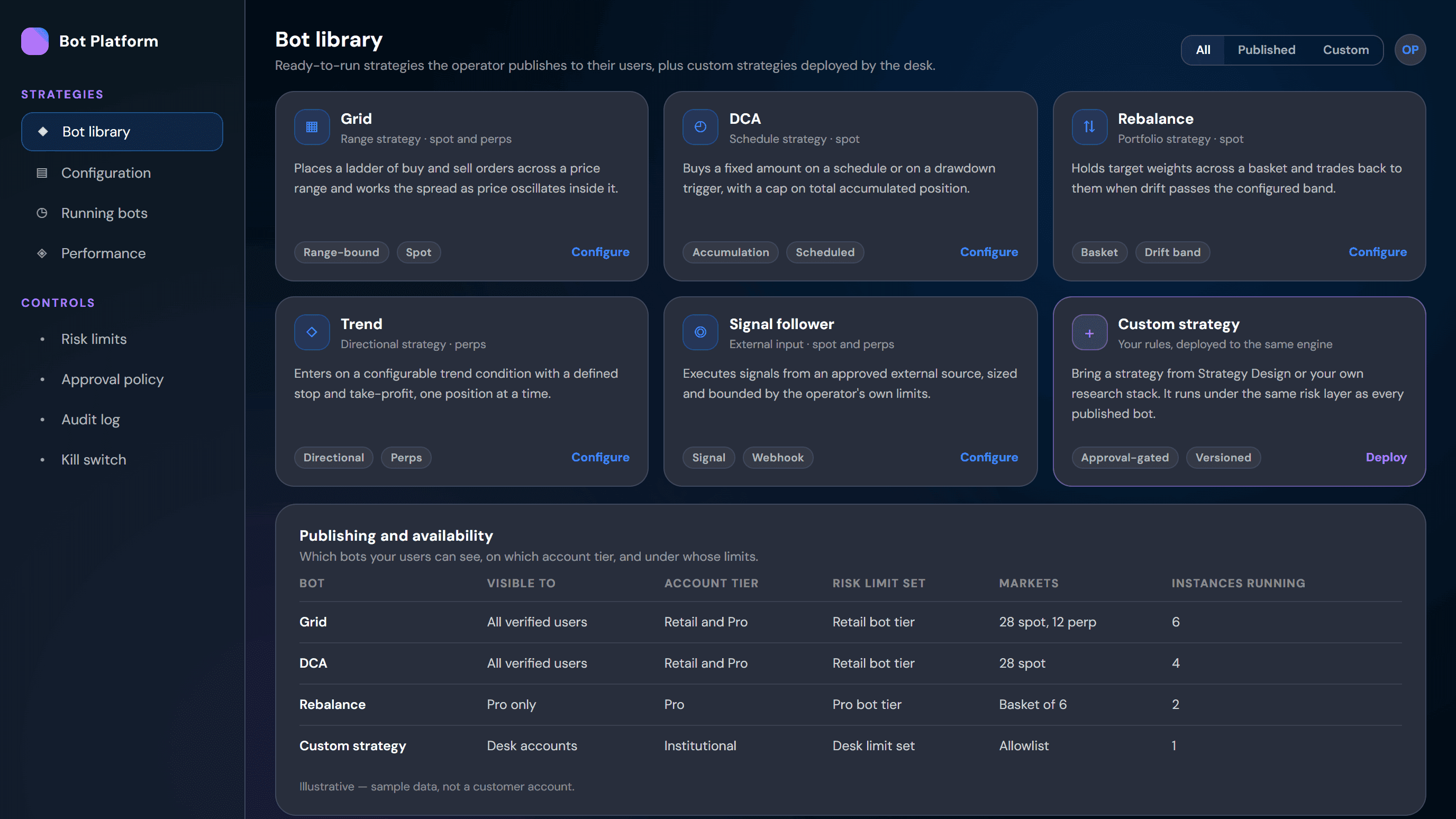
The library is where an operator decides which automation their users get and how far they may configure it. Every published strategy carries the limit set of the account tier it runs on.

  • Strategy families published or withheld per account tier
  • Parameter ranges bounded before a user ever sees them
  • Paper mode available on every strategy before live capital
  • Operator-configured fees on automated activity
Bot library and strategy configuration showing grid parameters and risk limits
OFTEN CONFUSED

Where Strategy Design Ends and Research Infrastructure Begins

A strategy builder turns intent into rules; research infrastructure decides whether those rules deserve capital. Most teams need both, in that order. On Coiny they are one pipeline: design strategies in plain language, then run them on these systems — the builder writes the rule set, the research layer tests it out of sample, and the same strategy APIs deploy whatever survived.

#Compared onStrategy builderResearch and testing infrastructure
1What it producesAn explicit rule set written from a plain-language descriptionEvidence about whether a rule set holds up outside its sample
2Primary inputA trader's intent, in wordsHistorical market data recorded by the same exchange stack
3Primary outputEntry, exit, sizing and risk parameters a human can readWalk-forward, robustness and parameter-sweep reports
4Question it answersWhat exactly am I asking the system to do?Would this have survived conditions I did not pick?
5Who reaches for itTraders and product teams without a quant stack of their ownQuant researchers and desks bringing their own models
6Where it lives at CoinyStrategy design and testing, in the intelligence suiteResearch and strategy APIs, in this quant suite
7How the two meetHands its rule set to the research layer for testingHands the approved version to the shared execution core
OPERATOR CONCERNS

What Operators Ask Before Turning a Quant Suite On

Quant systems are approved on their failure modes, not on their upside. These are the answers that decide whether a risk committee signs off.

  • If we run all five systems, do we run five risk processes?No. Every strategy, quote, arbitrage leg, copied trade and algo slice passes through the same execution core, so limits, permissions and the kill switch are set once and apply everywhere. Adding a system adds a strategy, not a second governance model.
  • What actually stops an automated system that is behaving badly?A loss limit halts rather than warns, and the kill switch is reachable at several scopes — a single strategy, an account, a market, or everything at once. Both are operator-set values enforced before an order leaves the engine, and both write to the audit trail when they fire.
  • Can we prove afterwards what the systems did and who changed what?Every automated action, parameter change and approval is recorded with its author and timestamp, and the record is exportable. That is what makes an automated desk defensible to a regulator, an auditor or a board, rather than something that has to be reconstructed from logs.
  • Do we need a quant team to operate this?Every rule is a value an operator sets in a console rather than code somebody has to ship. What a desk genuinely needs is a person accountable for the numbers in that console; the engines, the venue connectivity and the risk plumbing arrive ready to run.
  • Can our own strategies run on it, or only yours?Your strategies run on the same runtime as the shipped ones, deployed through the strategy APIs as versioned, approval-gated releases. They inherit the identical pre-trade checks, monitoring and kill switch, so there is no second, less-governed path into production.
Book a Strategy Demo
CONNECTED STACK

Where the Quant Suite Sits in the Coiny Stack

The five systems are one domain inside a larger platform. These are the neighbours they exchange orders, strategies and measurements with.

trading & execution stack

The parent domain this suite belongs to: spot and derivatives engines, aggregated liquidity, order and execution management, RWA markets and instant swap, alongside the quant systems on this page.

AI trading strategy builder

Design strategies in plain language, then run them on these systems. The builder converts a written description into explicit rules and hands them to the research layer for out-of-sample testing before anything is deployed.

execution analytics & TCA

The measurement side of the same order flow: predicted slippage and fill probability before a trade, achieved execution quality after it. It recommends the tactic that the execution algorithms then carry out.

OMS/EMS & multi-venue execution

The institutional order layer above the engines, with a real-time blotter, pre-trade risk controls, multi-venue routing and post-trade allocation for desks that manage orders on behalf of accounts.

COMMON QUESTIONS

Quant Trading Systems FAQ

A quant trading system is software that turns a defined trading rule into orders automatically, inside limits a human sets in advance. In practice it has four parts: a strategy that decides what to trade, a risk layer that checks every order before it leaves, connectivity to the venues where it trades, and a record of what happened. Coiny Exchange ships five such systems on one execution core, so an operator configures one set of limits rather than five.

A crypto quant trading stack includes market data and history to research on, a testing environment to validate rules before capital is committed, execution engines that place and work the orders, a risk layer that bounds every one of them, and an audit record for anything automated. Coiny Exchange covers all five layers as deployable software rather than a framework a team has to assemble, and each layer is a product page in this suite.

Build when the strategy itself is the differentiator and the team already runs production trading infrastructure; buy when the differentiator is the market you serve rather than the plumbing underneath it. The expensive part of building is rarely the strategy — it is venue connectivity, the pre-trade risk layer, monitoring and the audit trail. Coiny Exchange supplies that plumbing and still lets a desk deploy its own strategies onto it through the strategy APIs.

Algorithmic trading is the automated execution of a rule, and quantitative trading is the research discipline that decides which rule is worth automating. The two meet in a quant trading system: research produces a tested rule set, and the execution engine runs it under operator limits. Coiny Exchange keeps both on one platform, so the history a strategy is researched on is recorded by the same stack that later executes it.

Quant trading systems need controls that act before an order reaches a venue, not alerts that report afterwards. The working set is a position and notional cap per strategy, an instrument allowlist, an order-rate throttle, a price-band check, a loss limit that halts rather than warns, and a kill switch that an operator can reach at several scopes. On Coiny Exchange every one of these is an operator-set value enforced in the shared execution core, and every trigger is written to the audit trail.

Yes. Coiny Exchange delivers the quant trading suite white-label, so the bot library, the copy-trading marketplace and the execution tools appear as your own product, under your brand, on your domain, with no third-party attribution. You decide which systems your users see, which parameters they can touch, and which are reserved for your own desk, and each choice is set per account tier rather than requiring a separate deployment.

RUN THE SUITE

Ready to Run Quant Systems Under Your Own Brand?

Bring the markets you trade and the limits you are willing to run. We will walk the five systems against them — which one does your job, what your operators would configure, and what the audit trail looks like the morning after.

Book a Strategy Demo