White-Label Copy Trading Platform for Exchanges and Brokers
Copy, Social & Signal Trading lets an exchange's users follow strategy providers, mirror their trades within allocation and risk limits, and execute external signals automatically.
Book a Demo
One Module, Three Ways a User Can Follow a Strategy
Copying, a social layer and signal execution run on the same allocation engine and the same risk ceilings, so an operator enables what fits the market and governs all of it from one place.

Strategy Marketplace
The listing surface your users browse: providers, strategy type, markets, capacity and risk band.

Provider Profiles
A profile per provider carrying the strategy declaration, the markets traded, the measures you publish and the risk disclosure every follower sees.

Social Feed & Following
A community layer where users follow providers and each other, see what is being traded and discuss it.

Copy Settings & Allocation
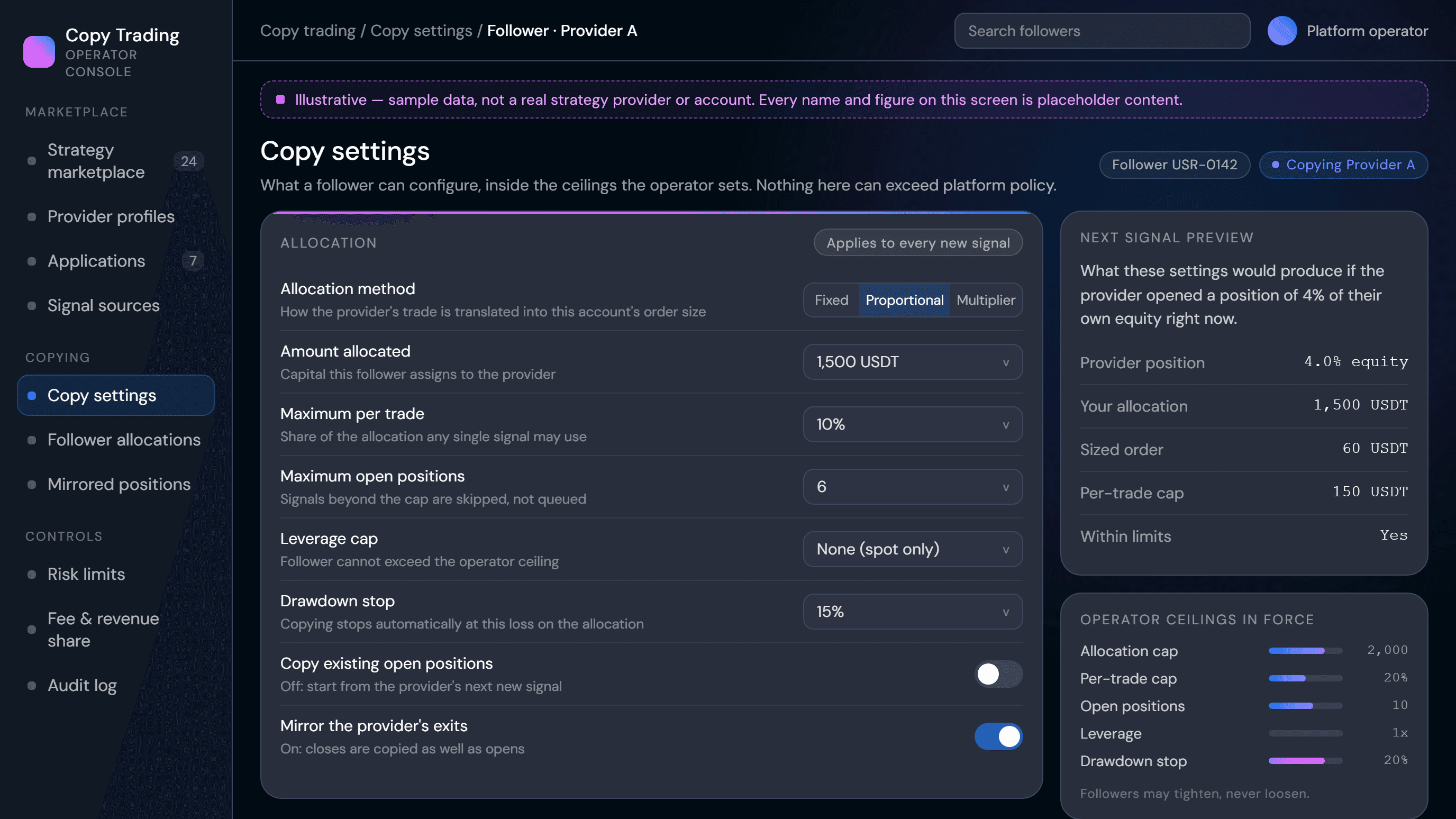
Each follower picks fixed, proportional or multiplier sizing, an amount, a per-trade cap and an open-position cap.

Signal Ingestion
Webhook and API intake from approved in-house or external sources, normalised onto your symbols, de-duplicated.

Automated Execution & Limits
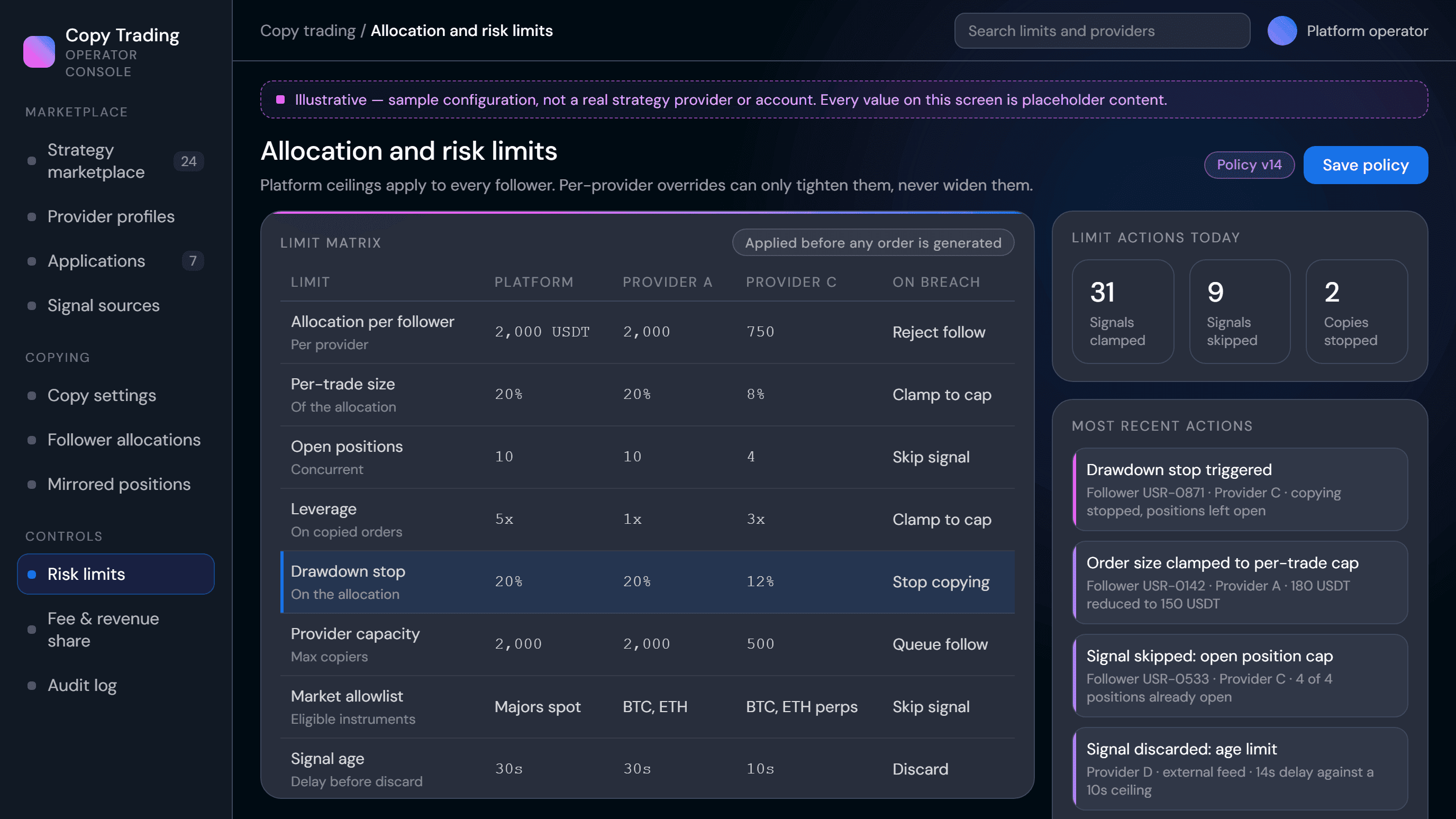
One child order per eligible follower, sized to that account, clamped or skipped when it would breach a limit.
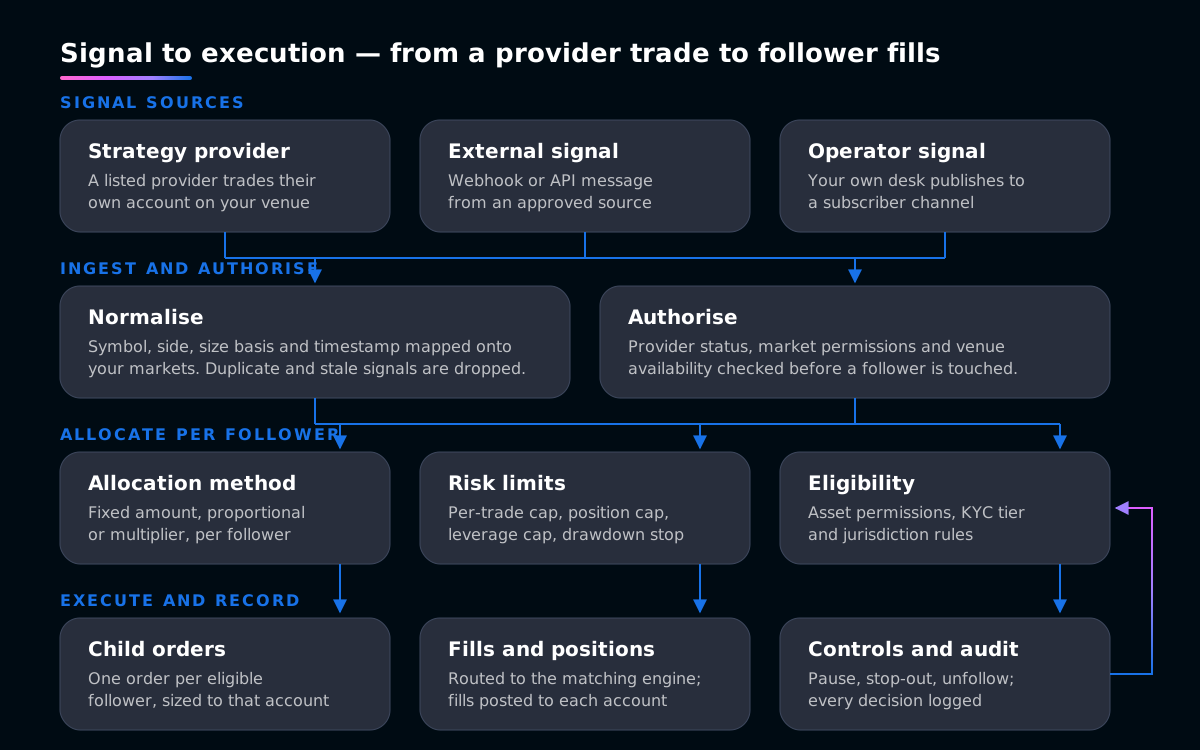
From a Provider Trade to Follower Fills
One path, whether the instruction came from a listed provider, an external feed or your own desk.
Marketplace, Profiles, Copy Settings and Limits in One Console
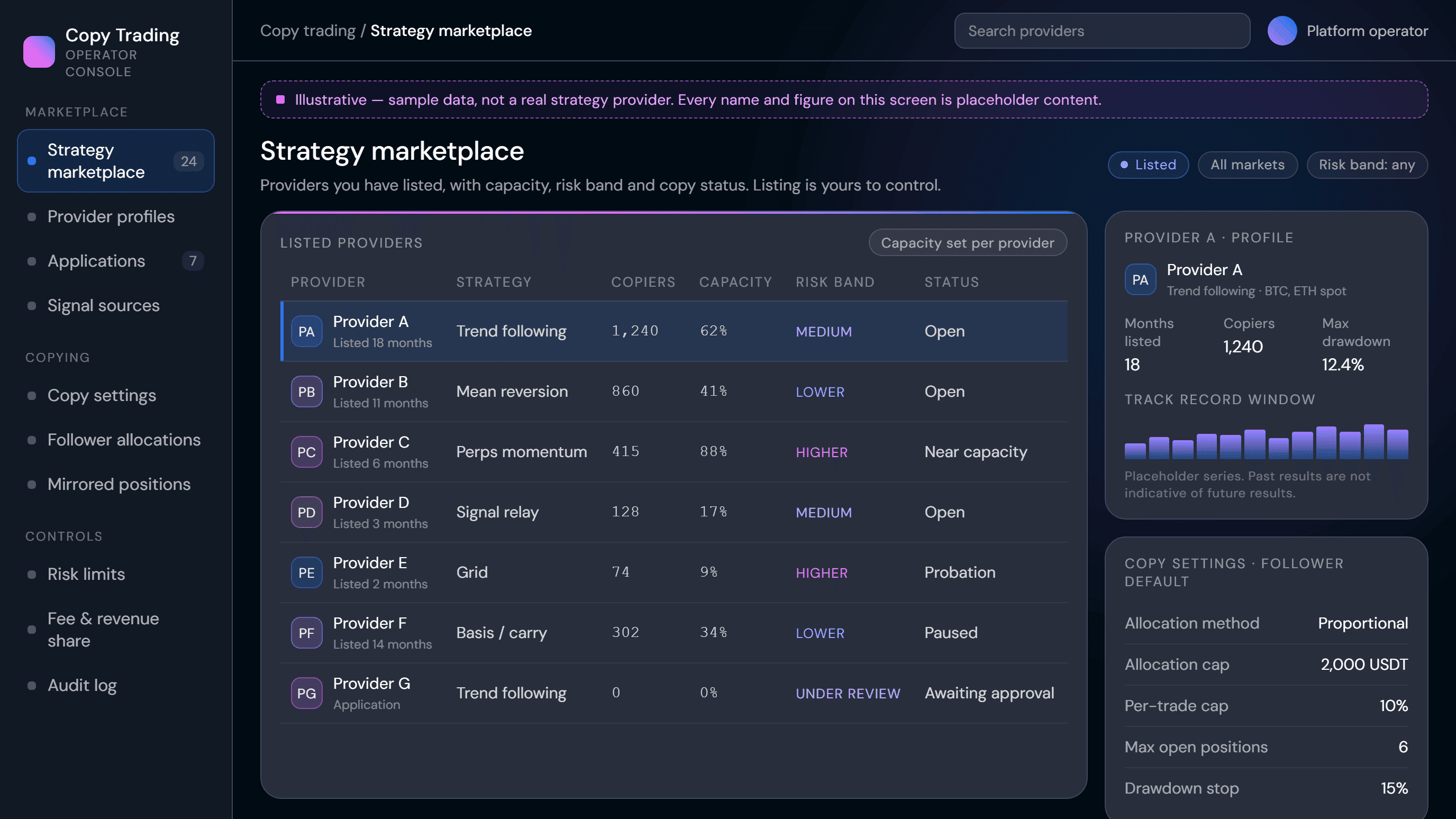
Every screen below is a working part of the module, shown with placeholder providers and placeholder figures. Coiny Exchange does not run a live provider marketplace; these are the surfaces an operator configures and their users see.
Strategy marketplace listed, capped, controlled
The marketplace is yours to curate. Providers apply, you approve, and each listing carries the capacity, risk band and copy status you assigned. Nothing is listed by default and nothing stays listed without an operator decision behind it.
- Applications queue with approve, reject and probation states
- Capacity cap per provider, with follows queued once it is reached
- Risk band assigned by the operator, shown on every listing
- Pause or delist a provider without touching open positions
Performance Measured on Your Venue, Not Self-Reported
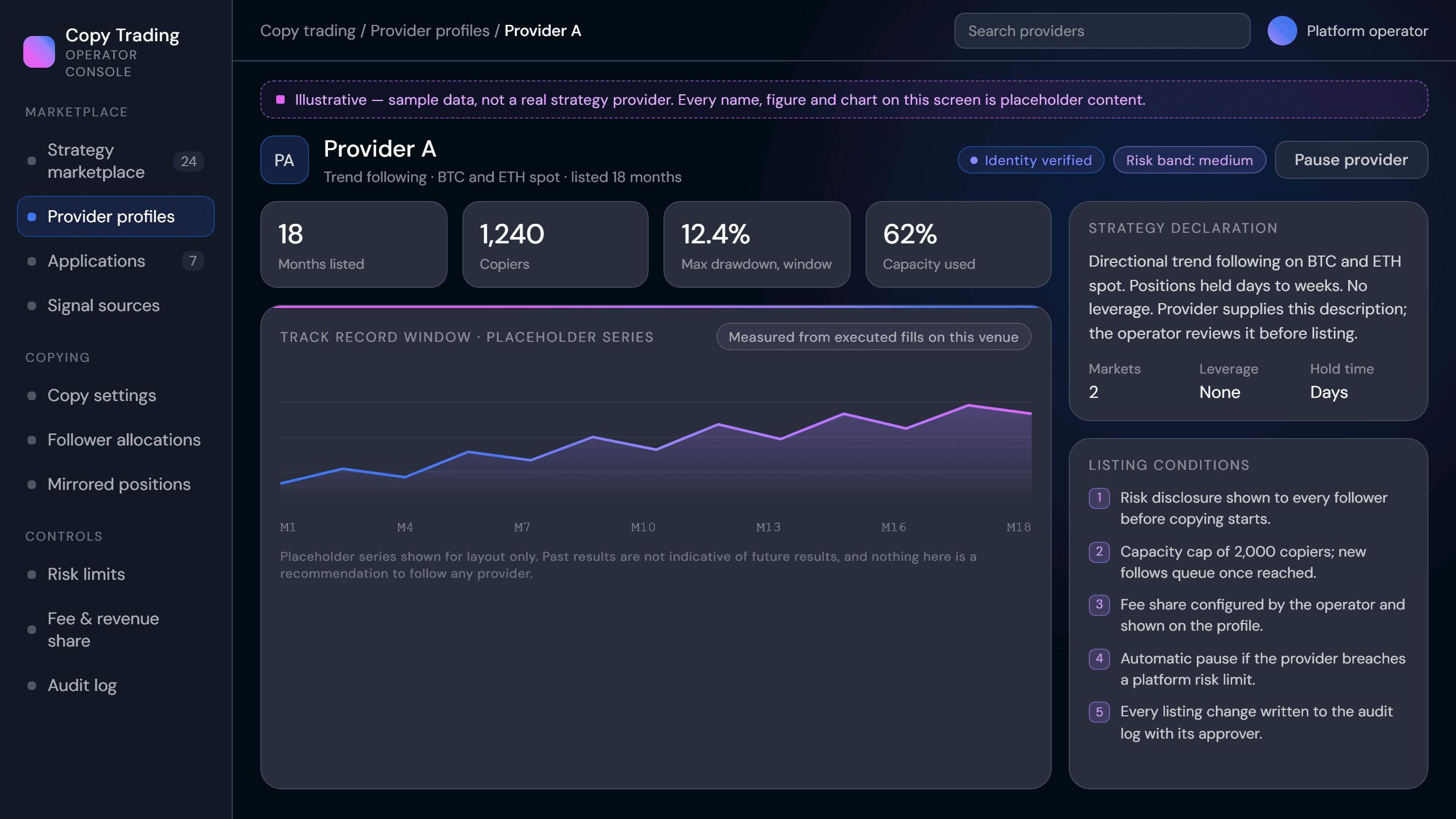
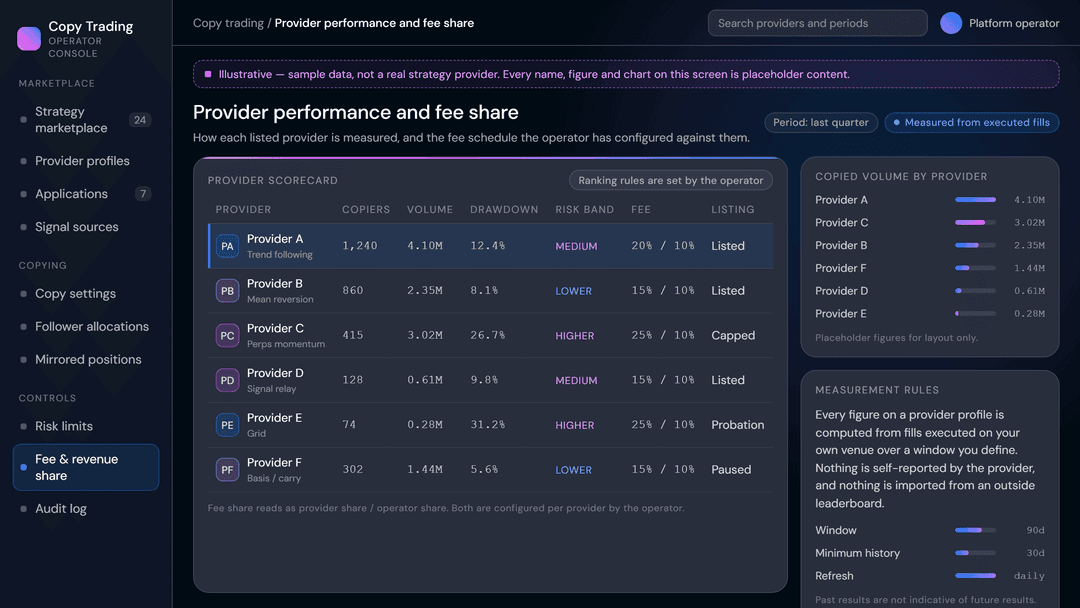
The credibility of a copy-trading product rests on where its numbers come from. Every figure on a Coiny provider profile is computed by the platform from fills executed on your own venue, over a window you define, with a minimum history before a provider can be listed at all.
- Figures computed from executed fills on your own matching engine
- Measurement window, refresh cadence and minimum history set by the operator
- Risk band and drawdown shown alongside activity, not activity alone
- Risk disclosure attached to every profile before a follow is possible
- Fee share configured per provider and accrued against the trade that produced it
- Past results are not indicative of future results, and nothing on a profile is advice
What Risk and Compliance Teams Ask Before Approving Copy Trading
- One provider trade becomes thousands of orders. What stops that overwhelming the book?Child orders are generated per eligible follower and sized to that account, then checked against the same pre-trade risk controls as any other order on the venue. Provider capacity caps bound how many followers a single provider can have in the first place, and per-provider market allowlists keep a strategy inside the instruments you chose for it.
- What happens when a follower's losses run past what they intended?Each follower has a drawdown stop on the allocation, under an operator ceiling. When it triggers, copying halts and no further orders are generated for that provider; open positions are left with the account owner rather than being closed on their behalf. The event is written to the audit log with the rule that fired it.
- Can a provider be removed quickly if something goes wrong?Pausing a provider stops new copied orders immediately, across every follower, without touching positions that are already open. Delisting removes them from the marketplace. Both are single operator actions, both take effect without a deployment, and both are recorded with the approver and timestamp.
- Does offering this make us an investment adviser?Coiny Exchange supplies the software; how the product is presented and what obligations it carries in your jurisdiction is your compliance decision. The module is built to support it: mandatory risk disclosures before a follow, operator-controlled wording on every profile, no ranking Coiny imposes, and a complete audit trail of what each user was shown and when.
- How do we keep signal sources from being abused?Signals are accepted only from sources the operator has allowlisted, and each one carries its own authorisation, market permissions and age limit. Duplicates and stale messages are discarded before allocation. Every accepted signal is stored with its source, its normalised form and the orders it produced, so any dispute is reconstructable.
Where Copy Trading Sits in the Coiny Stack
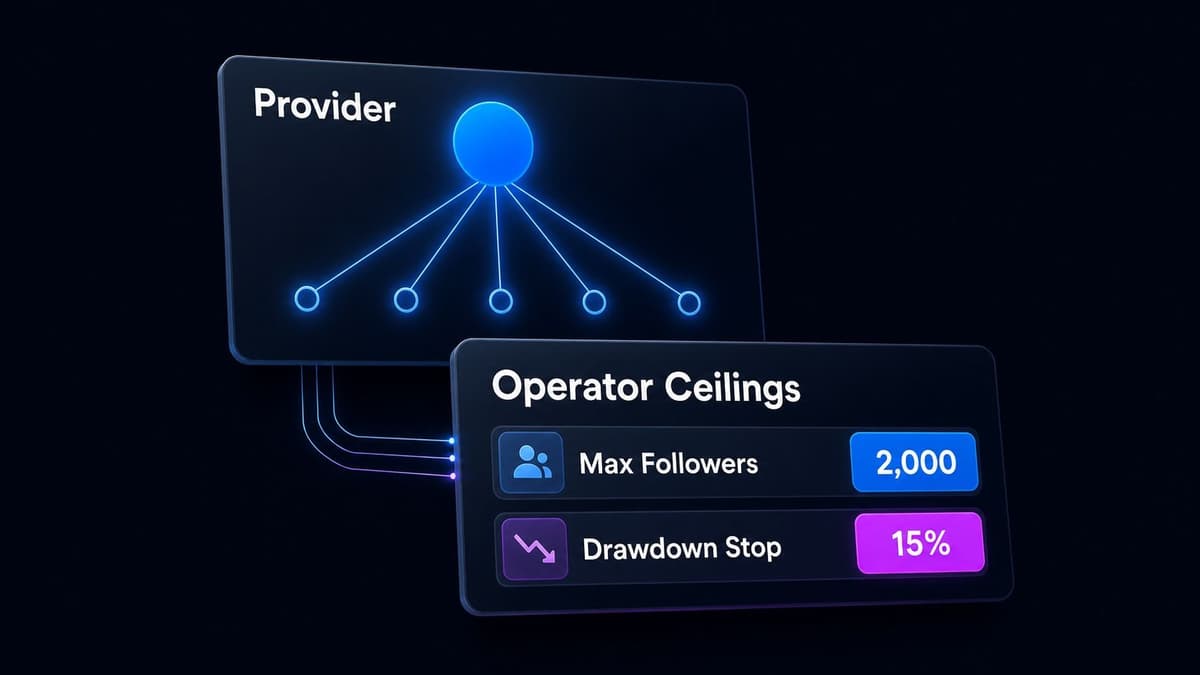
Copy, social and signal trading is one of five quant systems that share the same risk controls and the same execution path.


Copy, Social & Signal Trading FAQ
Copy trading on a crypto exchange works by mirroring a listed strategy provider's trades into the accounts of the users who follow them. When the provider opens or closes a position in their own account, the platform sizes an equivalent order for every follower using that follower's allocation method and caps, checks it against the operator's risk limits, and sends it to the matching engine. Coiny Exchange ships this as a module of the exchange, so copied orders execute on the same venue as everything else.
Copy trading mirrors a strategy provider's positions into a follower's account automatically; social trading shows what other users are doing and leaves the decision to the reader; signal trading executes trade instructions that arrive from an approved source rather than from a provider's own position. Coiny Exchange runs all three on one execution path, so an operator can enable any combination and apply the same allocation and risk limits to each.
Copy trading is added to a Coiny Exchange deployment as a module rather than a separate venue: it reads the accounts, markets and matching engine that already exist, so there is no second ledger and no external mirroring bridge. The operator configures which providers may be listed, the allocation and risk ceilings that apply to every follower, and the fee-share schedule, then exposes the marketplace in the trading interface and the mobile app.
Allocation and risk limits are applied before any copied order is generated, not after it fills. Each follower has an allocation, a per-trade cap, an open-position cap, a leverage cap and a drawdown stop, and each of those sits under an operator ceiling the follower can tighten but never loosen. When a signal would breach a limit, the platform clamps the order, skips it or stops copying entirely, and records which rule fired.
Signal ingestion accepts trade instructions over webhook or API from sources the operator has approved, normalises the symbol, side and size basis onto the venue's own markets, and discards duplicates and signals older than the age limit. Authorised signals then pass through the same allocation and risk checks as a copied trade before Coiny Exchange generates one child order per eligible subscriber and routes it to the matching engine.
Operators earn from copy trading in two ways: the trading fees on every copied order, which multiply because one provider action becomes many follower orders, and the fee-share schedule configured against each provider, which splits any performance or subscription fee between the provider and the platform. Coiny Exchange lets the operator set both per provider, and every accrual is recorded against the trade that produced it.
Provider figures are computed by the platform from fills executed on the operator's own venue over a window the operator defines, never self-reported by the provider and never imported from an outside leaderboard. The operator chooses which measures appear on a profile, sets a minimum history before a provider can be listed, and attaches the risk disclosure that every follower sees before copying starts. Past results are not indicative of future results.
No. Coiny Exchange supplies the software; the exchange operator runs the marketplace. The operator decides which providers are listed, approves or rejects applications, sets capacity and risk bands, writes the disclosures and owns the relationship with both providers and followers. Coiny Exchange does not select providers, does not operate a live provider marketplace of its own, and does not provide investment advice or recommendations to any end user.
Ready to Give Your Users Someone to Follow?
Walk through the marketplace, a provider profile, the copy settings a follower sees and the limit matrix behind them — and we will map the allocation ceilings and fee share to the markets you actually run.
Book a Demo