100+
Fiat currencies
100+ fiat currencies including USD, EUR, GBP, INR, NGN, BRL, TRY, VND, PHP, IDR and AED. Operators activate options per market, and each currency carries its own spread, limits and settlement.
USDEURGBPINR
The Fiat On-Ramp & Off-Ramp is white-label infrastructure for fiat-to-crypto and crypto-to-fiat flows via cards, bank transfers, and regional payment methods, with routing across integrated licensed payment providers. Your users buy and sell with the money they already have, inside your product, on your pricing — and every order is routed to the provider most likely to approve it.
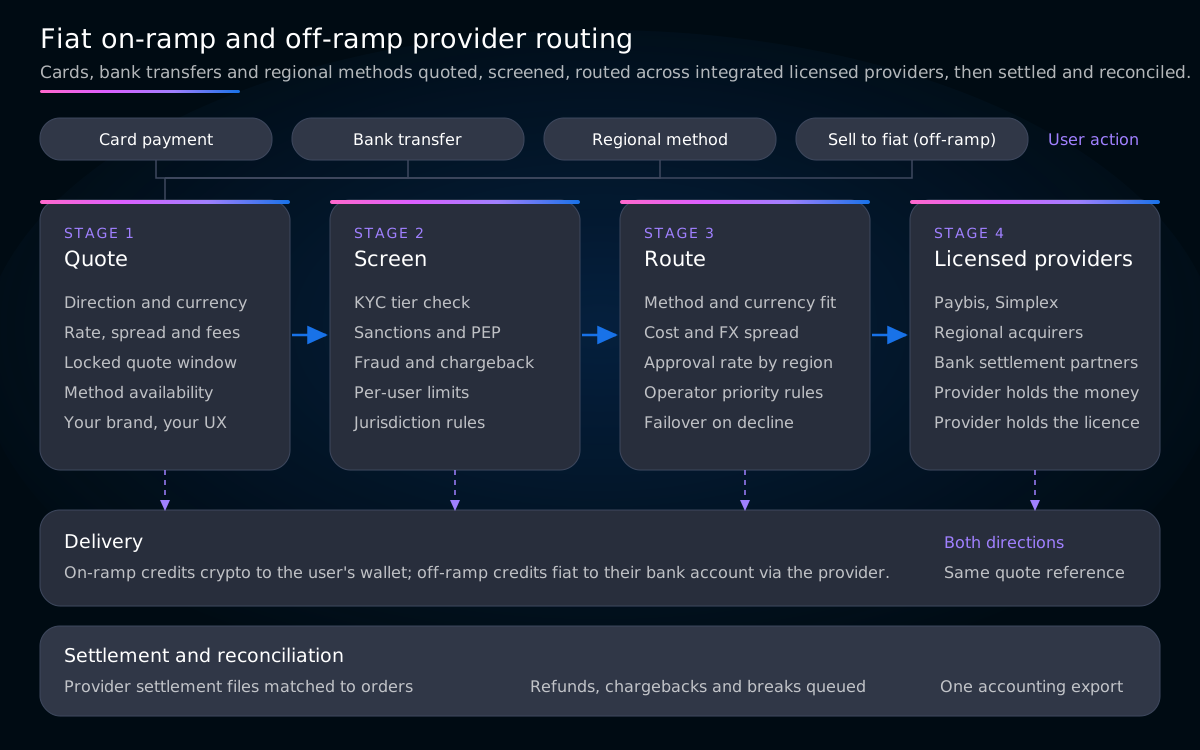
The full path a fiat order takes on your platform, in both directions — from the moment a user asks what a purchase will cost to the moment finance ties the provider's settlement file back to the order.
The user picks a direction, a fiat currency and a payment method you enabled for their market. The platform returns one quote — rate, your spread, provider fee and the amount that will arrive — and locks it.
Before money moves, the order is checked against the KYC tier reached, sanctions and PEP screening, fraud rules for the method, and the per-user caps you set per market. Tiers and limits are per jurisdiction.
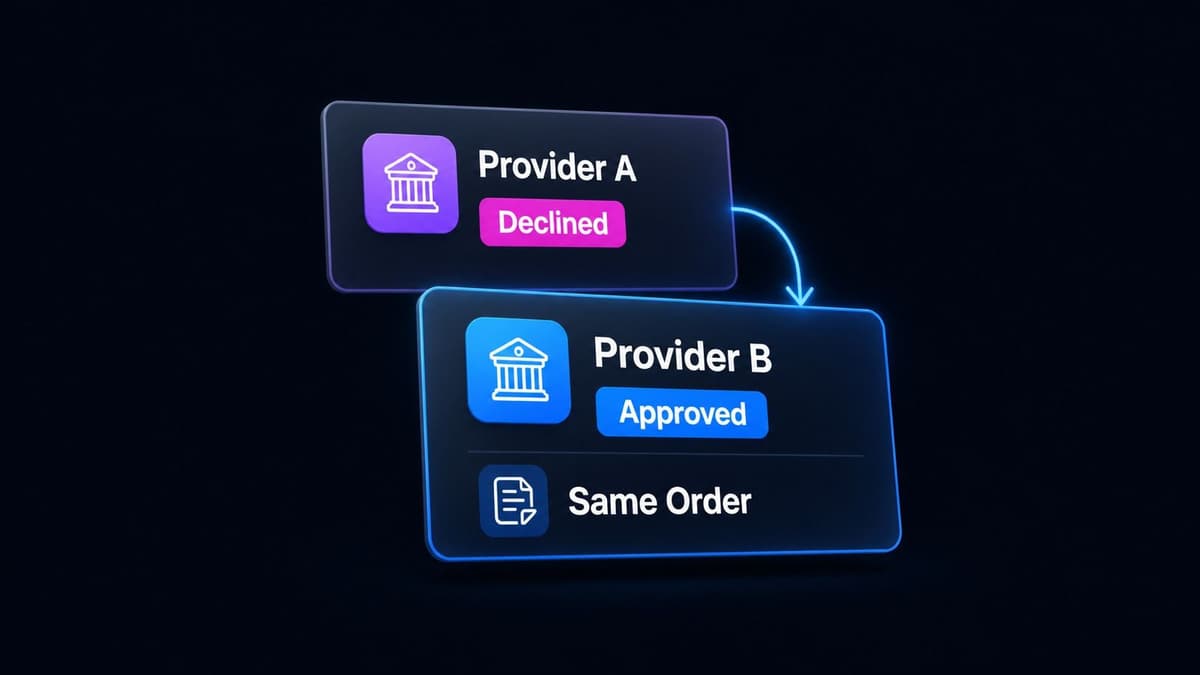
Routing narrows to providers that support the currency and method, applies your priority order, compares landed cost, and weighs outcomes recorded for that region. A decline fails over without the user restarting.
On the on-ramp, the purchased asset is credited to the wallet as soon as payment confirms at your depth. On the off-ramp, the sale settles and the payout goes to the provider paying the user’s bank account.
Each provider settlement file is matched back to the orders that produced it, line by line, so fees, spread, refunds and chargebacks land against the original order. Breaks are queued rather than absorbed.
Each stage below is a real subsystem in the deployment. Quoting, screening, routing and settlement each have their own controls, and the provider that executes the payment is chosen per order rather than fixed at integration time.
Most teams evaluating fiat rails are really choosing between dropping in someone else's checkout and owning the flow themselves. The conclusion of the table below: a widget is faster to switch on but hands the brand, the margin, the provider choice and the customer data to the vendor, while a white-label ramp keeps all four on your side and lets a declined order retry somewhere else.
| # | What you are deciding | Embedded third-party widget | White-label ramp on Coiny |
|---|---|---|---|
| 1 | Brand and interfaceWhat the user sees at the moment of payment | The vendor's checkout in a frameTheir logo, their flow, their support copy | Your product, end to endYour brand, copy, layout and domain |
| 2 | Customer relationshipWho the buyer thinks they transacted with | Shared with the widget vendorSupport tickets often leave your platform | Yours aloneYour support team sees the whole order |
| 3 | Provider choiceWho actually processes the payment | Fixed by the widgetOne provider, no visibility into selection | Several providers behind routingChosen per order on your rules |
| 4 | Pricing and marginWhere the spread on a purchase lands | Set by the vendorRevenue share at best | Set by you, per marketYour spread and fee schedule |
| 5 | Declines and coverage gapsWhat happens when one provider says no | The purchase failsThe user is asked to try again later | Failover to the next providerWithout restarting the order |
| 6 | Data and reconciliationWhat finance and analytics can see | A vendor report to importLimited order-level detail | Order-level records in your systemsOne reference from quote to export |
| 7 | Licensing of the money legWho is authorised to handle the funds | The widget vendor's providerTerms you do not negotiate | Integrated licensed payment providersProviders carry the licensing, not Coiny |
A ramp only converts when the currency, the method and the provider all line up for the user in front of it — so coverage is configured per market rather than shipped as one global default.
100+ fiat currencies including USD, EUR, GBP, INR, NGN, BRL, TRY, VND, PHP, IDR and AED. Operators activate options per market, and each currency carries its own spread, limits and settlement.
500+ regional and global methods, from card networks and SEPA, Faster Payments and ACH through to UPI, Pix, GCash and mobile money. You configure which appear per fiat currency.
Users in 180+ countries, with eligible methods, verification tiers and limits differing by jurisdiction. A market needing a new licensed provider takes one without changing your interface.
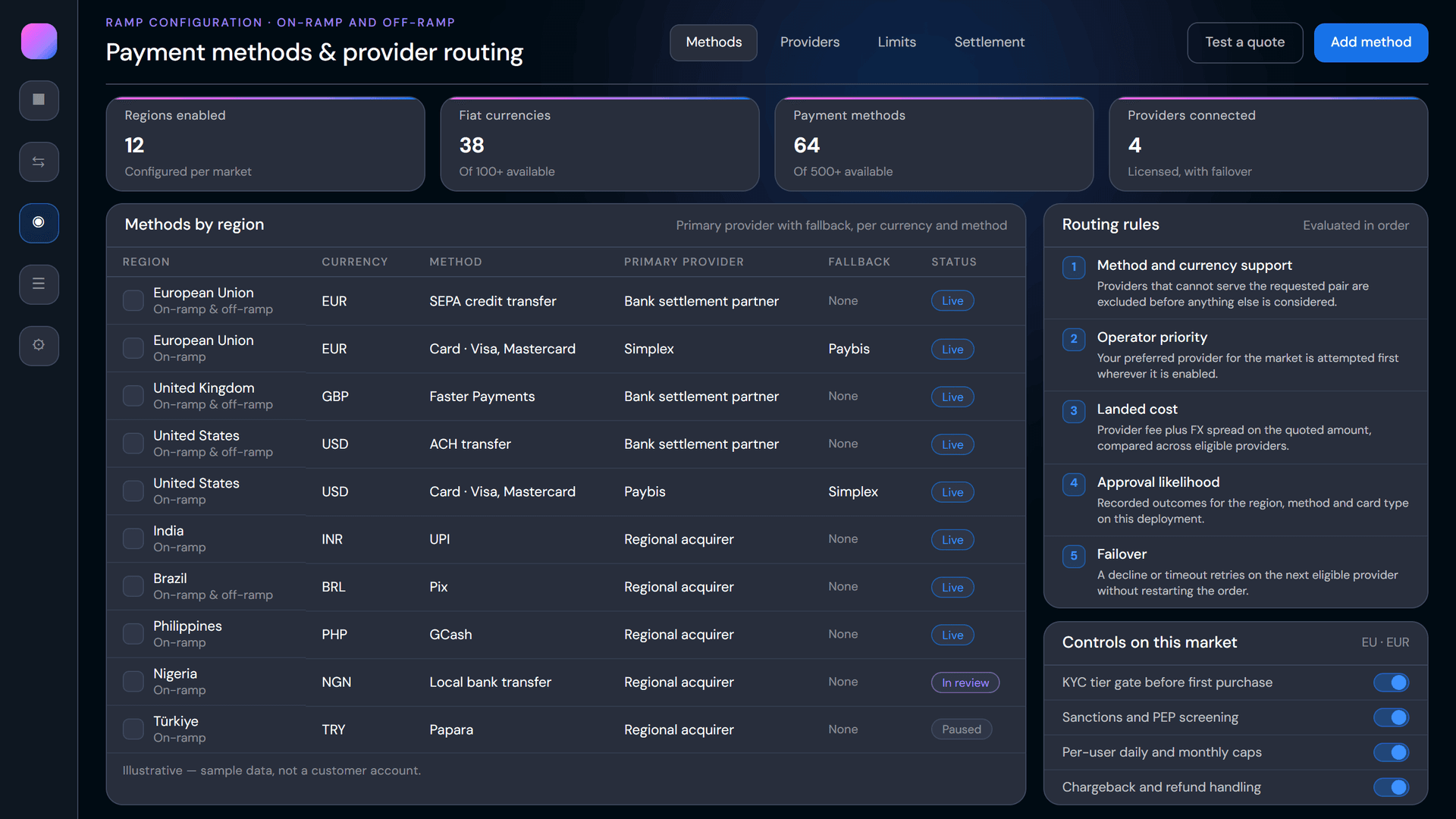
One console for the team that owns the ramp: which methods are live where, which provider takes them first, what happens on a decline, and which controls gate a first purchase.
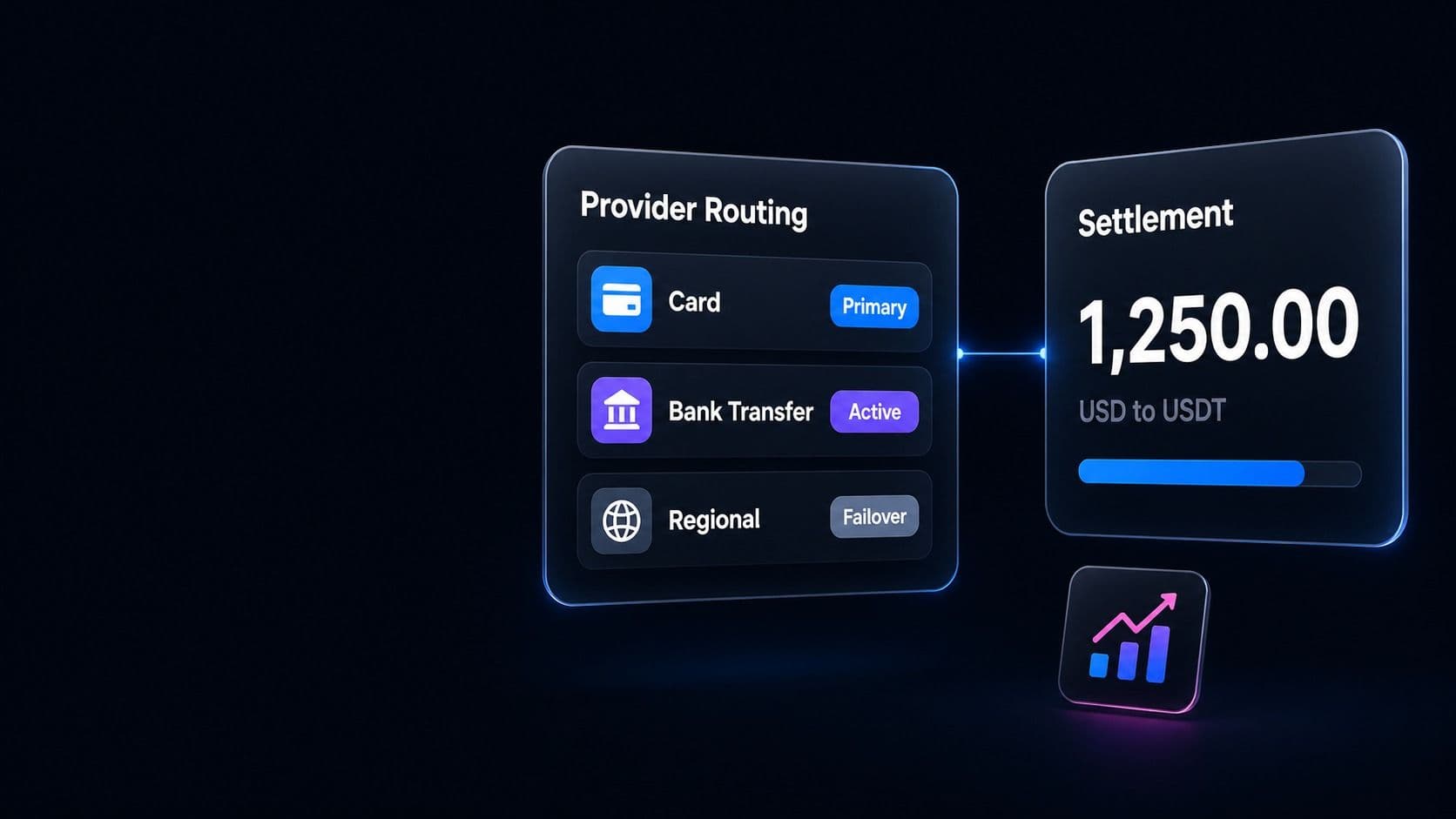
Provider routing is not one rule applied to everything. The conclusion of the matrix below: each rail is selected on different evidence and settles on a different clock, and in every case an integrated licensed payment provider — not Coiny — executes the money leg.
| # | Rail | How routing decides | Settlement and timing | Licensing and controls |
|---|---|---|---|---|
| 1 | Card on-rampDebit and credit, major networks | Approval likelihood for the region and card type, then landed costFailover on decline or timeout | Crypto credited on payment confirmationProvider settles to your account on its cycle | Card provider is the licensed processorFraud, 3-D Secure and chargeback rules apply |
| 2 | Bank transfer on-rampSEPA, Faster Payments, ACH and local rails | Currency and rail coverage first, then your priority orderOne provider per rail in most markets | Credited when the deposit is matched to the orderSame-day to a few business days by rail | Bank settlement partner holds the accountReference matching and unmatched-deposit queue |
| 3 | Regional payment methodUPI, Pix, GCash, mobile money and similar | Whether the method exists in that market at allRegional acquirer per country | Usually near-instant confirmationProvider settles in local currency | Regional acquirer holds the local licensingPer-market caps and tier gates |
| 4 | Crypto-to-fiat off-rampPayout to a bank account or local method | Destination country, currency and payout method supportCost and payout speed compared | Sale settles, then the payout instruction is sentArrival follows the destination rail's clock | Payout provider executes the bank settlementScreening and named-account checks first |
| 5 | Refunds and chargebacksMoney going back the way it came | Always returned through the original providerNever re-routed to a cheaper one | Booked against the original order referenceVisible in the same statement line | Provider dispute process, your evidence packCase opened automatically on notification |
Accepting a card is the easy half. What decides whether a ramp is worth owning is the quoting, the screening, the routing and the settlement trail sitting behind it.
One quote object covering rate, your spread, provider fee and the net amount that will arrive, locked for a window and identical in the interface, the API and the receipt.
Cards on the major networks, bank rails including SEPA, Faster Payments and ACH, and the regional methods a market uses — each enabled per currency and country, and pausable on its own.
Orders are matched to providers that can serve them, ordered by your priority rules, landed cost and recorded approval outcomes. Adding a provider is configuration, not a rebuild.
KYC tiers gate what a user may transact, sanctions and PEP screening runs before the money leg, and per-user caps apply per market. Every decision is logged with its reviewer.
Provider settlement files are matched to orders line by line, so fees, spread, refunds and chargebacks resolve against the order that caused them. Unmatched lines are queued.
Where settlement should stay digital rather than land in a bank account, the ramp hands off to the stablecoin payments and treasury layer. Fiat conversion is this page’s job.
REST endpoints for quotes, orders, limits and payouts, plus signed webhooks on every state change, with idempotency keys, scoped keys and an isolated test environment.
Fiat conversion is one rail among several. These are the products it connects to most often.
The buyer is usually whoever owns onboarding conversion and has watched users abandon at the moment they were asked to fund an account.
A way in that does not require users to already hold crypto elsewhere, and a way out that does not end at an unsupported withdrawal.
Embed buy and sell inside your own onboarding and wallet screens through the ramp APIs, rather than handing off to a third-party checkout.
Enter a country by switching on its currency, local methods and a provider that serves it, with tiers configured for that jurisdiction.
Settlement files matched line by line to orders, a queue for anything that does not reconcile, and one export carrying the quote reference.
A crypto fiat on-ramp is the flow that turns a user's ordinary money — a card payment, a bank transfer or a local payment method — into crypto credited to their wallet, and an off-ramp is the same flow in reverse, selling crypto and paying the proceeds into a bank account. Coiny Exchange deploys both as white-label infrastructure: your brand, your quote and fee rules, your interface, with the payment leg routed to integrated licensed payment providers.
Provider routing is the logic that decides which integrated payment provider handles a given fiat transaction instead of sending every order to one supplier. Coiny Exchange evaluates each order against the providers that support the currency and method, then your priority rules, the landed cost of provider fee plus foreign-exchange spread, and the outcomes recorded for that region and card type. A decline or timeout fails over to the next eligible provider without the user restarting.
An embedded ramp widget is a third-party checkout dropped into your product: the vendor owns the interface, the pricing, the single payment provider and the customer record. A white-label ramp is infrastructure you run under your own brand, with your quote and fee rules, several providers behind a routing layer and the transaction data in your own systems. Coiny Exchange deploys the white-label model, which is why declines can fail over and margin stays yours.
Users buy crypto with debit and credit cards on the major networks including Visa and Mastercard, with bank transfers such as SEPA, Faster Payments and ACH, and with the regional methods their market actually uses — UPI, Pix, GCash, mobile money and local bank rails among them. The Coiny Exchange platform supports 100+ fiat currencies and 500+ payment methods, and the operator switches on the subset that suits each market.
A crypto-to-fiat off-ramp sells the user's crypto at a quoted rate, then pays the fiat proceeds out through a payment provider to the bank account or local method the user has verified. On Coiny Exchange the sale, the quote lock and the payout instruction all carry one reference, screening and limits apply before the instruction leaves, and the bank settlement itself is executed by an integrated licensed payment provider.
Fiat ramp transactions are reconciled by matching each provider's settlement file back to the orders that produced it, line by line, so fees, foreign-exchange spread, refunds and chargebacks land against the original order rather than in an unexplained balance. Coiny Exchange keeps one reference from quote through provider settlement to ledger entry, queues anything that does not match for review, and exports the result to your accounting system.
The integrated payment providers are. Coiny Exchange supplies the ramp software — quoting, verification, routing, delivery, settlement reporting and the branded interface — and is not a bank, a payment institution, a money transmitter or a licensed custodian. Each fiat leg is executed by a provider that holds the money-service licensing in that market, and Coiny's compliance infrastructure is built to support the operator's own licensing process rather than replace it.
Walk through a live deployment — a branded quote with your spread, a tier check and screening, routing across providers with a decline failing over, delivery to a wallet and to a bank account, and the settlement file reconciled back to the order.
Book a Demo