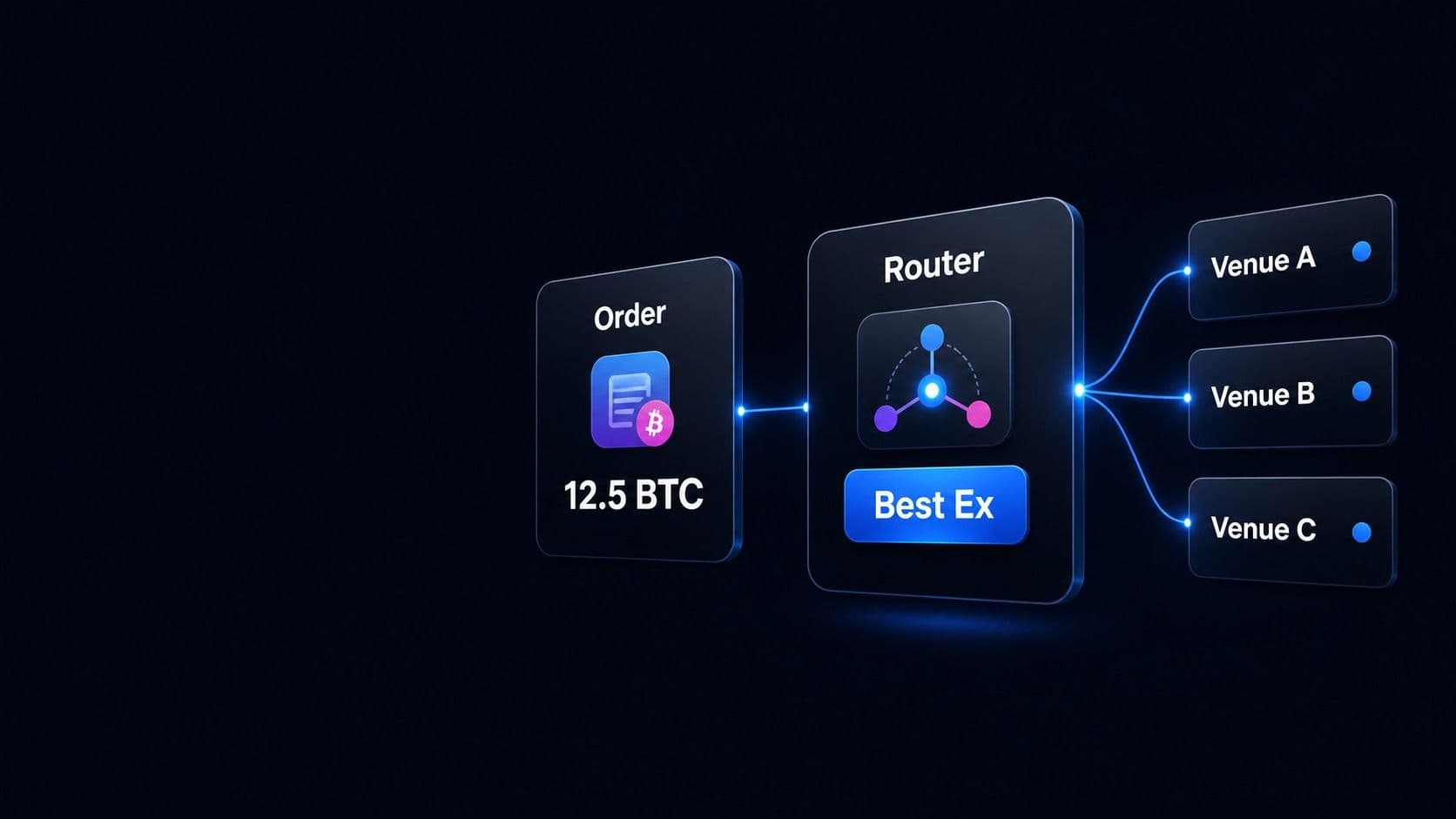
TRADING & EXECUTION

Crypto Trading Infrastructure, Assembled as One Stack

Eight systems, one matching and risk core, one set of operator limits. This page is the map rather than the manual: what each system does, which one matches the job in front of you, and where they hand off to each other.

Eightsystems
Onematching core
Multi-venuerouting
Audit-readyevery action
THE STACK

Every System in the Stack, and the Job It Does

Eight products, deployable individually or together on the same core. Each card is a full page of its own — open the one that matches the job you have, and use the table underneath to tell two of them apart.

MARKETS

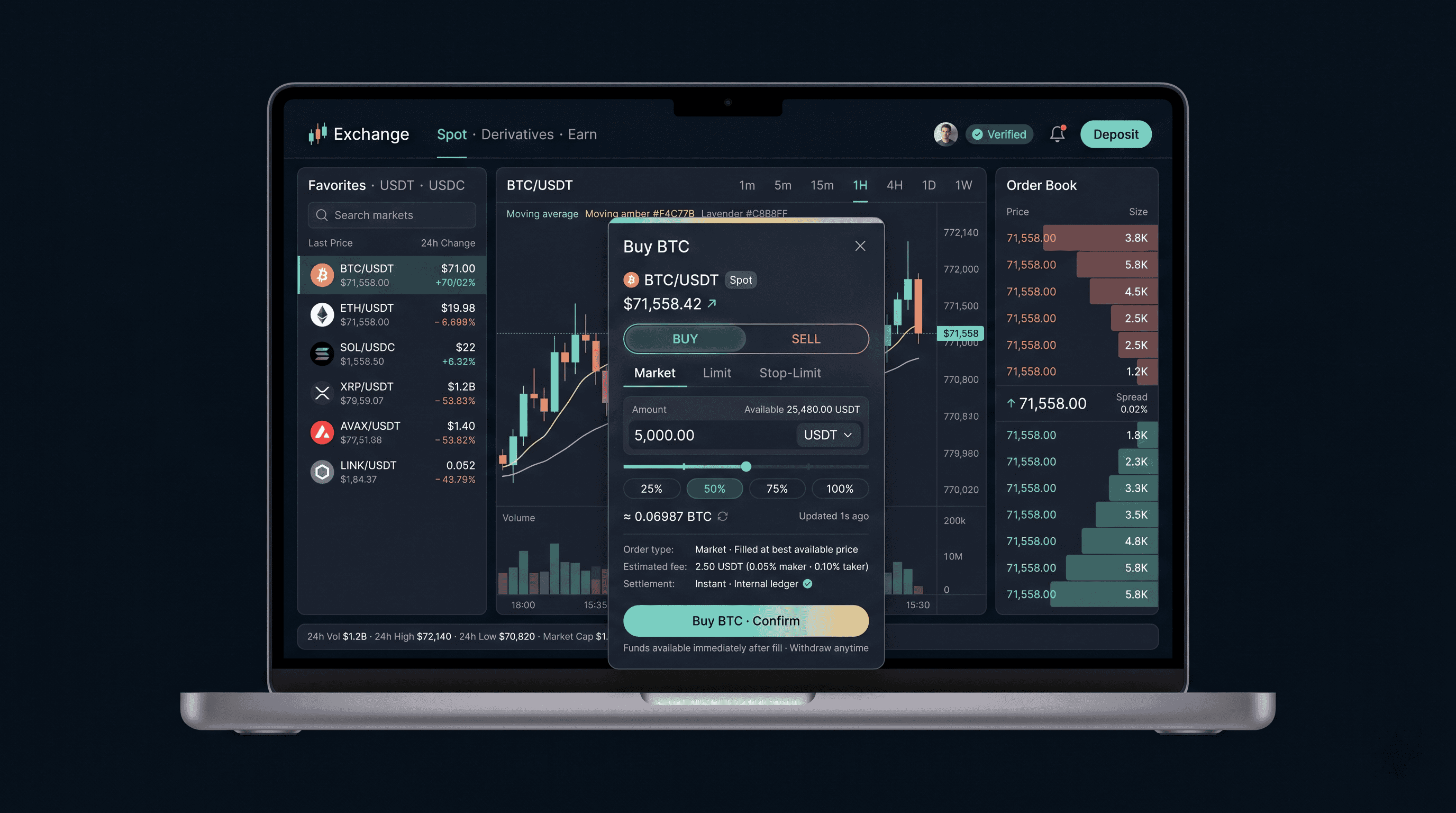
Spot Trading Platform

The foundation layer of every exchange: order books, fiat gateway, instant convert and asset-listing governance on an engine that settles as it matches. Start here when the first job is letting people trade.

  • 500+ spot pairs with instant settlement
  • Sub-millisecond matching engine
  • Fiat gateway and asset listing governance
Learn more
Laptop spot exchange with market watchlist, price chart, order book and an open market buy ticket
MARKETS

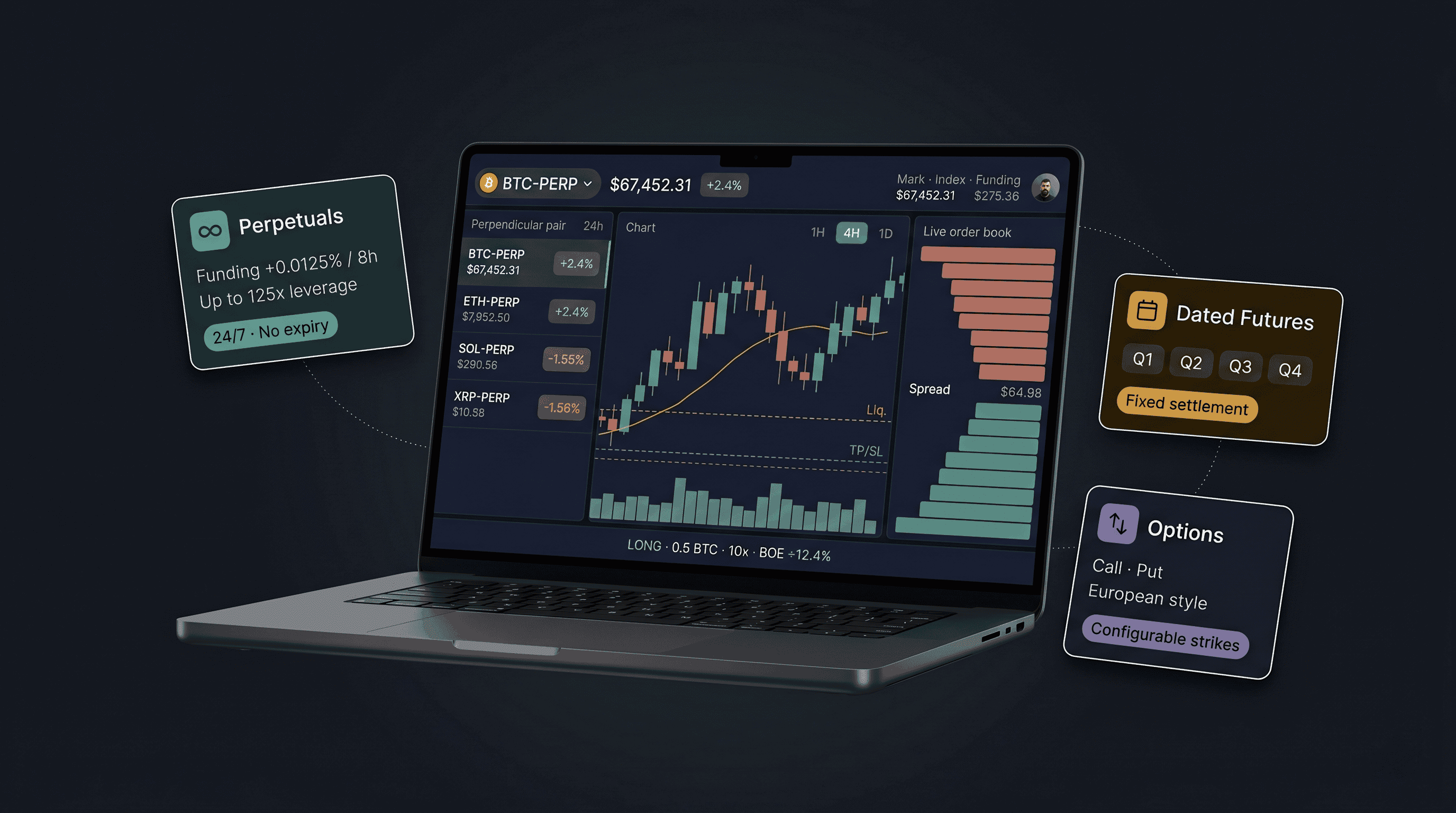
Derivatives Trading Platform

Perpetual contracts, dated futures and options on one matching engine, with configurable leverage, a unified risk engine, clearing-house mechanics, multi-source oracle pricing and insurance-fund-backed defaults.

  • Perpetuals, futures and options on one engine
  • Configurable leverage up to 125x
  • Insurance fund and transparent ADL mechanics
Learn more
Laptop derivatives terminal with a perpetuals order book, plus callouts for dated futures and options
DEPTH, MANAGED

Crypto Exchange Liquidity Solutions

Aggregated depth from multiple tier-1 venues, proprietary AMM bots, smart order routing and an STP agency model — the cold-start problem solved. Liquidity delivered as a service rather than operated by you.

  • Aggregated depth from multiple tier-1 venues
  • Smart order routing and STP agency model
  • Real depth on every listed pair from day one
Learn more
Monitor and phone showing a bid and ask order ladder beside a glowing market depth curve
AUTOMATION

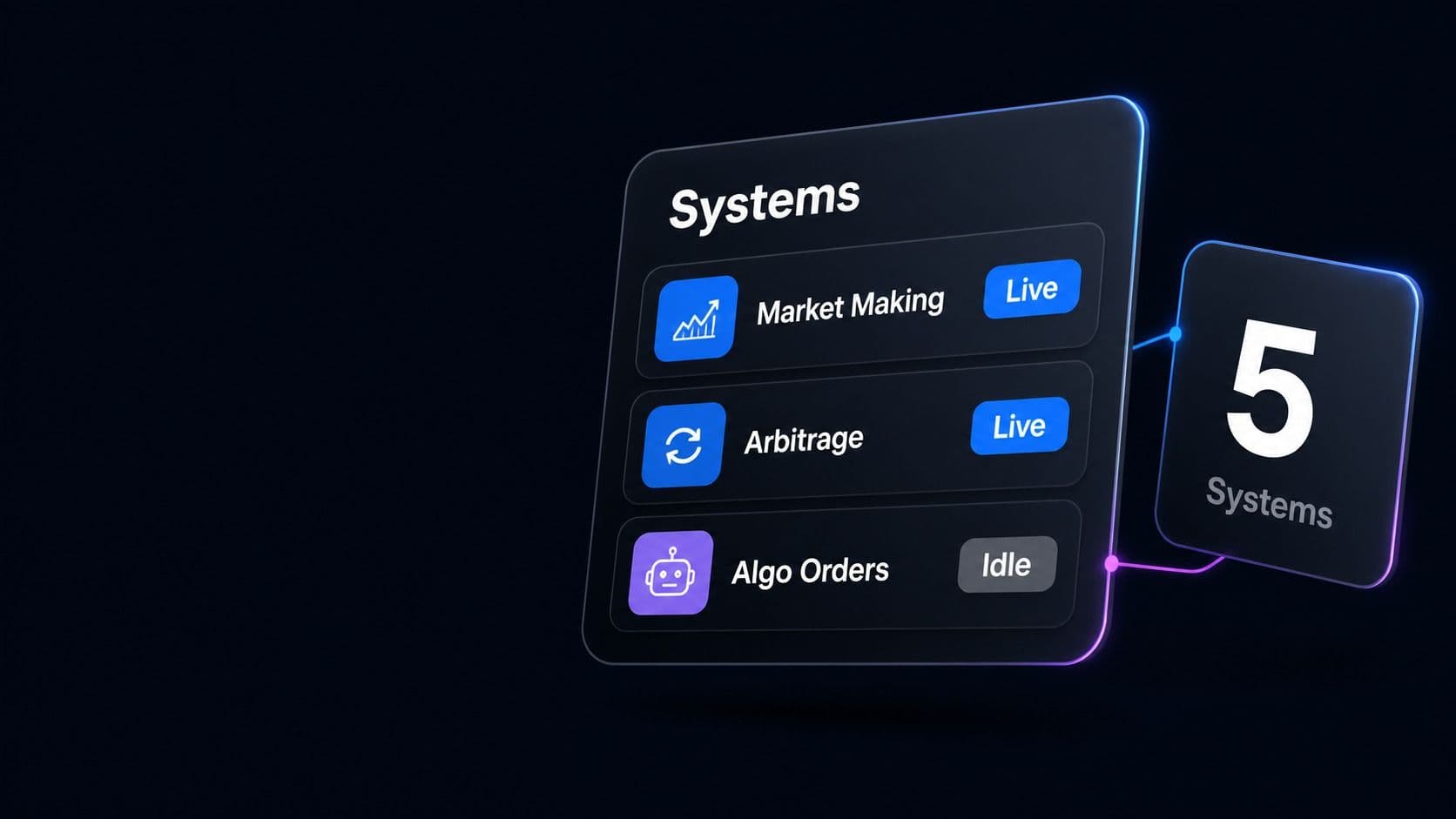
Quant Trading Systems

Five deployable systems on one execution core: automated strategies, continuous quoting, copy trading, execution algorithms and research infrastructure, all under shared risk controls. A sub-hub in its own right.

  • Five systems, one set of operator limits
  • Configurable software your own team runs
  • White-label for your users or your desk
Learn more
A systems card with market making and arbitrage live and algo orders idle
INSTITUTIONAL

OMS/EMS & Multi-Venue Execution

An institutional order and execution management system: blotter, pre-trade risk controls, multi-venue routing, post-trade allocation and reporting. The layer that manages orders on behalf of accounts.

  • Real-time blotter and order lifecycle
  • Pre-trade controls before an order leaves
  • Post-trade allocation and reporting
Learn more
Institutional order blotter composition on a dark dashboard
TOKENIZED MARKETS

RWA Trading Infrastructure

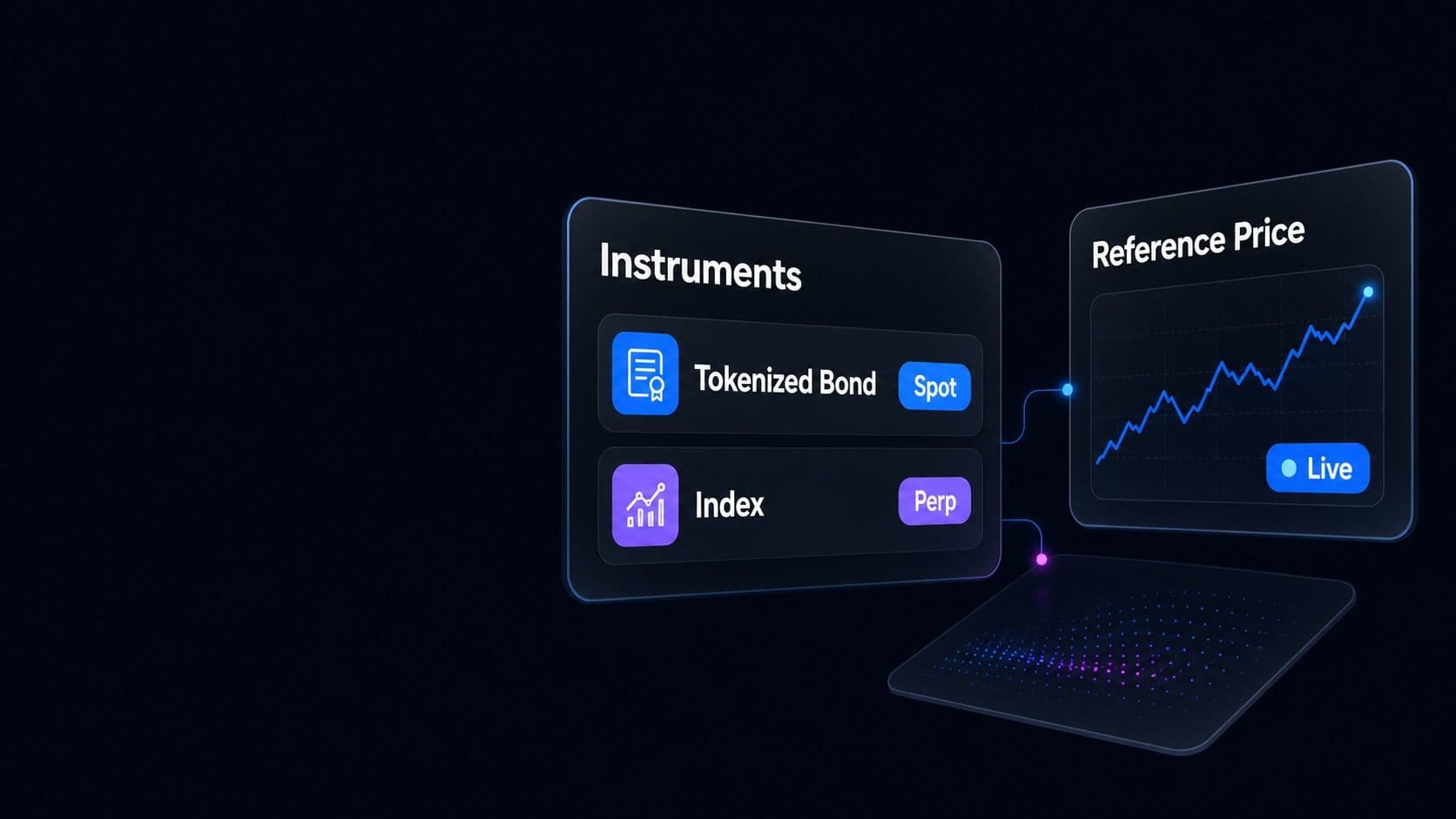
Spot and perpetual markets, market data, liquidity and risk controls for tokenized real-world assets an issuer has created. Coiny supplies the venue layer, never the asset itself.

  • Spot and perpetual markets on issued tokens
  • Instrument configuration and reference pricing
  • Trading infrastructure only, never issuance
Learn more
An instruments card with a tokenized bond spot market and an index perpetual, beside a live reference price
CONVERSION

Instant Swap Engine

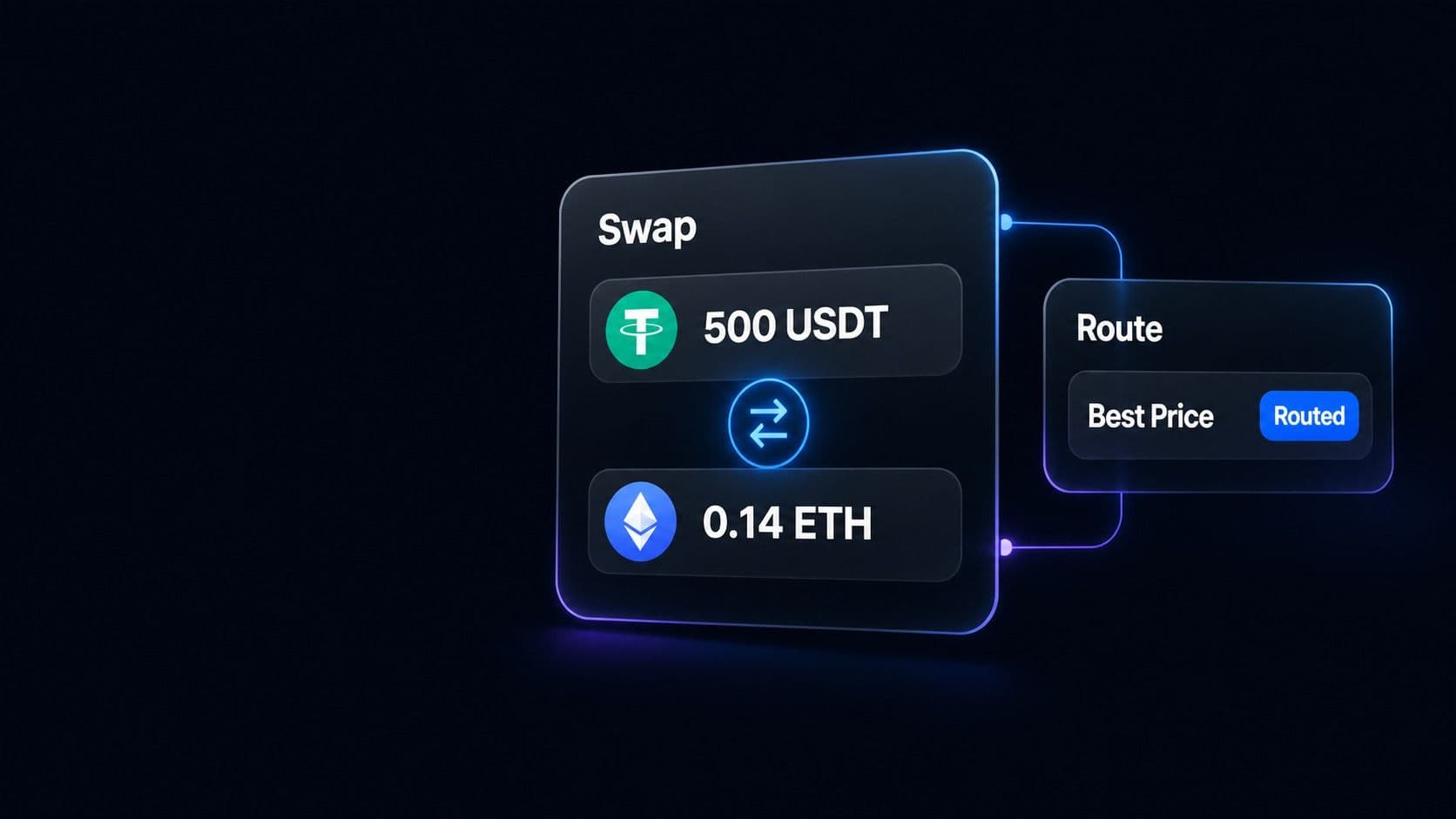
One-action conversion between two assets: smart routing across internal and aggregated liquidity, one net rate on screen, slippage controls and MEV protection. The simplest surface in the stack.

  • One net rate, one confirmation
  • Smart routing with slippage controls
  • Embeddable in exchanges and wallets
Learn more
A swap card converting 500 USDT to 0.14 ETH, beside a route card marked best price
EXECUTION QUALITY

Execution Analytics & TCA

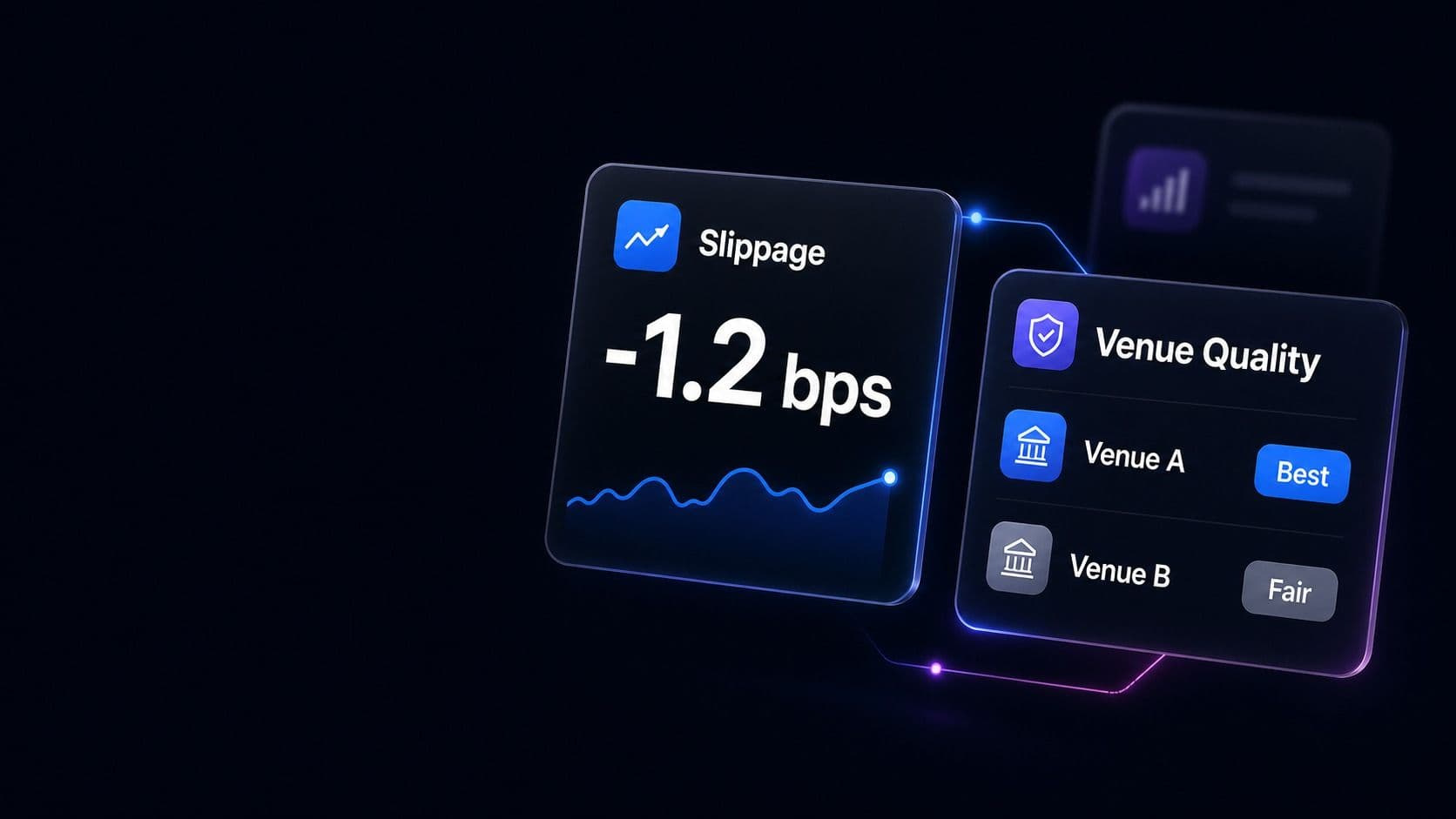
Execution quality measured rather than assumed: predicted slippage and fill probability before an order is sent, a recommended venue and tactic, then transaction cost analysis against the benchmark.

  • Pre-trade slippage and fill-probability forecasts
  • Venue and tactic recommendations
  • Post-trade transaction cost analysis
Learn more
A slippage reading of minus 1.2 basis points beside a venue quality comparison
ARCHITECTURE

Where Each System Sits in the Platform

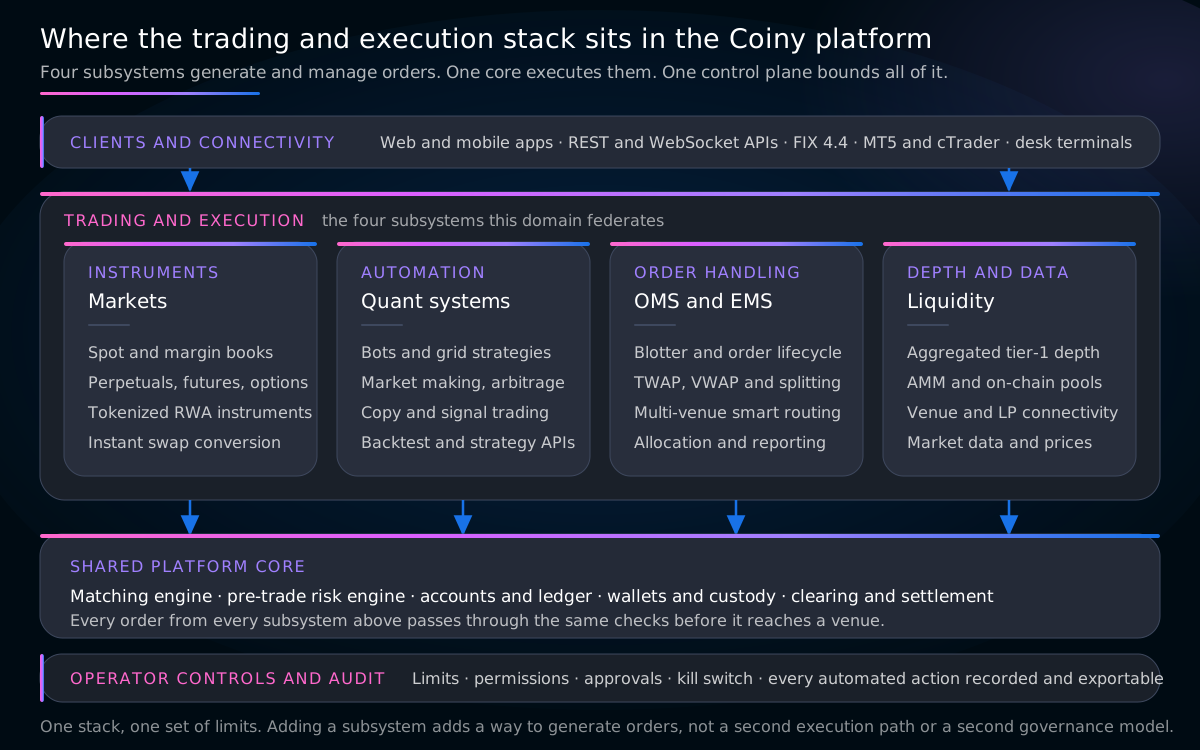
Four subsystems generate and manage orders. One core executes them. One control plane bounds all of it.

Diagram: Coiny platform architecture with trading and execution subsystems highlighted, showing clients and connectivity feeding markets, quant systems, order management and liquidity onto one shared platform core with operator controls and an audit trail

Clients arrive over web and mobile, REST and WebSocket, FIX 4.4 or MT5 and cTrader bridges. Four subsystems do different jobs — markets hold the instruments, quant systems generate orders, the OMS and EMS manage them, and liquidity supplies the depth. Every order lands on one matching engine, one risk engine and one control plane.

CHOOSING A SYSTEM

Which System Does Which Job

Nothing here competes with anything else on the page — each column answers a different question. Need a venue for people to trade on, and it is the markets. Need that venue to have depth on day one, and it is liquidity. Need orders generated from a rule, and it is the quant systems. Need orders managed on behalf of accounts across venues, and it is the OMS and EMS. Need one asset turned into another with no decisions attached, and it is instant swap. Tokenized real-world assets ride on the markets column, with their own instrument configuration.

#Compared onMarketsLiquidityQuant systemsOMS and EMSInstant swap
1The job it doesRuns the venue your users trade onPuts real depth in that venue from day oneGenerates orders automatically from a ruleManages orders placed on behalf of accountsConverts one asset into another in one action
2Who operates itYour exchange operations teamCoiny, delivered to you as a running serviceYour desk, or your users inside your limitsYour trading desk and middle officeNobody — it runs behind a single screen
3What the operator configuresPairs, fees, leverage caps, listing governanceCoverage, spread targets and routing policyStrategies, parameter ranges, per-tier visibilityRisk limits, venue set, allocation and reporting rulesAsset set, spread and the slippage ceiling
4Who usually buys itAn operator launching or widening an exchangeAny venue without organic depth yetA desk or exchange adding automationAn institutional desk trading across venuesA wallet or app embedding conversion
5Can it be deployed aloneYes; it is the base the rest attaches toYes, onto a Coiny venue or one you already runYes, onto the shared execution coreYes, inside your own infrastructureYes, embedded in another product entirely
ONE LEVEL DOWN

Five Ways to Automate an Order

The automation card above opens onto a sub-hub of its own. If you already know which engine you need, go straight to it.

algorithmic trading platform & bots

Ready-made and custom bots — including grid strategies — inside a risk-controlled engine with live monitoring, P&L and kill-switch controls, published to your users under your own brand.

market-making & arbitrage engines

Configurable engines that quote two-sided markets with spread and inventory controls, hedge automatically, and run cross-venue, cross-market and triangular arbitrage on your own accounts.

copy, social & signal trading

Lets your users follow strategy providers, mirror their trades inside allocation and risk limits, and execute external signals automatically, on the accounts and matching engine you already run.

smart execution & portfolio automation

TWAP, VWAP, smart order routing and large-order splitting, plus portfolio rebalancing with a cost preview and human approval before anything is sent.

backtesting, research & strategy APIs

Research infrastructure for testing strategies on historical market data, including walk-forward and robustness analysis, and deploying the tested version through the same APIs.

OPERATOR CONCERNS

What Buyers Ask Before Consolidating a Trading Stack

A trading stack is approved on how it behaves at the edges — what happens when you only want part of it, when you already own a piece, and when something goes wrong at three in the morning.

  • Do we have to take the whole stack?No. Every system on this page deploys on its own and connects to the others when you add them. Most operators start with the venue and its liquidity, then add automation and order management as volume justifies the operational cost of running them.
  • We already run a matching engine. Can we use only part of this?Yes. The liquidity service, the quant systems and the OMS/EMS all connect outward over REST and WebSocket APIs, FIX 4.4, and MT5 and cTrader bridges, so they can sit in front of infrastructure you already own rather than replacing it.
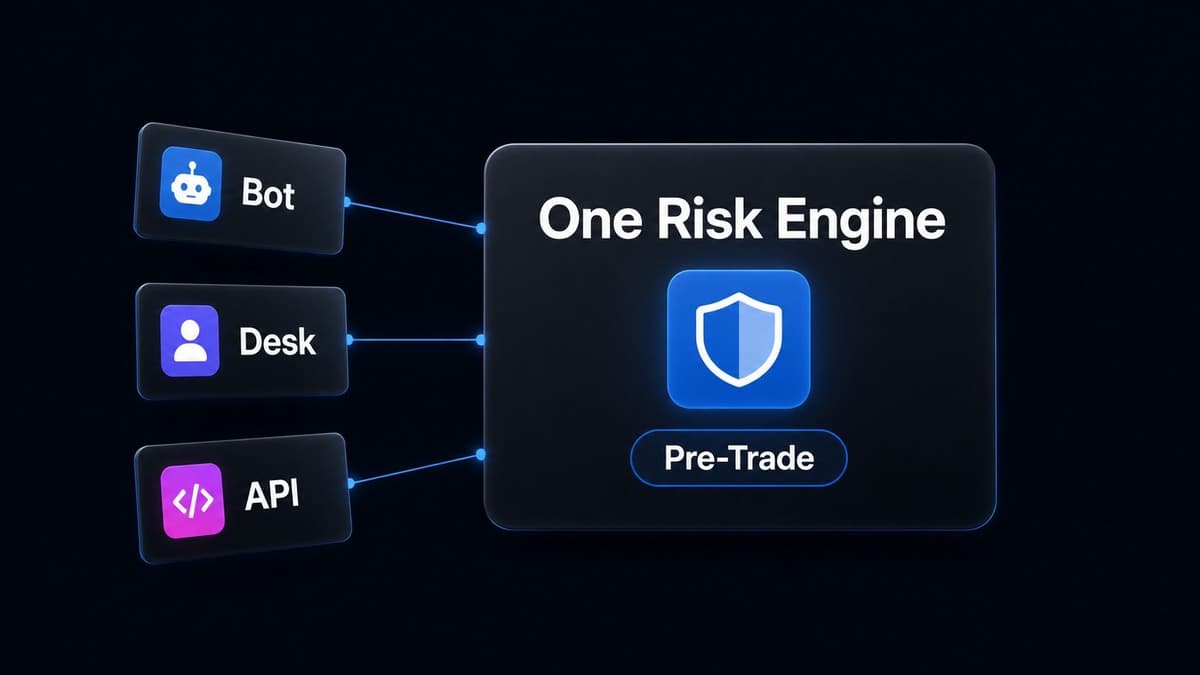
  • How many risk models are we signing up to run?One. Every order — from a market, a bot, a quoting engine, a copied trade or an algo slice — passes through the same pre-trade risk engine before it reaches a venue. Limits, permissions and the kill switch are set once and apply across all eight systems.
  • Which of these do you operate, and which do we?Liquidity is the one we run for you as a deployed service. Everything else is software your team operates: your parameters, your accounts, your limits, your audit trail. That boundary is deliberate, and it is the single most common source of confusion when comparing vendors.
  • Can all of it run under our own brand?Yes. The markets, the trading interfaces, the automation tools and the swap screen deploy white-label on your own domain with no third-party attribution, and you decide per account tier which systems and which parameters your users ever see.
Book a Demo
CONNECTED STACK

What the Trading Stack Plugs Into

Trading is one domain inside a larger platform. These are the neighbours it exchanges orders, identities, assets and measurements with.

execution analytics & TCA

The measurement side of the same order flow: predicted slippage and fill probability before a trade, achieved execution quality after it.

compare crypto exchange platforms

The venues this stack trades on: centralized, decentralized, a dedicated DEX chain, P2P and mobile. Compare the models before you decide which markets to run.

integration catalogue: FIX, MT5, cTrader & more

The connectivity layer underneath: FIX 4.4 sessions, MT5 and cTrader bridges, liquidity providers, payment, custody and compliance vendors, pre-integrated with every platform Coiny deploys.

risk & compliance infrastructure

Exchange security, AML/KYC/KYT, trade surveillance and token due diligence, pre-integrated with the trading platform so market conduct and financial-crime obligations are covered by the same deployment.

AI trading intelligence

The intelligence layer applied across research, strategy, execution, portfolio analysis and operations, under operator-controlled approvals — the same platform this trading stack runs on.

COMMON QUESTIONS

Common Questions About Crypto Trading Infrastructure

Crypto trading infrastructure is the software a business needs to run digital-asset markets: a matching engine and order books, market data, liquidity, risk controls, and the systems that place and manage orders against them. Coiny Exchange supplies all of it as one deployable stack — spot and derivatives engines, quant systems, aggregated liquidity, order and execution management, tokenized real-world asset markets, and instant swap — rather than as separate products a team has to integrate itself.

Build the part that is genuinely your differentiator and buy the rest. In practice the differentiator is the market a business serves or the strategy it trades, and almost never the plumbing underneath: matching, venue connectivity, the pre-trade risk layer, market data and the audit record. Coiny Exchange supplies that plumbing as deployed software, and still lets a desk run its own strategies on top of it through the strategy APIs.

Yes. Each system in the Coiny Exchange trading and execution stack deploys on its own and connects to the others as you add them. A common path is to launch spot markets with managed liquidity, add derivatives once volume supports the risk machinery, then layer automation and order management as the desk grows. Nothing has to be torn out later, because every system already shares one matching and risk core.

Yes. Coiny Exchange delivers the trading and execution stack white-label, so the markets, the trading interfaces, the automation tools and the swap screen all appear as your own product, on your own domain, with no third-party attribution. You decide which systems your users can see, which parameters they may change, and which are reserved for your own desk, and each of those is set per account tier.

Coiny Exchange connects outward through REST and WebSocket APIs, FIX 4.4, and MT5 and cTrader bridges, so an existing desk, terminal or venue relationship keeps working. Aggregated liquidity is drawn from multiple tier-1 venues, and multi-venue routing sends an order to whichever connected venue offers the best result inside the limits you set. Existing accounts and custody arrangements are connected rather than replaced.

Managed liquidity is a service Coiny Exchange deploys for you: aggregated depth from multiple tier-1 venues, routing and an STP agency model, so a new venue has real depth from day one without a desk to run it. Market-making and arbitrage engines are software you operate yourself, with your own spread, inventory and hedging parameters. Most operators start with the managed service and add the engines once they have a desk to run them.

BUILD THE STACK

Ready to Assemble Your Trading Stack?

Bring the markets you intend to run and the desk you have to run them. We will walk the eight systems against that — which ones you need on day one, which can wait, what your operators would configure, and what the whole thing looks like deployed under your brand.

Book a Demo