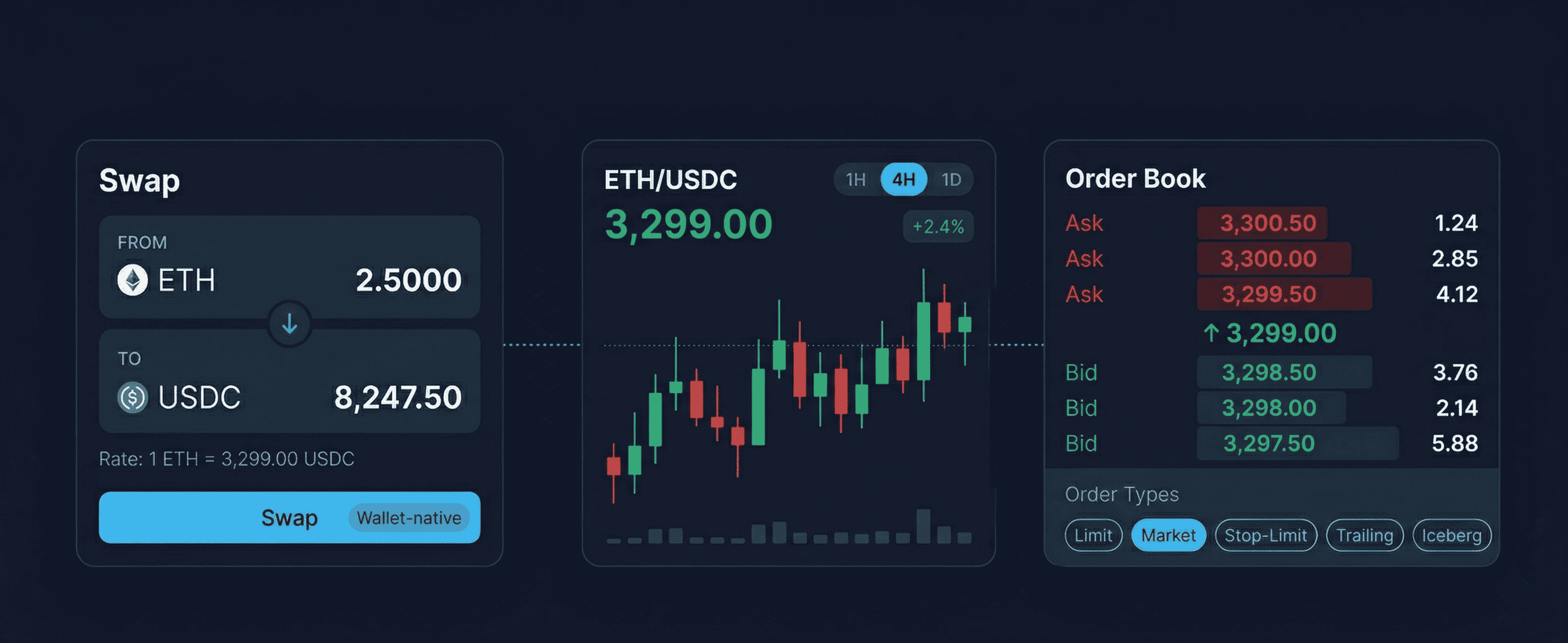
Spot Swaps
Direct asset-to-asset swaps routed across aggregated AMM pools and order book liquidity. Instant settlement, deep depth, and advanced order types — limit, market, stop-limit, trailing stop, and iceberg.
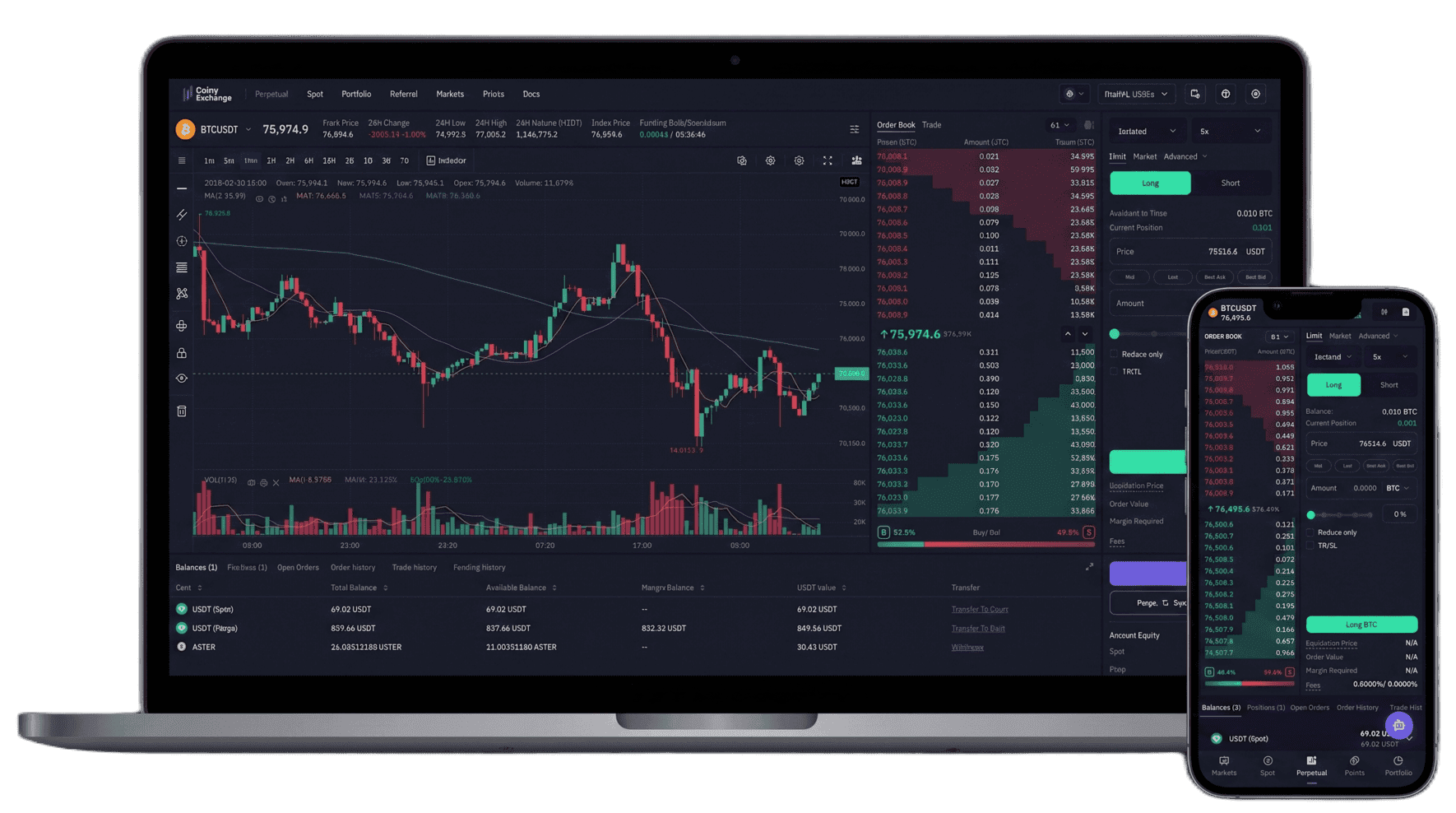
Execute spot swaps, deploy perpetual strategies, and access deep cross-chain liquidity — all settled noncustodially from your users' wallets. No intermediaries. No centralized chokepoints. No permission required.
Provide your users access to the entire decentralized economy from day one. Our protocol connects seamlessly across every major chain and wallet—so you can launch globally without building a single integration yourself.
Direct asset-to-asset swaps routed across aggregated AMM pools and order book liquidity. Instant settlement, deep depth, and advanced order types — limit, market, stop-limit, trailing stop, and iceberg.
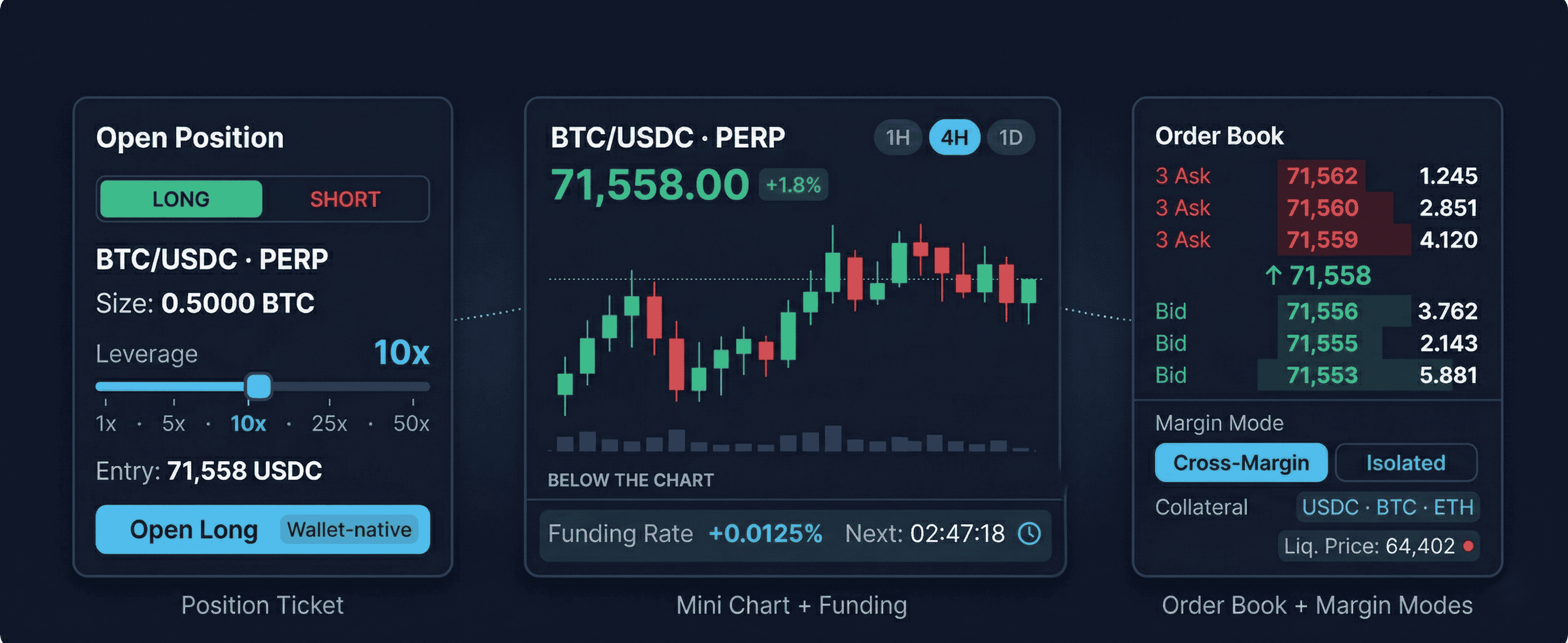
Perpetual contracts with no expiry, flexible leverage, and transparent funding rate mechanics. Cross-margin and isolated-margin modes with diversified collateral support.
Wallet-native onboarding, bridgeless multi-chain execution, MEV-resistant routing, and noncustodial settlement — unified under one protocol layer. This is mission-critical exchange infrastructure, not a swap UI bolted onto an AMM.

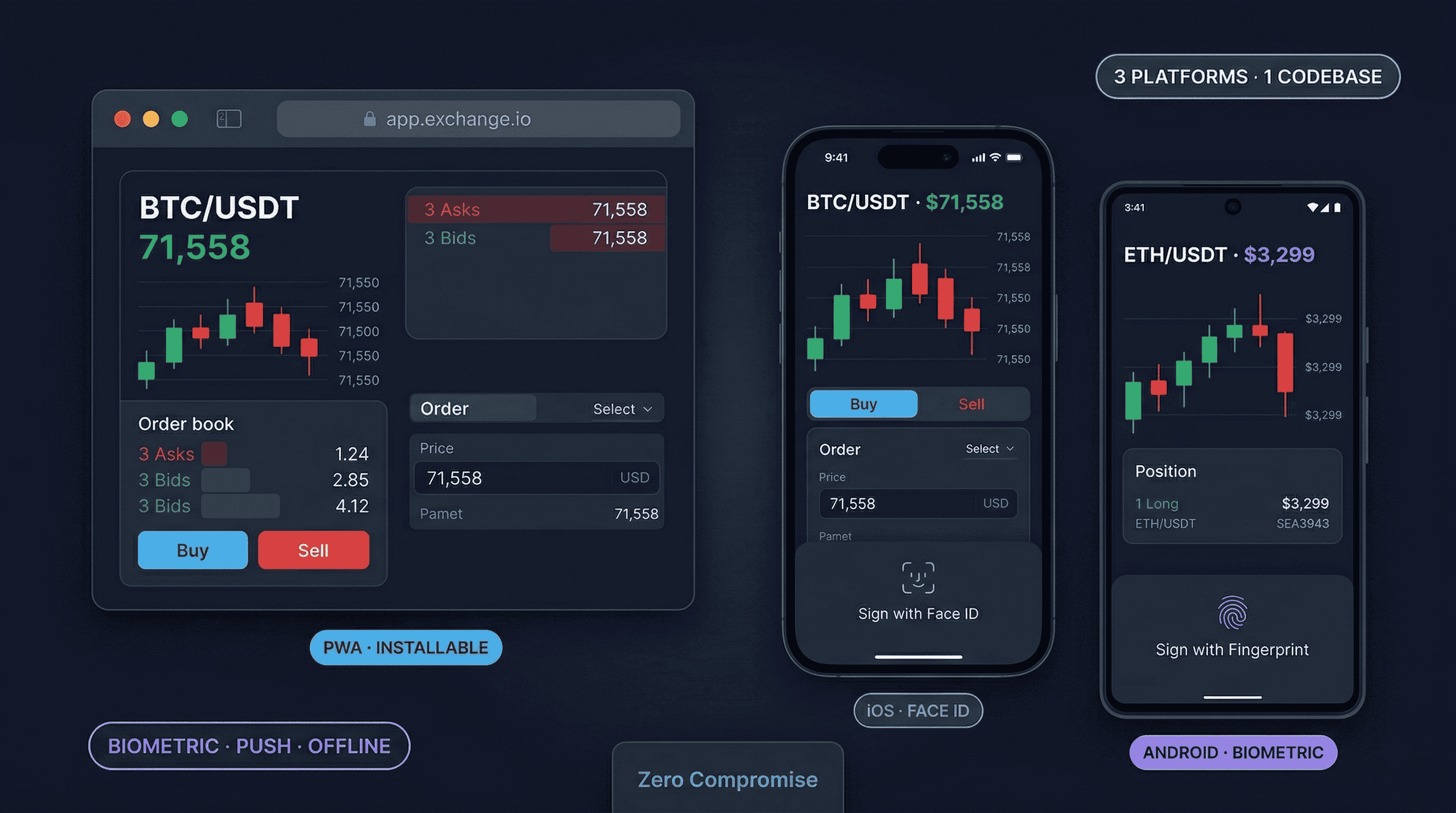
500+ wallets — MetaMask, WalletConnect v2, Phantom, Rabby, Trust, Coinbase Wallet, and hardware signers (Ledger, Trezor). Zero accounts. Zero KYC. Connect and trade in one signature.
Onboarding is a single signature away. No account creation, no KYC gate, no email verification loop. The protocol meets every trader exactly where their keys already live.

Supports 500+ wallets including MetaMask, WalletConnect v2, Phantom, and Ledger/Trezor for secure cold storage.

ERC-4337 smart wallets, passkey signers, and session keys enable one-click trading while maintaining full self-custody and seamless security.

Single wallet connection resolves identity across all supported chains, allowing users to switch networks without reconnecting or re-signing.

No sign-ups, passwords, or custodial database; the wallet itself acts as the user account, giving full control and simplifying access.
The protocol natively processes settlements across all major L1 and L2 networks.
| 1 | Deposits from any supported chain resolve at the protocol level — no manual bridging, no intermediary custody, no confirmation delays | Atomic Settlement |
|---|---|---|
| 2 | Eliminating external bridge dependencies removes the single largest attack vector in DeFi. Assets never pass through exploitable middleware | Bridge-Free Security |
| 3 | Ethereum, Solana, Arbitrum, Optimism, Base, Polygon, BNB Chain, Avalanche, zkSync, Sui, Aptos, and an expanding integration roadmap — unified under one trading interface | 50+ Network Coverage |
| 4 | Order flow aggregates across every connected chain rather than fragmenting into siloed, chain-specific pools | Unified Liquidity Access |
The platform never takes custody of user funds. Every trade, settlement, and withdrawal operates through audited smart contracts and user-controlled signatures — shielded from extractive actors at every layer of the execution path.
Private order flow, encrypted mempool submission and anti-sandwich routing neutralise front-running and back-running.
All core protocol contracts audited by independent third-party security firms with published reports.
Funds remain in user wallets until the exact moment of settlement. No hot wallet exposure. No centralized honeypot.
Protocol upgrades and parameter changes require multi-sig approval from distributed keyholders.
Enterprise-grade infrastructure protection ensures platform availability during volumetric attacks and abnormal traffic spikes.
The platform holds no user keys and no pooled balances, so there is no operator wallet for an attacker to reach in the first place.
Liquidity sourced from on-chain AMMs, professional market makers, cross-chain networks, and prime-of-prime layers.
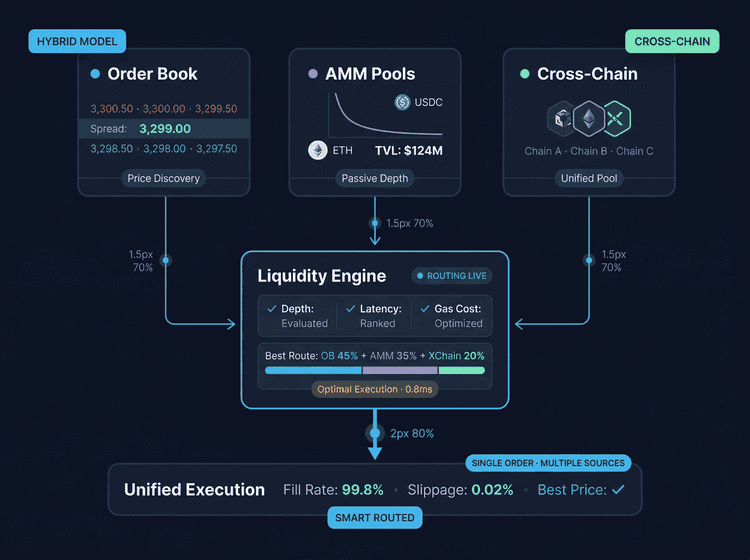
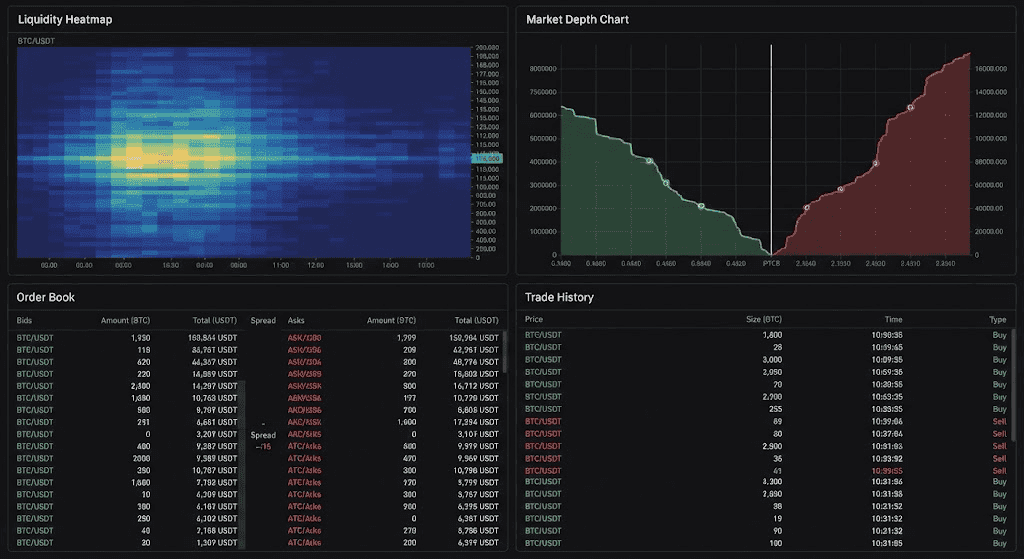
Coiny Exchange supports a decentralized central limit order book (CLOB) for professional order-book trading without centralized custody. Traders can place and manage market, limit, stop-limit, trailing stop, and iceberg orders against order-book liquidity while assets remain in user-controlled wallets until settlement.
The decentralized CLOB works alongside aggregated AMM liquidity to combine order-book price discovery with passive on-chain depth. This hybrid liquidity model supports tighter spreads, efficient execution, and access to liquidity across spot and perpetual markets.
Professional liquidity providers can quote into decentralized order books and manage trading activity across connected markets while using the platform's MEV-protected, noncustodial execution infrastructure.
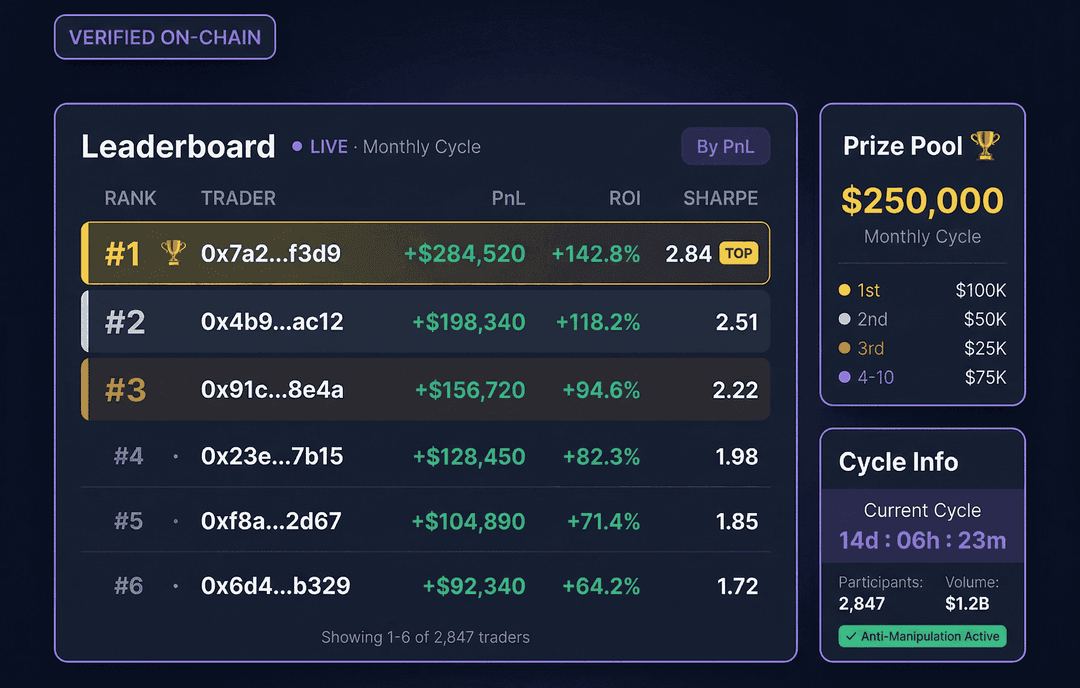
A real-time leaderboard ranks participants by verified on-chain performance — weighing net PnL, ROI, Sharpe ratio, and consistency to reward sustainable trading over outlier wins.
A multi-tier referral engine turns active traders into distribution channels, giving referrers a share of fees and referees onboarding discounts. A points system rewards trading, retention, referrals, and competitions with redeemable discounts, feature access, and airdrop eligibility — creating a self-reinforcing growth loop funded by the protocol.
Enterprise operators earn across multiple channels — trading activity, cross-chain settlement, liquidations, listings, and premium subscriptions.
Maker: 0.004%–0.015% · Taker: 0.026%–0.045% — tiered by 30-day volume.
Nominal fees on cross-chain transfers and bridgeless deposit routing.
Fees from liquidations, margin buffer capture, and optimized exit execution.
Listing fees include security review, liquidity onboarding, and marketing support.
Paid tiers for advanced analytics, priority execution, and higher API limits.
Fees from liquidity providers accessing tiered incentives and rebate programs.
What happens if a blockchain network goes down?
Multi-chain architecture ensures no single network is a point of failure. Cross-chain routing automatically directs flow to active networks while affected chains recover.
Can we white-label a DEX without blockchain engineering expertise?
The DEX infrastructure ships pre-built — no smart contract development or on-chain deployment expertise required. Your team manages branding, user acquisition, and business operations.
Will liquidity be thin at launch?
Liquidity from integrated on-chain AMM pools, professional market makers, cross-chain liquidity networks, and prime-of-prime aggregation layers is pre-connected at launch.
What if the smart contracts get exploited?
All core protocol contracts are independently audited with published reports. An active bug bounty program maintains continuous vulnerability coverage. The noncustodial architecture eliminates any centralized honeypot.
Deploy a noncustodial product line alongside your CEX — capture fees from self-custody traders without additional infrastructure or custody liability.
Launch a branded DEX for protocol-native assets and governance tokens with full white-label control over branding, fee structures, and routing policy.
Integrate a noncustodial trading module into existing products — no smart contract engineering, no wallet custody liability, no regulatory custody exposure.
MEV-protected venue with hybrid order book and cross-chain aggregation for professional quoting and inventory management.
A full-spectrum decentralized trading system — bridgeless cross-chain settlement, MEV-protected execution, hybrid order book + AMM liquidity, and multi-model AI orchestration — unified under a single white-label protocol.
No. Connect any of 500+ supported wallets and trade in one signature. Zero accounts, zero KYC, zero onboarding friction.
50+ networks including Ethereum, Solana, Arbitrum, Optimism, Base, Polygon, BNB Chain, Avalanche, zkSync, Sui, Aptos, and an expanding integration roadmap. Cross-chain deposits require no manual bridging.
The platform never holds or controls user funds. All assets remain in user-owned wallets, with settlement executed through audited smart contracts and user signatures.
Order flow routes through private mempool submission with anti-sandwich safeguards, neutralizing front-running, back-running, and extractive value capture before transactions reach public settlement.
Maker: 0.004%–0.015%. Taker: 0.026%–0.045%. Tiered by 30-day rolling volume. No deposit fees. Withdrawals reflect only network gas at zero markup.
Walk through the protocol, demonstrate operator controls, and configure your DEX deployment.
Book a Demo