EXCHANGE PLATFORMS

Types of Crypto Exchange Platforms, Compared Side by Side

The models differ in one thing that matters far more than the feature list: who holds the keys, and who runs the match. Compare them on custody, matching, settlement, liquidity and regulatory posture, then go straight to the platform that fits your market.

5 modelsCEX to mobile
One providerone brand
4 optionscustody models
Sharedliquidity and KYC
PLATFORM DIRECTORY

Every Exchange Model Coiny Deploys, and What Each One Is For

Seven pages, one platform. Start with the card that matches how your users expect to hold their assets — each one opens the full product page for that model.

CUSTODIAL · OFF-CHAIN MATCHING

White-Label Centralized Exchange

The classic order-book venue. Users deposit into accounts you custody, and your matching engine fills them off chain. The shortest path to spot, derivatives and margin under your own brand.

  • 1M+ TPS matching engine with sub-millisecond acknowledgment
  • 1500+ trading pairs and multi-tier custody out of the box
  • Fiat gateways, KYC and AML, and native mobile apps included
Learn more
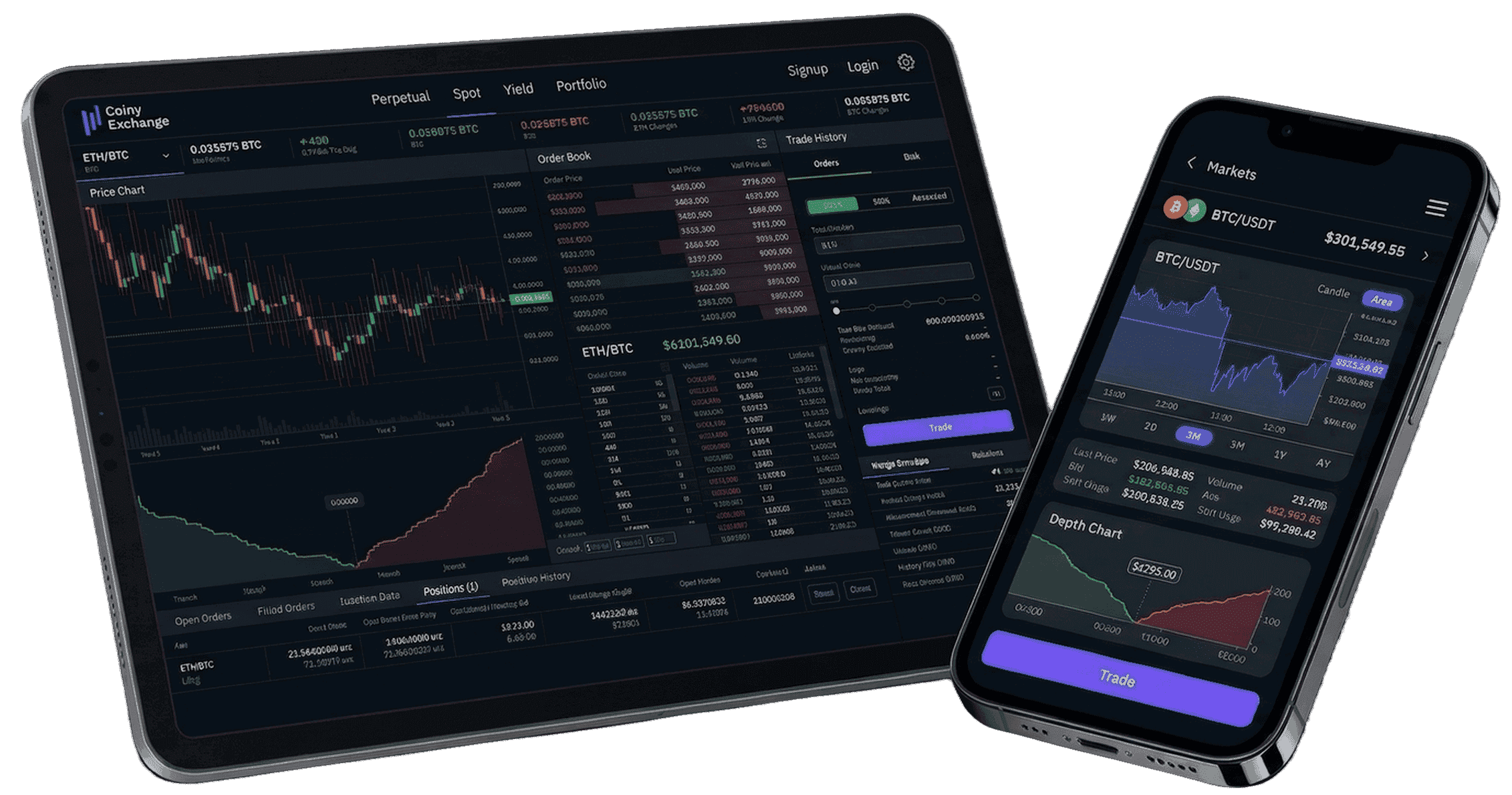
Tablet and phone running the exchange terminal with price chart, order book and depth chart
NON-CUSTODIAL · CONTRACT SETTLEMENT

Decentralized Exchange Software

The technical DEX platform. Spot swaps and perpetuals settle straight from your users’ wallets, with MEV-resistant routing. Your platform never takes custody of a user balance.

  • Wallet-native onboarding with no deposit step at all
  • Spot and perpetual instruments on one non-custodial protocol
  • Aggregated on-chain depth across 50+ networks
Learn more
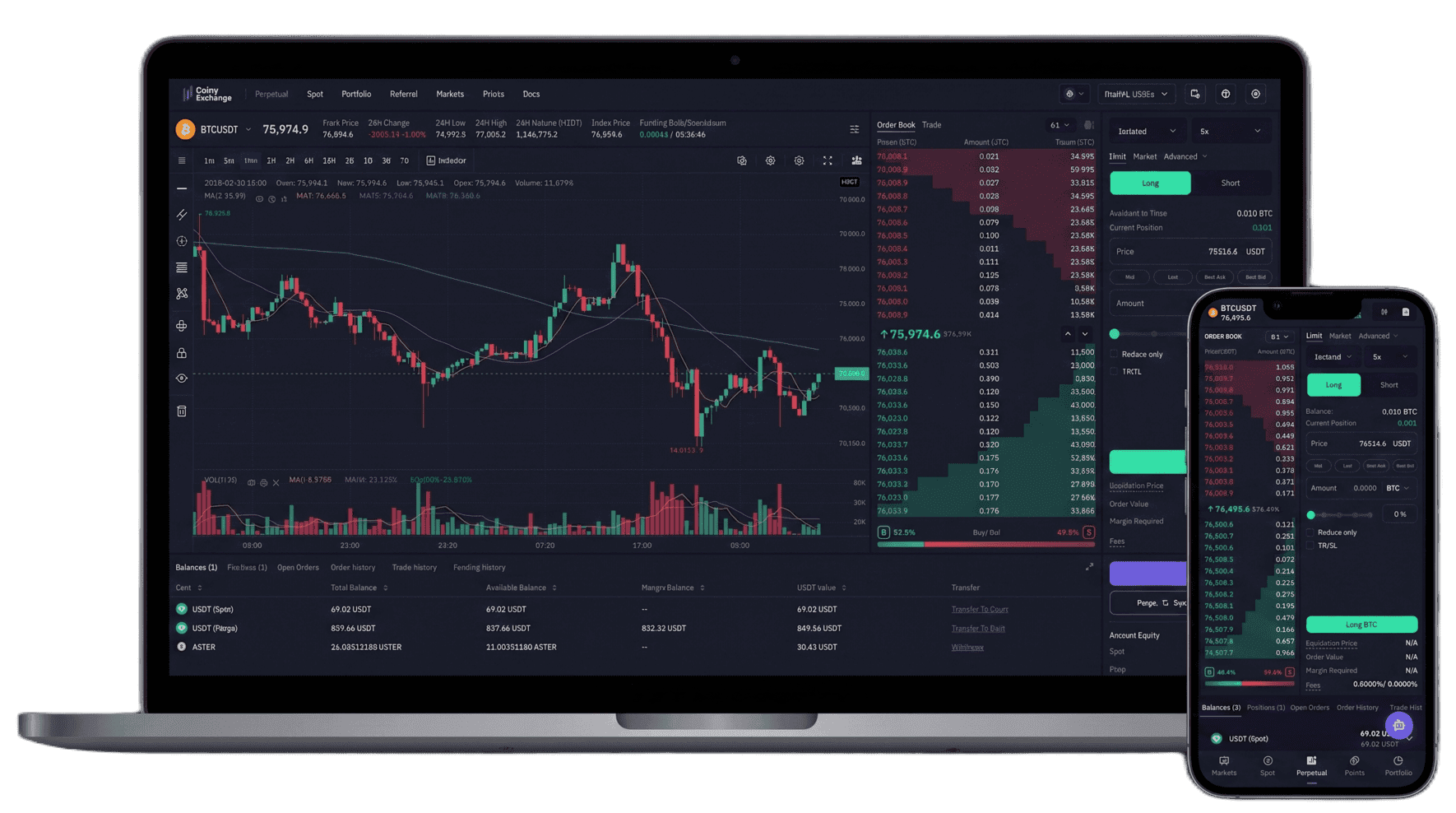
Laptop and phone running the exchange perpetuals terminal with candlestick chart, order book and long-short panel
LAUNCH PROGRAM

White-Label DEX Launch

The commercial route onto that same protocol. Branding, market configuration, deployment and liquidity are handled end to end, so a branded DEX goes live without an engineering team of your own.

  • Branding, domain and fee schedule configured for you
  • Spot and perpetuals, multi-chain, run as a launch programme
Learn more
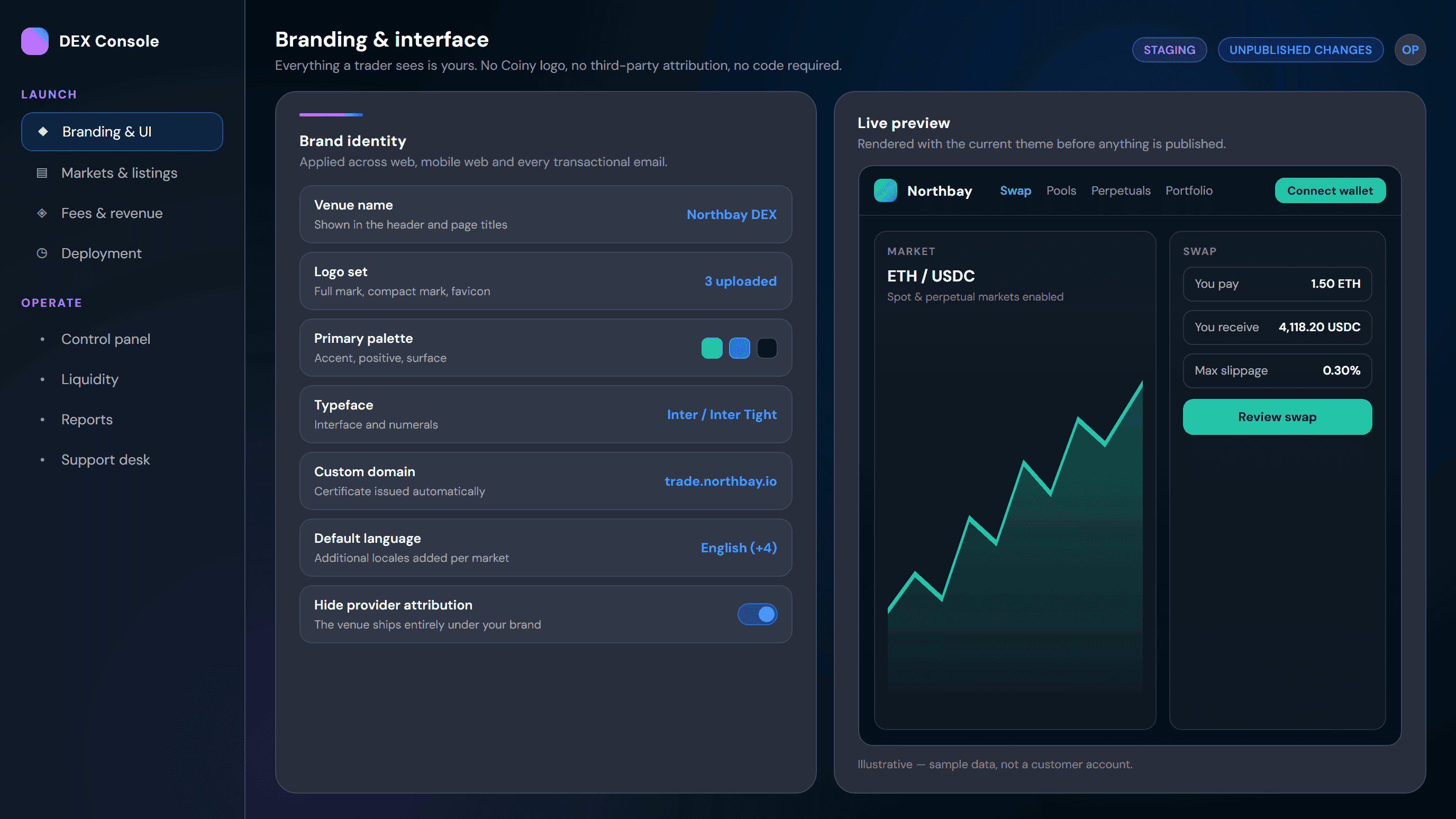
White-label DEX branding configuration showing logo, palette, typography and custom domain settings beside a live preview of the branded venue
CHAIN INFRASTRUCTURE

Dedicated DEX Chain Infrastructure

For when the order book should be chain state rather than an application on top of one. Provision your own trading chain, choose the execution environment and sequencing, and run a decentralized CLOB natively.

  • Any virtual machine, EVM or non-EVM, with configurable proving
  • Matching inside the chain's own state transition function
Learn more
Abstract network where glowing bid and ask lattices converge at a match point with token coins
ESCROW · LOCAL FIAT

P2P Crypto Marketplace

Users trade with each other on local payment methods while platform escrow holds the crypto. This is the way into markets where card and bank rails are unreliable or simply unavailable.

  • 100+ fiats and 500+ payment methods on local rails
  • Escrow, disputes, merchant tiers and public reputation
Learn more
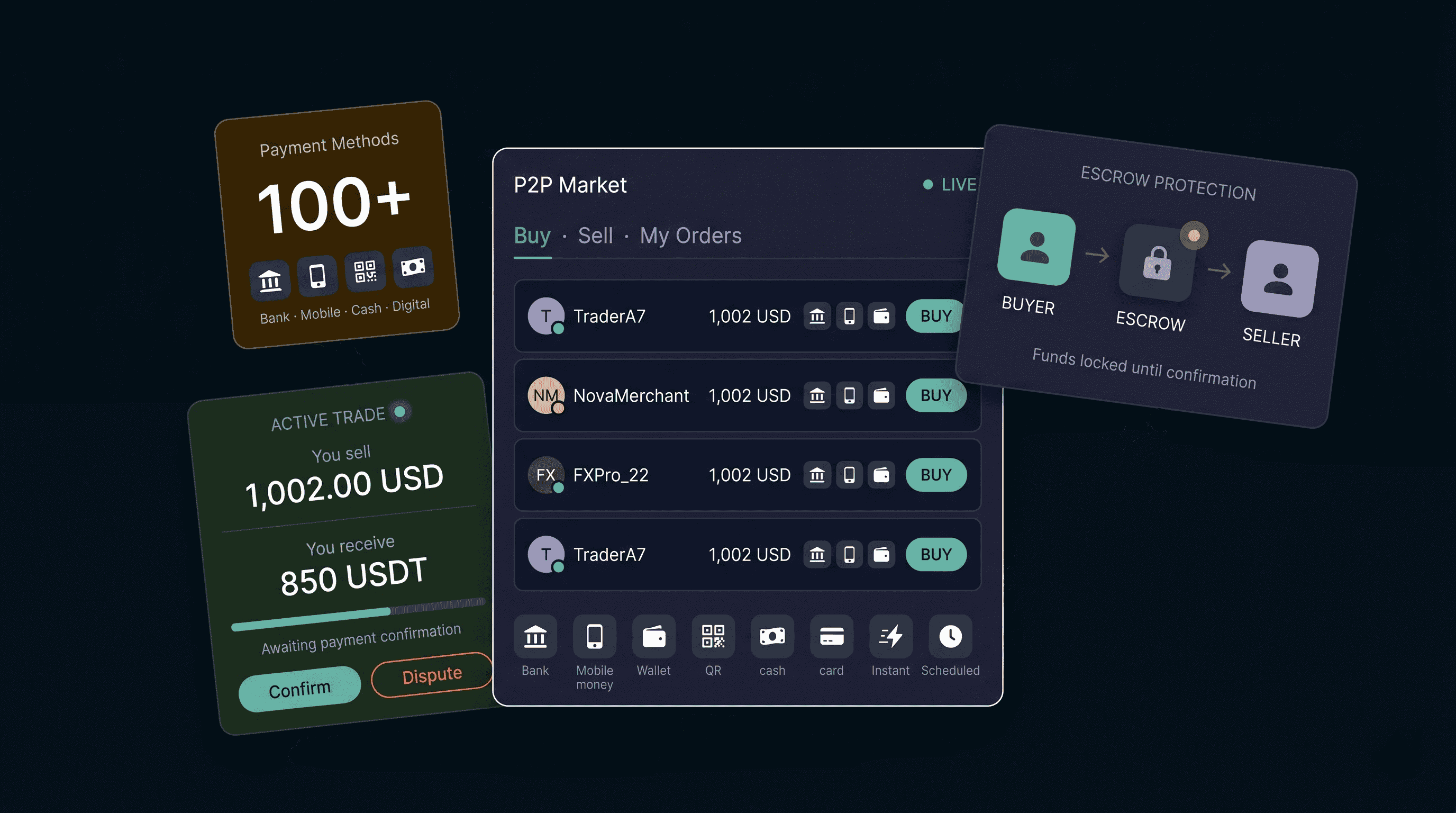
P2P market offer list ringed by payment method icons, an active trade card and an escrow flow
DELIVERY SURFACE

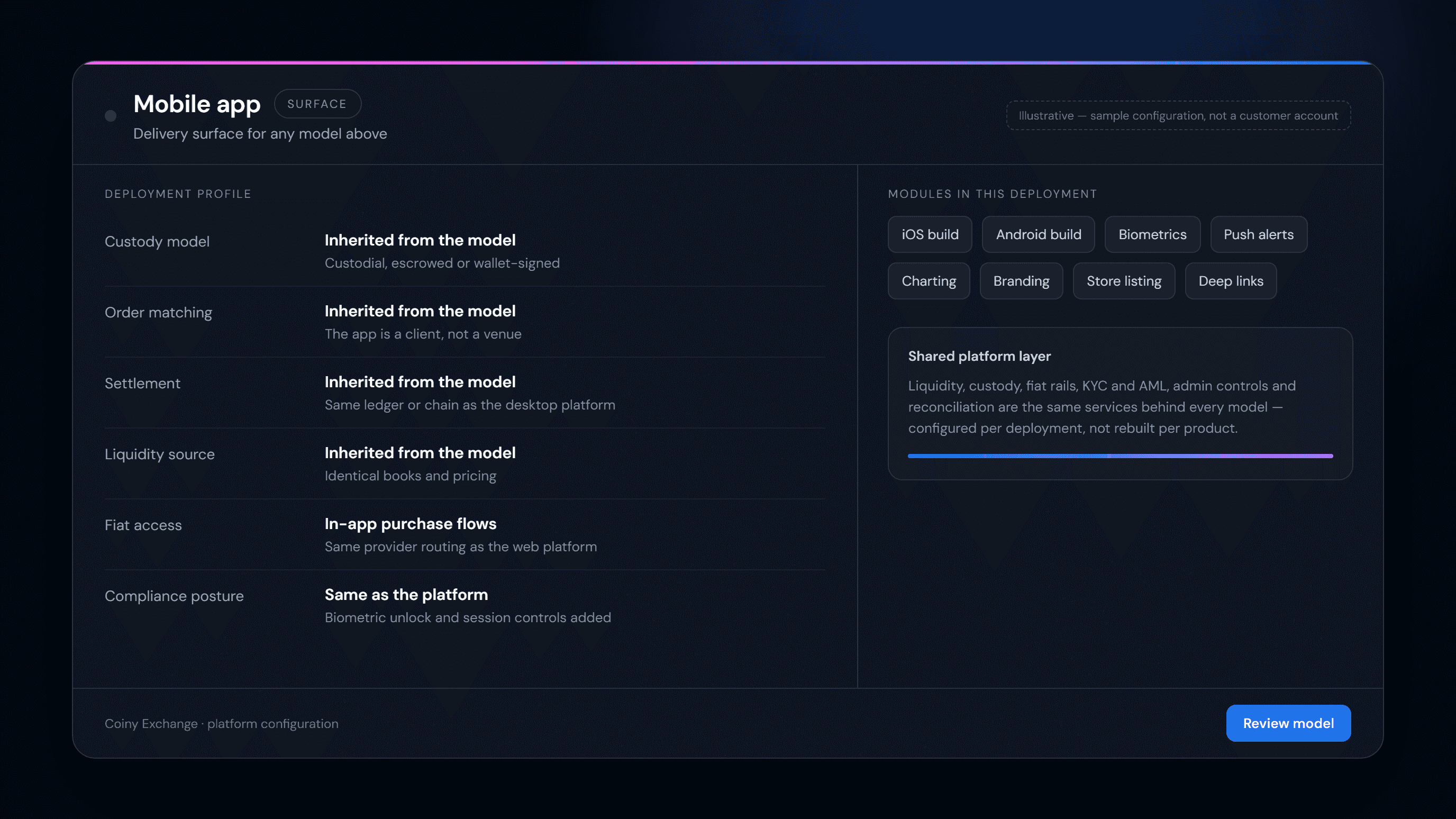
White-Label Mobile Trading App

Native iOS and Android apps published under your identity, with full feature parity against the web platform. Not a fifth exchange model — the surface any of the models above are delivered on.

  • Native builds for the App Store and Google Play
  • Biometric unlock, push alerts and TradingView charting
  • Same books, same pricing and same compliance as the desktop platform
Learn more
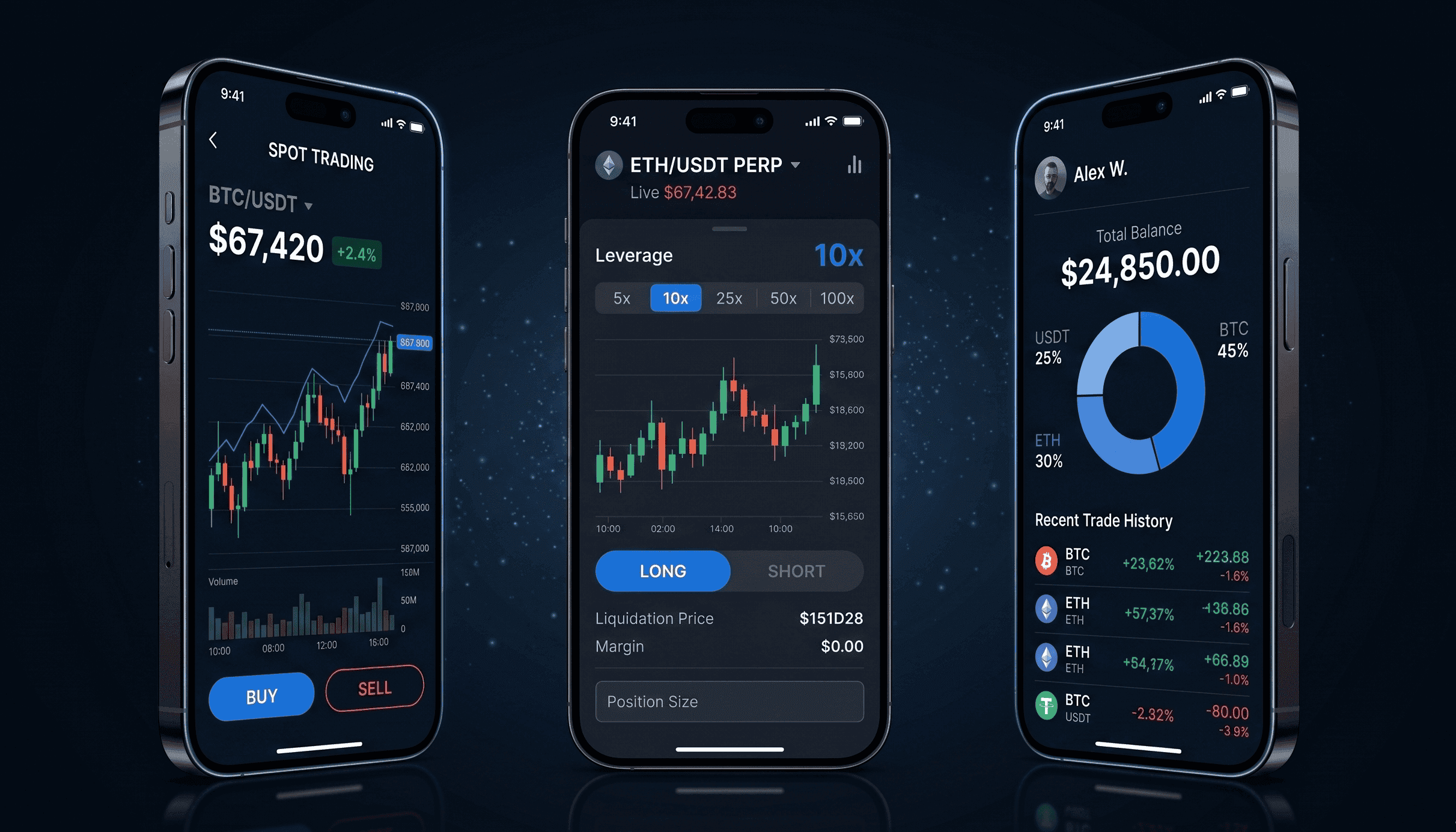
Three phone screens showing spot trading, a leveraged perpetuals order ticket and a portfolio balance breakdown
OPERATIONS

Exchange Operations & Reconciliation

Whichever model you run, someone has to answer why a deposit never landed. The operations console investigates deposits and withdrawals and reconciles settlements with approval-gated fixes.

  • One case per break, with its evidence already attached
  • Chain, ledger, venue and payment-provider feeds compared on a schedule
  • No balance changes without a named approver
Learn more
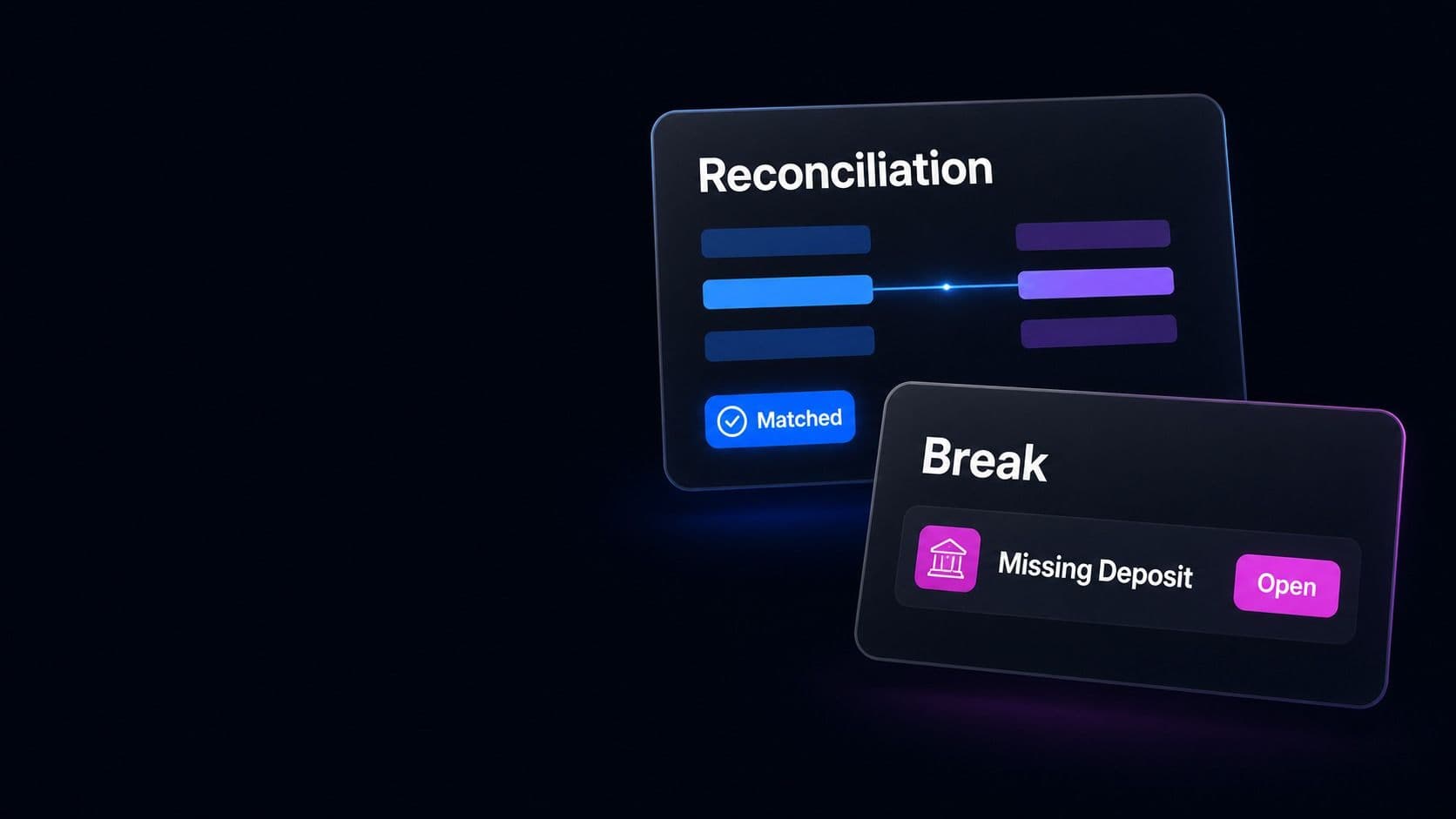
A reconciliation card matching two columns of entries, beside an open break for a missing deposit
PLATFORM ARCHITECTURE

One Platform Underneath, Five Ways to Face the Market

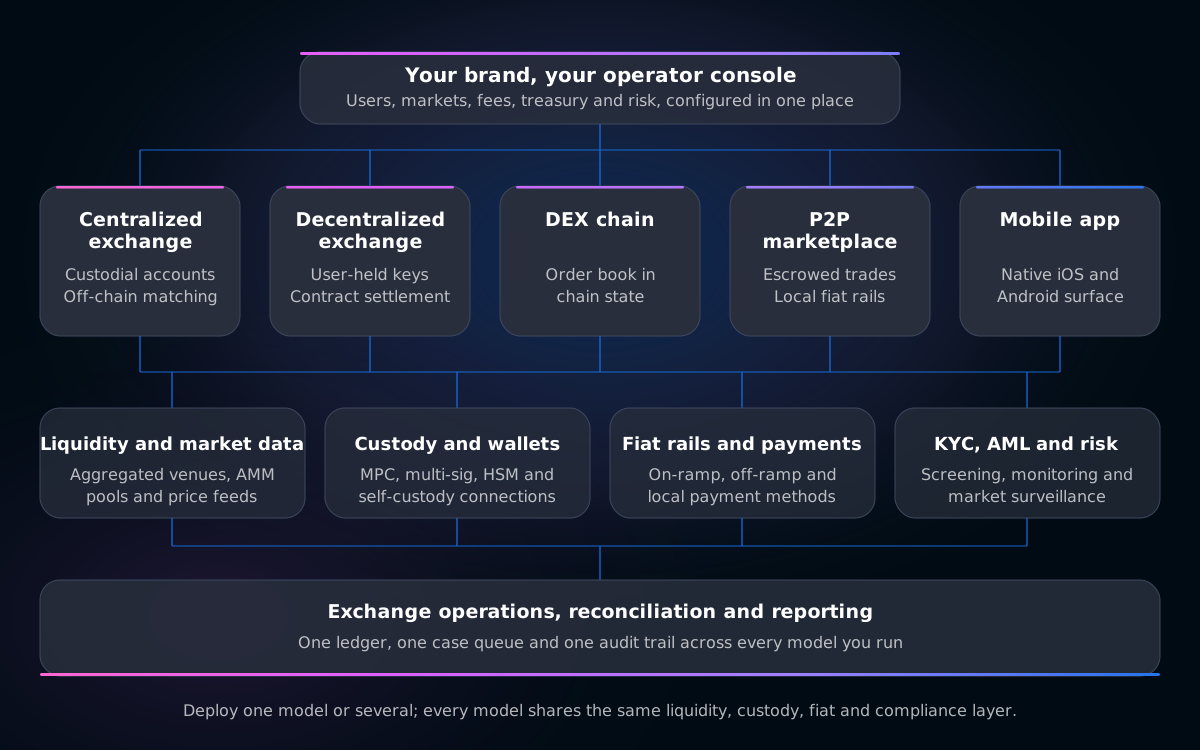
The models diverge at the top, where custody sits and who runs the match. Underneath they share the same liquidity, custody, fiat, compliance and operations services — which is why running two models costs a fraction of buying two platforms.

Diagram: Coiny platform architecture with the five exchange platform models above shared liquidity, custody, fiat rails and compliance services, over a common operations and reconciliation layer

One operator console configures every model. Beneath it sit the five platform models, each drawing on the same liquidity and market data, custody and wallets, fiat rails and KYC, AML and risk services. A second model adds markets rather than a second back office.

MODEL COMPARISON

CEX vs DEX vs DEX Chain vs P2P: How the Four Models Actually Differ

All four models trade the same assets, so the decision is not a feature checklist — it comes down to who holds the keys, who runs the matching engine, and where settlement lands. Pick a centralized exchange when you want custody, fiat rails and speed; a decentralized exchange when users must keep their own keys; a dedicated DEX chain when the order book itself should be chain state.

#Decision factorCentralized exchangeDecentralized exchangeDedicated DEX chainP2P marketplace
1Custody modelwho can move the fundsCustodialhot, warm and cold tiers with multi-sig releaseNon-custodialusers sign from their own walletsNon-custodialkeys never leave the traderPlatform escrowcrypto locked until both sides confirm
2Who runs matchingwhere an order meets its counterpartyYour off-chain engineoperator-run, sub-millisecond acknowledgmentProtocol routingAMM pools and aggregated on-chain depthThe chain itselfdecentralized CLOB in the state transitionNo matching enginebuyers and sellers post their own terms
3Where settlement landswhat changes when a trade fillsInternal ledgerbalances updated inside the exchangeSmart contractwallet to wallet, on chainThe chain you operatesequencing and settlement path are yours to setEscrow releasefiat settles between the two people
4Liquidity sourcewhere the depth comes fromAggregated venues and AMMprime-of-prime providers and market makersOn-chain pools and makerscross-chain depth with MEV-resistant routingNative markets and bridgesmakers quoting directly on your chainMerchants and makersverified merchant tiers supply the book
5Fiat accesshow money enters and leavesNative to the platformcard, bank transfer and local methodsAt the edgethrough a connected on-ramp and off-rampAt the edgefiat handled by the application layerThe entire point100+ fiats and 500+ payment methods
6Typical operatorwho launches this modelBrokers, fintechs, regional exchangeswanting a full-service branded venueWeb3 platforms and trading firmsserving self-custody usersInfrastructure teams and market makersneeding protocol-level controlOperators in emerging marketswhere banking rails are unreliable
7Regulatory posturewhat you take onHeaviestcustody obligations, full KYC, AML and surveillanceLighter on custodyaddress screening and listing due diligencePolicy set at genesisordering and listing rules live in the protocolKYC plus a dispute processverification tiers, appeals and case files
8What you configurethe operator's real control surfaceMarkets, fees, custody tiers, leverage capsfrom the admin panel, without a releaseChains, pools, listings, fee sharewithout ever touching user fundsExecution VM, sequencer, proving, data availabilitychosen at genesis, governed after launchAssets, payment methods, merchant tiers, dispute SLAsconfigured per market

Where the mobile app fits

Mobile is a delivery surface, not a fifth market structure. A native iOS and Android app carries whichever model you run — the same books, the same custody and the same compliance — with biometric unlock and push alerts added on top.

Running more than one model

The four models are not exclusive. Operators commonly pair a centralized exchange for depth with a P2P marketplace for fiat entry, or add a decentralized exchange for self-custody traders.

What every model ships with

Liquidity, custody or wallet connections, payment rails, KYC and AML, an admin panel and reconciliation come with all four. You are choosing a market structure — not a different vendor for each one.

DEPLOYMENT PROFILES

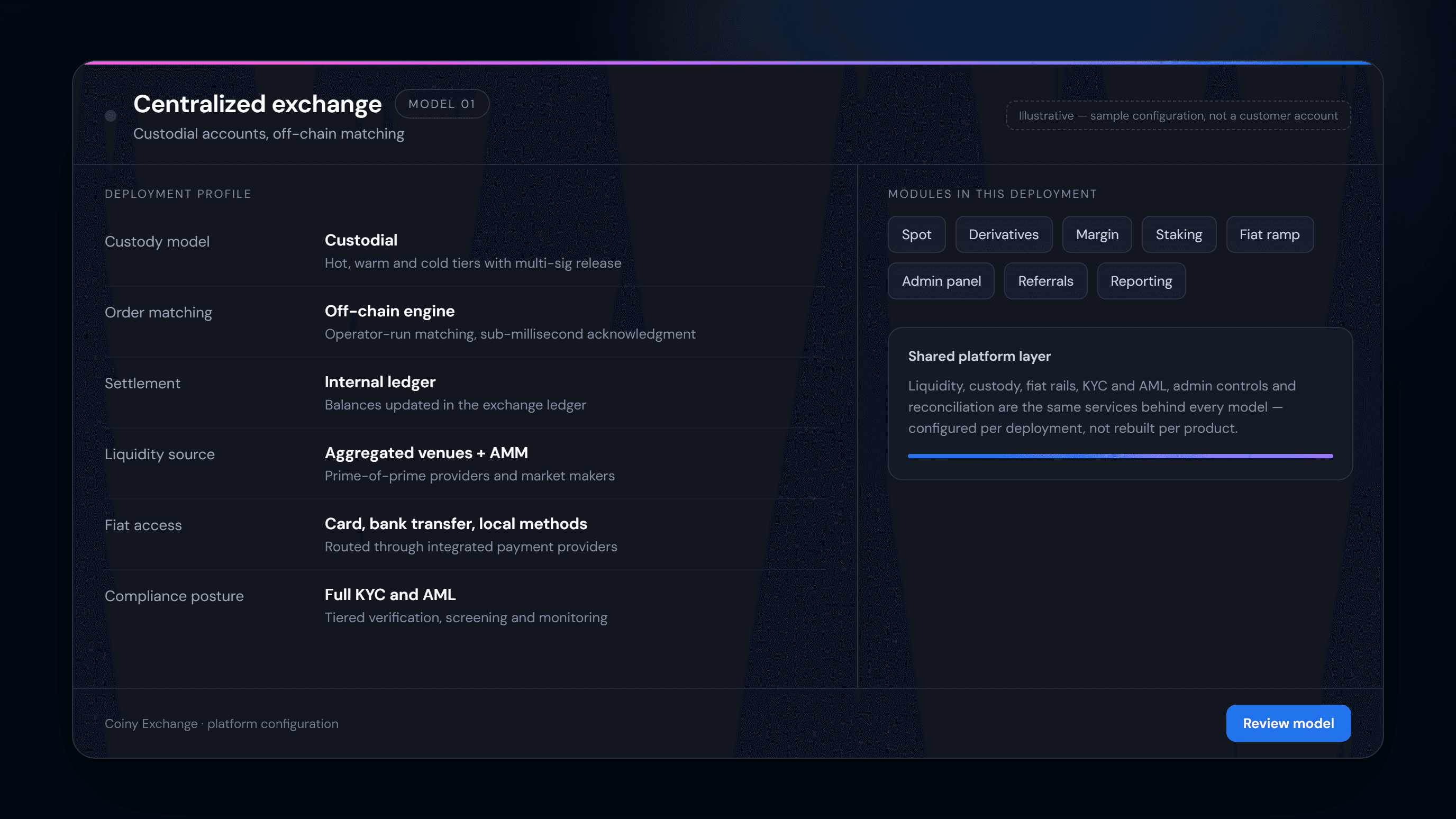
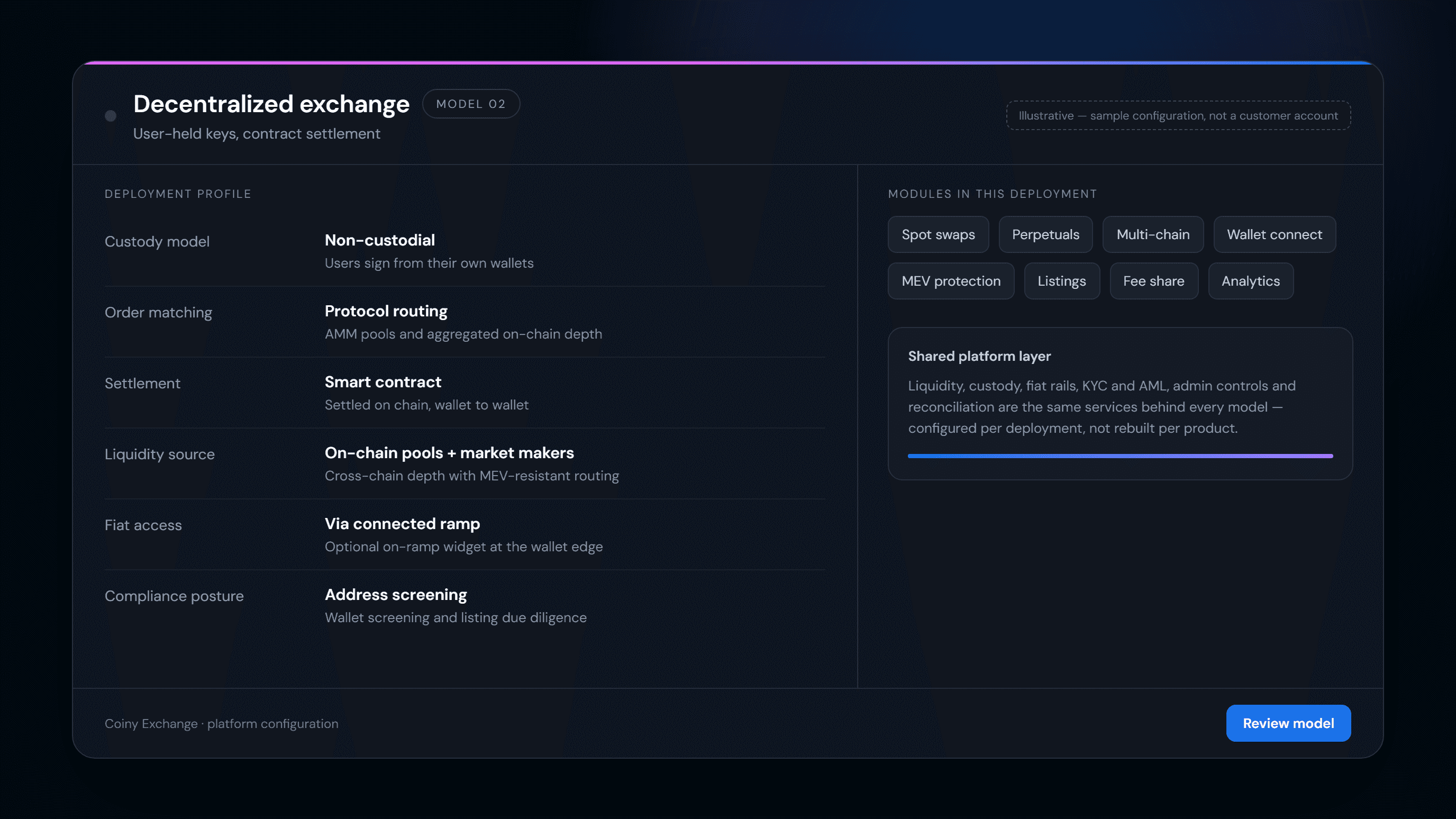
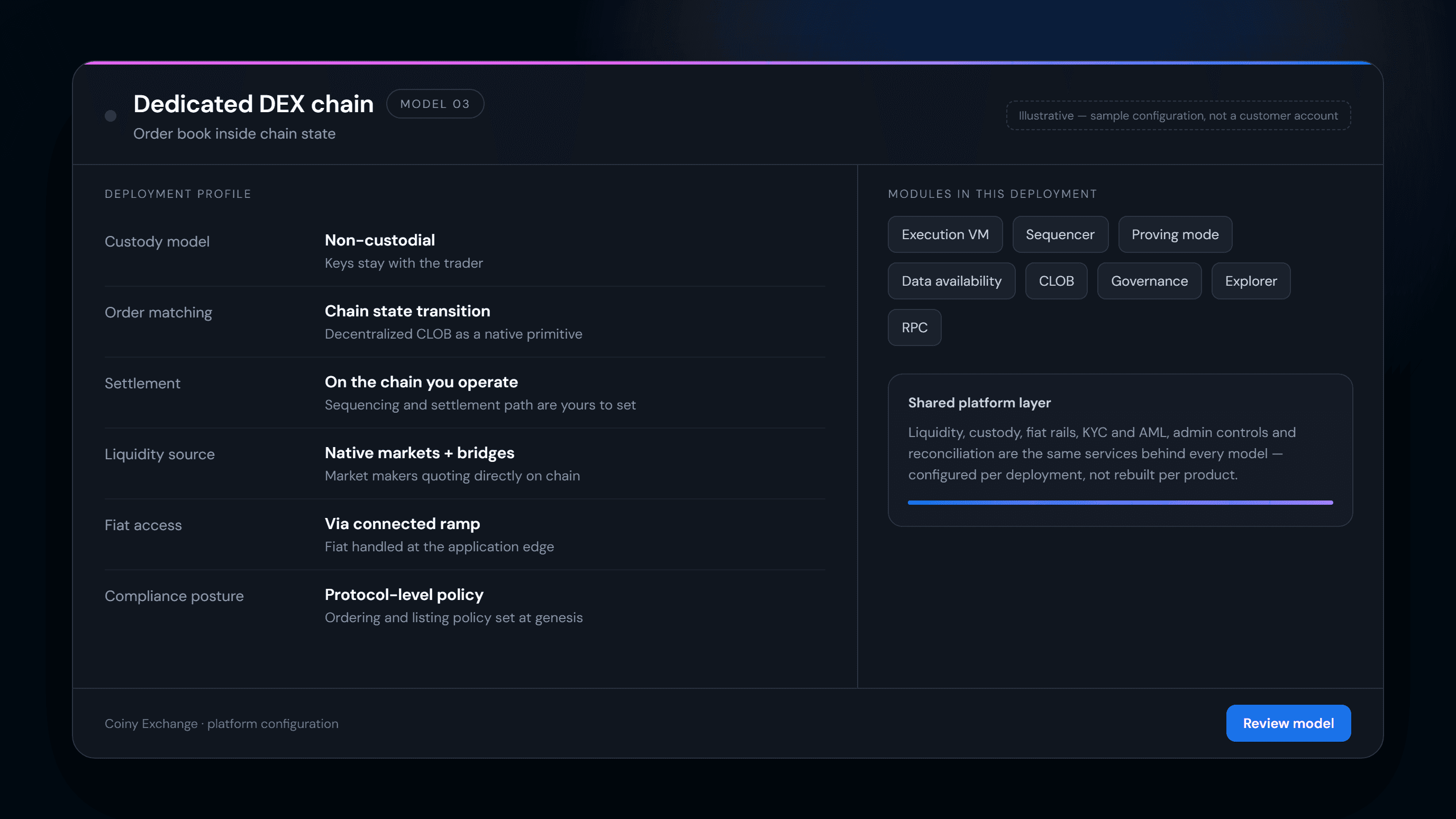
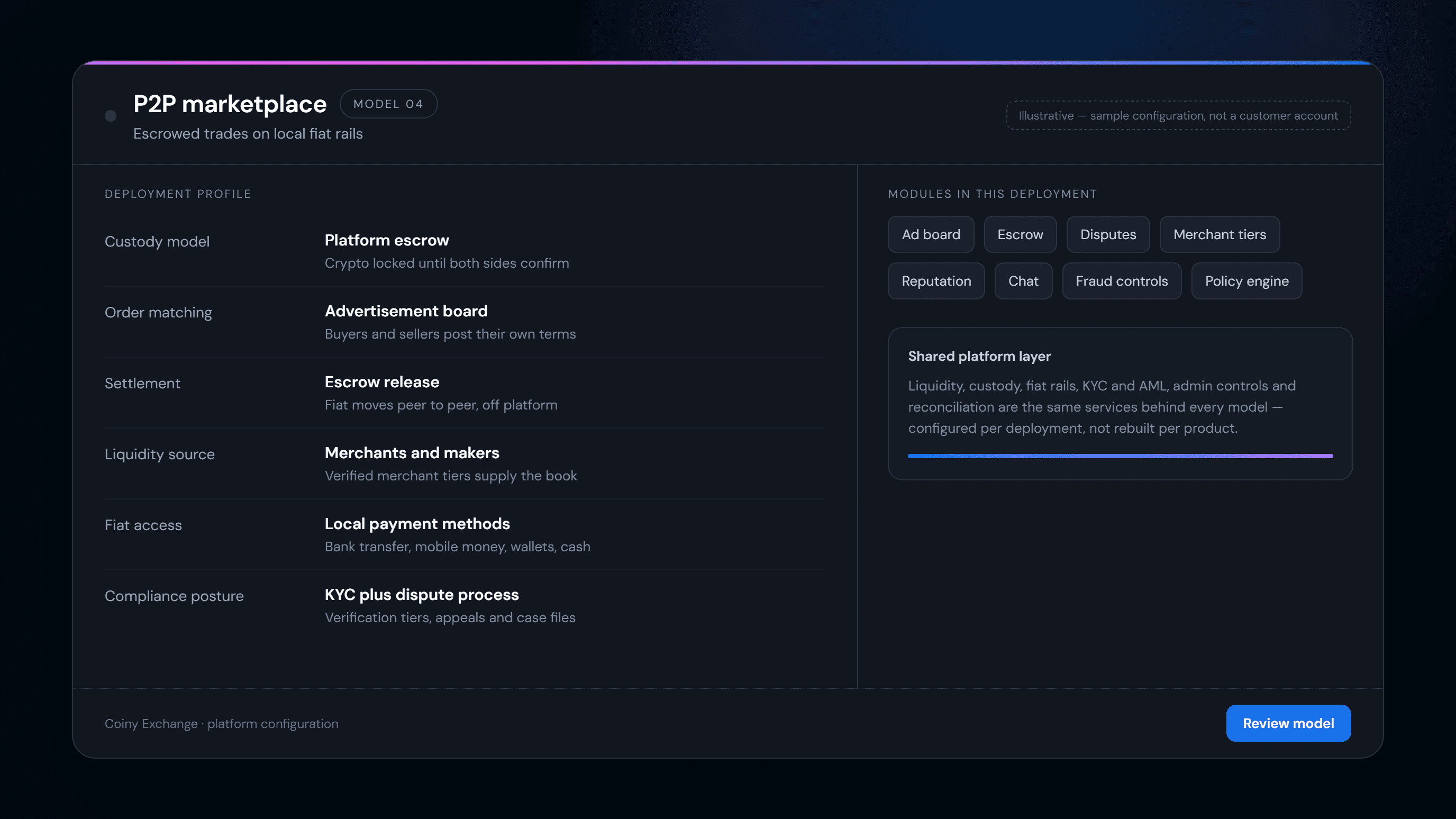
What Each Model Locks In When You Configure It

The same operator console, five deployment profiles. Each tab shows the choices a model settles on your behalf and the modules that come with it, then opens the full product page.

Custodial accounts, off-chain matching

Choosing the centralized model settles custody, matching and fiat in one move: you hold the assets, your engine matches the orders, and card and bank rails are native rather than bolted on.

  • Custodial wallets across hot, warm and cold tiers with multi-sig release
  • Operator-run matching with sub-millisecond acknowledgment
  • Card, bank transfer and local payment methods through integrated providers
  • Spot, derivatives, margin, staking and referrals as configurable modules
Deployment profile for the centralized exchange model showing custody, matching, settlement, liquidity, fiat and compliance choices
CHOOSING A MODEL

The Questions That Actually Decide Which Platform You Launch

Five conversations that come up in every model-selection call, answered before the demo rather than during it.

  • We are undecided on custody. What does that choice really settle?Custody sets your regulatory weight, your security burden and your fiat options in one decision. Custodial gives you card and bank rails, account recovery and the fullest trading experience, at the cost of custody obligations and a full KYC and AML programme. Non-custodial removes those obligations and the deposit step, and moves fiat to the edge of the platform.
  • Can we start with one model and add another later?Yes. The models share one liquidity layer, one custody and wallet layer, one compliance stack and one operations console, so a second model is a deployment rather than a second procurement. Operators regularly add a P2P marketplace to a centralized exchange, or a decentralized exchange beside it for self-custody users.
  • Which model gets us into a market with weak banking rails?The P2P marketplace. Fiat never touches the platform: users pay each other over local bank transfers, mobile money, wallets or cash, and escrow holds the crypto until both sides confirm. It runs across 100+ fiat currencies and 500+ payment methods, which is why it opens markets no card gateway will serve.
  • Do we need to treat the mobile app as a separate project?No. The mobile app is a delivery surface for whichever model you run, not a fifth platform. It ships as native iOS and Android builds under your identity with full feature parity, drawing on the same books, the same custody and the same compliance as the web platform.
  • Once two models are live, who reconciles all of it?One operations console does, across every model you run. It compares chain activity, the internal ledger, venue statements and payment-provider files, opens a case for each break with the evidence attached, and executes corrective postings only after a named approver signs.
Book a Demo
WHERE TO GO NEXT

Platform Pages and the Shared Services Behind Them

Each model has its own product page. Liquidity and instant convert are shared services that run underneath all of them, whichever model you deploy.

White-label centralized exchange

The custodial order-book venue: matching engine, multi-tier custody, fiat gateways and a full operator admin panel under your brand.

Decentralized exchange software

The non-custodial protocol: spot swaps and perpetuals settled from user wallets, with MEV-resistant routing across 50+ networks.

White-label DEX launch

The commercial programme on top of that protocol — branding, market configuration, deployment and liquidity handled end to end.

P2P crypto marketplace

Escrow-protected peer-to-peer trading on 100+ fiats and 500+ local payment methods, with merchant tiers and a dispute process.

White-label mobile trading app

Native iOS and Android apps under your identity, with full feature parity against whichever platform model they front.

Exchange operations & reconciliation

The ops console that investigates deposits and withdrawals, diagnoses ledger breaks and reconciles trades with approval-gated fixes.

Exchange liquidity from day one

Every platform ships with liquidity attached — aggregated venue depth, AMM pools and market-maker programmes, so no model launches into an empty book.

Instant convert across all platforms

One-action asset conversion with smart routing, best-price execution and slippage controls, embeddable in any of the platform models.

COMMON QUESTIONS

FAQ

There are four distinct types of crypto exchange platform: centralized exchanges, where the operator custodies funds and runs an off-chain matching engine; decentralized exchanges, where users trade from their own wallets and smart contracts settle; dedicated DEX chains, where the order book lives in chain state rather than in an application on top of one; and peer-to-peer marketplaces, where escrow secures trades that settle on local fiat rails. A mobile app is a delivery surface for any of them, not a fifth type. Coiny Exchange deploys all four models plus native mobile.

A centralized exchange (CEX) holds user funds and matches orders on its own off-chain engine, updating balances in an internal ledger; a decentralized exchange (DEX) never holds funds, and trades settle on chain from the user's own wallet. The practical consequences are custody obligations, speed and fiat access: a CEX carries the custody and KYC burden but delivers sub-millisecond matching and card and bank on-ramps, while a DEX removes custody risk and the deposit step but depends on on-chain liquidity and an external ramp for fiat.

Choose the exchange model by how your users expect to hold assets and how money reaches them. A centralized exchange fits markets with working card and bank rails and users who want an account. A P2P marketplace fits markets where those rails fail, because fiat moves directly between people. A decentralized exchange fits self-custody and Web3 audiences. A dedicated DEX chain fits teams that need protocol-level control of sequencing and listing policy. Coiny Exchange deploys any of them, or several together under one brand.

An order book exchange matches named buy and sell orders against each other at prices traders set, while an automated market maker (AMM) prices trades algorithmically against a pool of deposited assets with no counterparty order required. Order books give tighter spreads and professional order types when there is real two-sided flow; AMMs give continuous quotes in thin markets without a market maker present. Coiny Exchange platforms run order books on the centralized exchange and the DEX chain, and combine pool liquidity with aggregated depth on the decentralized exchange.

Custody is the decision that sets an exchange's regulatory weight, so choose custodial when you want to own fiat rails, account recovery and a full trading experience, and non-custodial when you want users to keep their keys and you want no custody obligations. Coiny Exchange supports four custody models across its platforms — fully custodial with hot, warm and cold tiers, semi-custodial MPC, multi-signature quorum approval, and fully user-held keys — so the model is a configuration choice rather than a change of vendor.

Yes. Coiny Exchange deploys its exchange platform models individually or together under one brand, because they share the same liquidity, custody, payment, compliance and operations services underneath. An operator commonly runs a centralized exchange for depth and fiat access alongside a P2P marketplace for users the banking system does not reach, or a decentralized exchange for self-custody traders, and administers all of them from one control panel with one reconciliation ledger.

PICK YOUR MODEL

Bring Your Market. We Will Tell You Which Platform Fits It.

Walk through all five platform models against your users, your payment rails and your regulatory position — then see the one that fits, configured live.

Book a Demo